Cart
0
You may also like

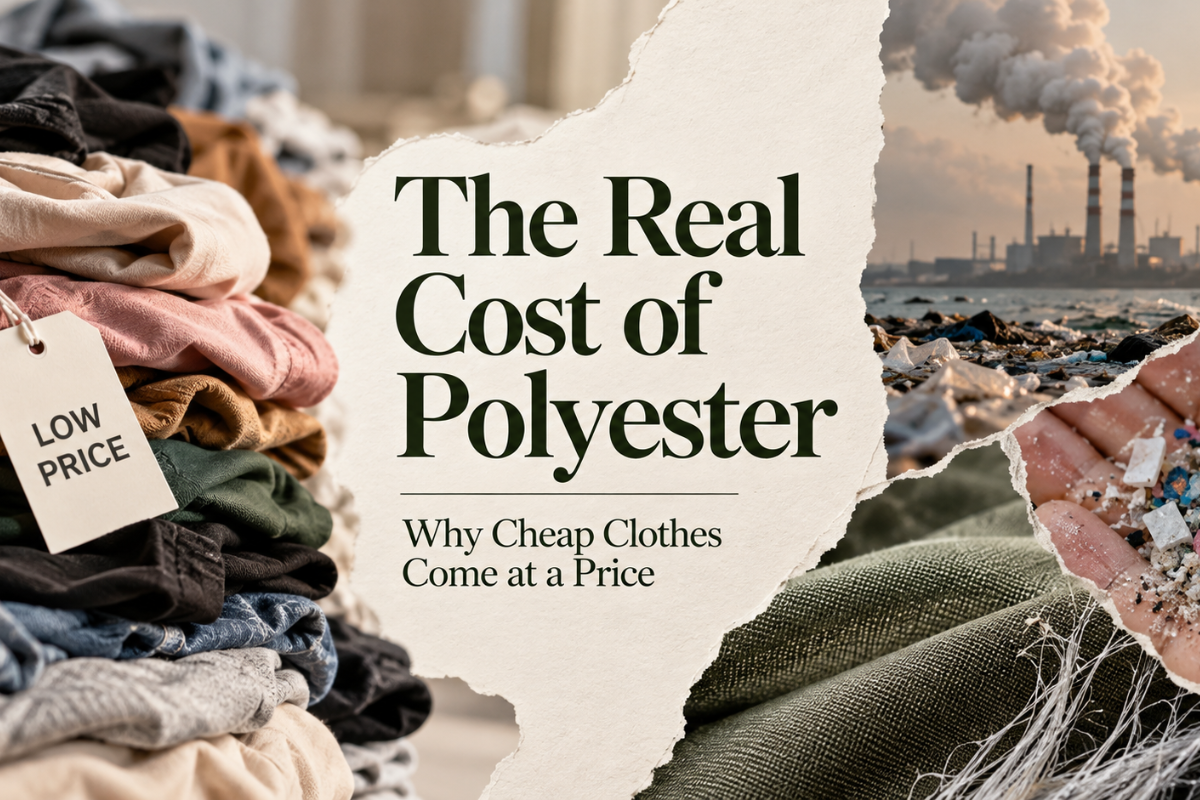
There is a kurta on the rack for Rs. 249. It is the right colour. It is roughly the right shape. The price makes it an easy decision, you have spent more on lunch. You buy it, wear it a few times, and six months later it is at the back of your wardrobe, slightly misshapen, with a faint chemical smell that washing never quite removes, the fabric beginning to pill at the seams. It cost Rs. 249. But did it?
The price tag on a piece of clothing tells you one number. It does not tell you what the fabric cost the environment to produce, what it costs your skin to wear it across a long Indian summer, what it will cost the water system every time it is washed, or what it will cost the planet when it ends up, decades from now, in a landfill that cannot break it down. The Rs. 249 kurta is not cheap. It is cheap for you, at the point of purchase. Everywhere else in its life, someone or something is paying a price you are not being shown.
That fabric, in almost every case, is polyester. And this blog is about what polyester actually is, what it actually costs, and what you can choose instead.
Polyester is a synthetic polymer, which is another way of saying it is a form of plastic. Specifically, it is most commonly made from polyethylene terephthalate, or PET, the same material used to make plastic bottles. It is derived from petroleum, a non-renewable fossil fuel, and its production is an industrial chemical process that requires significant energy and generates significant waste and emissions.
It became the dominant fabric in global fashion for reasons that are entirely about manufacturing economics. Polyester is cheap to produce at scale. It can be made in any colour without complex dyeing processes. It is dimensionally stable, it does not shrink the way cotton does, and it holds its shape under repeated washing. It dries quickly. And it can be blended with natural fibres to reduce the cost of those fibres without eliminating them from the fabric entirely, allowing brands to put "cotton blend" on a label while the fabric is predominantly plastic.
None of these qualities make it good to wear, particularly in the Indian context. But they make it extremely good to sell cheaply, which is why the fast fashion industry is built almost entirely on it. Approximately sixty percent of all clothing produced globally today contains polyester — and the figure is rising.
The first and most immediate cost of polyester is borne by the person wearing it. And in a country where the climate demands breathable fabric for most of the year, this cost is significant.
Polyester does not breathe. Its fibres are non-porous, which means they do not allow moisture, sweat, body heat, the natural humidity your skin exchanges with its environment, to pass through the fabric. Instead, that moisture is trapped against your skin. In mild, temperate weather, this is uncomfortable. In an Indian summer, in a city like Jaipur or Delhi or Chennai where temperatures routinely exceed forty degrees, it is genuinely punishing. The body's primary mechanism for cooling itself is evaporation of sweat from the skin's surface. Polyester prevents this mechanism from functioning properly, making you hotter and more uncomfortable than the weather alone would make you.
The trapped moisture also creates conditions that bacteria thrive in. This is why polyester garments tend to develop persistent odours after a relatively small number of wears, odours that survive washing because the bacteria causing them are embedded in the non-porous fibre structure in a way that water and detergent cannot easily reach. It is why polyester garments feel stale in a way that natural fibre garments do not.
For people with sensitive skin, polyester presents additional problems. The friction of synthetic fibres against skin over the course of a long day can cause irritation and rashes, particularly in areas of repeated movement, the inner thighs, under the arms, around the waistband. Polyester does not adapt to the temperature and moisture of the skin the way cotton does. It remains static, foreign, and resistant. Many people who believe they simply have sensitive skin find that switching to natural fibres resolves what were persistent low-level discomforts they had come to think of as simply part of wearing clothes.
The environmental cost of polyester begins long before the garment reaches a shop floor, and this is the part of the story most clothing brands would prefer you did not think about.
Polyester is made from petroleum. Extracting petroleum requires drilling, an ecologically disruptive process that carries significant risks of spill and contamination. Refining petroleum into the precursor chemicals for polyester production requires large amounts of energy, predominantly from fossil fuels. The manufacturing process itself produces volatile organic compounds, particulate matter, and wastewater laced with chemical residues. In countries with weaker environmental regulation, many of the world's largest polyester producers operate in such countries, and this waste is often discharged into local waterways and air systems with limited treatment.
The carbon footprint of producing a kilogram of polyester fibre is approximately three times that of producing a kilogram of conventional cotton, and roughly six times that of producing a kilogram of organic cotton. This is the embedded carbon cost of the fabric, the emissions generated before a single stitch is made.
Compare this to the production of cotton. Cotton requires water and land, and conventional cotton farming has its own environmental challenges, particularly around pesticide use. But cotton is a biological process; it grows from soil, using sunlight and water, and produces a fibre that is fundamentally part of the natural carbon cycle. At the end of its life, cotton returns to the earth. Polyester does not.
This is the polyester story that has only recently entered public awareness, and it is perhaps the most alarming chapter in it.
Every time a polyester garment is washed, it sheds tiny plastic fibres, microplastics, into the water. These fibres are too small to be captured by most washing machine filters and too small to be reliably removed by most water treatment systems. They pass through into rivers, lakes, and eventually the ocean. They have now been found in fish tissue, in drinking water, in the deepest ocean trenches, in Arctic ice cores, in human blood, and in human placentas.
The scale of this is difficult to comprehend. A single wash cycle of a polyester garment can release between 700,000 and 1.5 million microplastic fibres, depending on the garment, the wash temperature, and the age of the fabric. Globally, synthetic textiles are estimated to be responsible for approximately thirty-five per cent of the microplastics entering the ocean each year. In India, where most wastewater treatment infrastructure does not include microplastic filtration, essentially all of this pollution passes directly into water systems.
These fibres accumulate in the food chain. They have been found in the bodies of fish and shellfish consumed widely across India. They have been found in table salt. They have been found in bottled water. The long-term health implications of microplastic ingestion are still being studied, but the early evidence is not reassuring; they appear to cause inflammation, carry persistent organic pollutants, and accumulate in tissue rather than being eliminated.
This is the environmental cost that happens every single time a polyester garment is laundered. It is not a one-time cost at the point of manufacture. It is a recurring cost, paid by the water system, the marine ecosystem, and ultimately the food chain, for the entire life of the garment.
Cotton, at the end of its useful life, biodegrades. Depending on conditions, a cotton garment will break down in the soil in somewhere between a few months and a few years. The material returns to the earth and re-enters the natural cycle. Linen biodegrades even faster. Mulmul, being very finely woven cotton, decomposes quickly. Natural fibres, however worn out, do not persist.
Polyester, being plastic, does not biodegrade. It photodegrades, breaks down under UV light, but what this process produces is not an absence of plastic. It is smaller and smaller fragments of plastic, which eventually become the microplastic particles described above, continuing to accumulate in soil and water for decades. A polyester garment in a landfill will persist, in one form or another, for an estimated two hundred years.
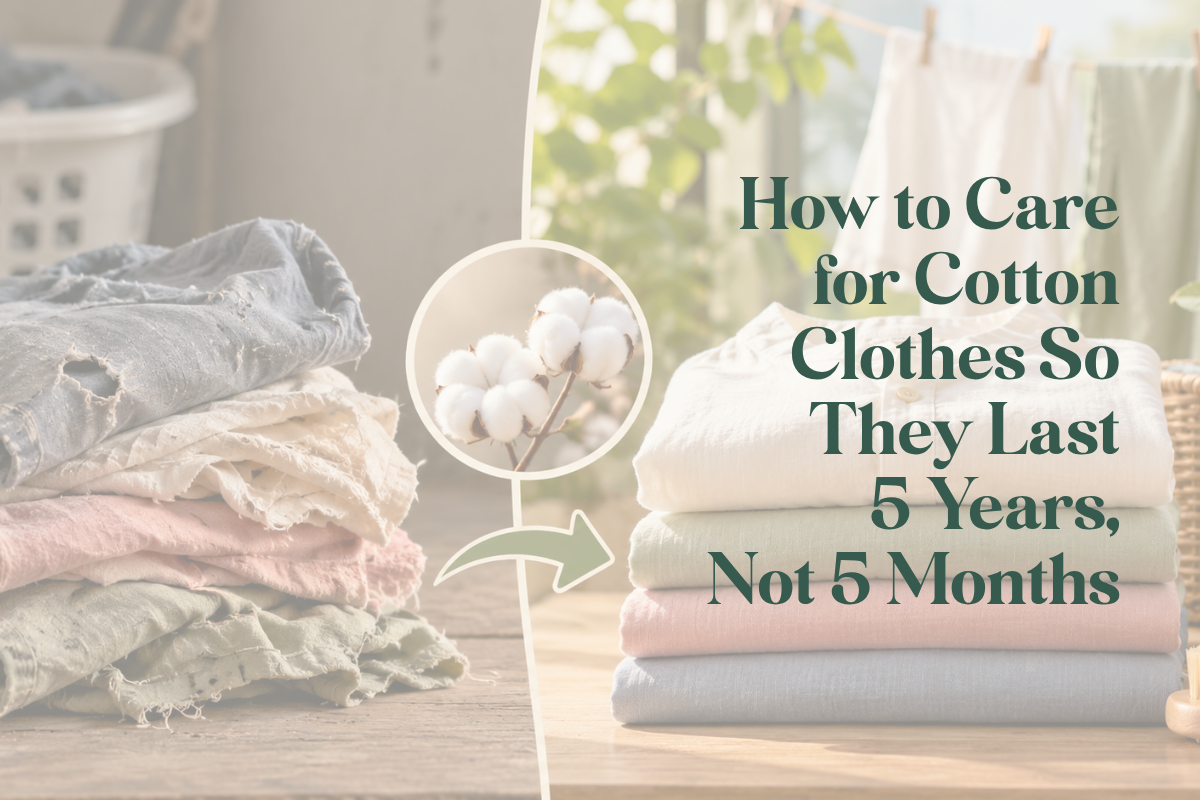
India generates an estimated one million tonnes of textile waste annually, and the proportion of that waste that is synthetic, and therefore non-biodegradable, is growing as fast fashion's dominance of the Indian market grows. The landfill burden of synthetic textiles is already significant and is on a trajectory to become much more so. Every natural fibre garment that displaces a synthetic one in a wardrobe is a small reduction in this burden. And every natural fibre garment that lasts five years rather than five months is a larger reduction still.
There is a dimension of polyester's cost to human health that extends beyond the microplastics in the food chain, and it begins with the people who make the fabric.
The production of polyester and other synthetic fabrics exposes textile workers to a range of chemical hazards: dyes and fixatives that are carcinogenic or endocrine-disrupting, finishing agents that off-gas volatile organic compounds, and solvent residues in fabric that persist into the finished garment. Studies of textile workers in synthetic fabric production facilities have found elevated rates of certain cancers and respiratory conditions linked to sustained chemical exposure.
The chemical story does not end at manufacture. Many synthetic garments are treated with finishing chemicals, flame retardants, anti-wrinkle treatments, and antimicrobial coatings that can remain on the fabric surface and be absorbed through skin contact, particularly when the fabric is warm. Formaldehyde-based anti-wrinkle treatments have been found in garments sold across price ranges and geographies. The regulatory environment governing these residues in clothing is inconsistent, and in many markets essentially absent.
None of this is to say that wearing a polyester garment is acutely dangerous in the way that, for example, ingesting a pesticide is. The risks are diffuse, chronic, and cumulative rather than immediate. But they are real, and they fall hardest on the people least able to avoid or mitigate them: the factory workers who make synthetic fabrics every day, and the consumers who cannot afford to choose differently.
The good news is that the alternatives to polyester are not obscure or difficult to find. They are the fabrics that clothed humanity for thousands of years before petroleum-based synthetics existed, and they remain widely available, affordable, and, in the Indian context, culturally deeply appropriate.
Cotton is the most obvious and most versatile alternative. It is breathable, biodegradable, soft against skin, and capable of being woven into a remarkable range of textures and weights. Fine cotton, the kind used in high-quality everyday basics, softens with washing rather than degrading, maintains its colour better than polyester with correct care, and feels better on the skin in warm weather by a margin that is not subtle. In India, where the climate makes breathability a genuine daily necessity rather than a luxury preference, cotton is not merely a preference; it is the logical default.
A cotton-linen blend is a step up in structure and formality without sacrificing breathability. Linen, like cotton, is a natural plant fibre, derived from the flax plant, that is biodegradable and produced without the petrochemical inputs of synthetic fabric. Linen has a slightly crisp, textured quality that makes it look polished and feel cool simultaneously. Cotton-linen blends combine the softness of cotton with the structure and natural variation of linen, producing a fabric that ages beautifully and wears well across seasons.
Mulmul, fine muslin cotton, is the Indian subcontinent's great gift to hot-weather dressing. It is so loosely woven and finely spun that it is almost translucent and almost weightless, providing coverage without adding perceptible warmth. It is the fabric of Indian summers, and it has been for centuries. The fact that it has been largely displaced in the everyday market by polyester chiffon and synthetic georgette, which mimic its lightness visually while delivering none of its breathability, is one of the quieter losses of the fast fashion era.
Kota doria, chanderi, and other traditionally Indian lightweight weaves are similarly excellent alternatives for those who want the formal quality of a fine fabric without synthetic content. These are fabrics made on handlooms by skilled weavers, in natural fibres, in traditions that stretch back centuries. They are available at a range of price points, and they wear in a way that no synthetic fabric can replicate.
At The Good Artisan, we have never used polyester. This is not a marketing position; it is simply how we started and how we have stayed. Everything in our collection is made in natural fibre, because that is the only category of fabric we believe is appropriate for everyday Indian ethnic wear.
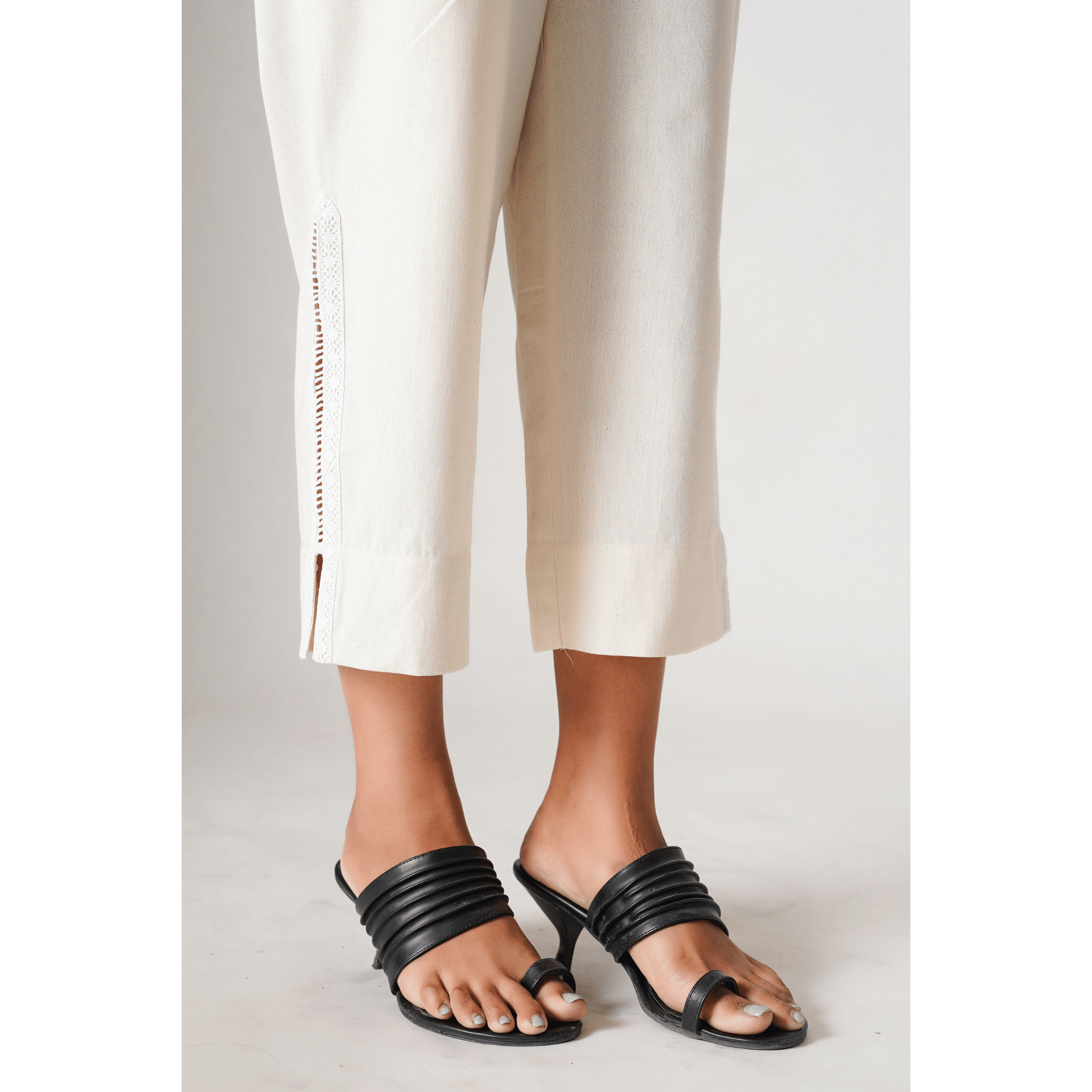
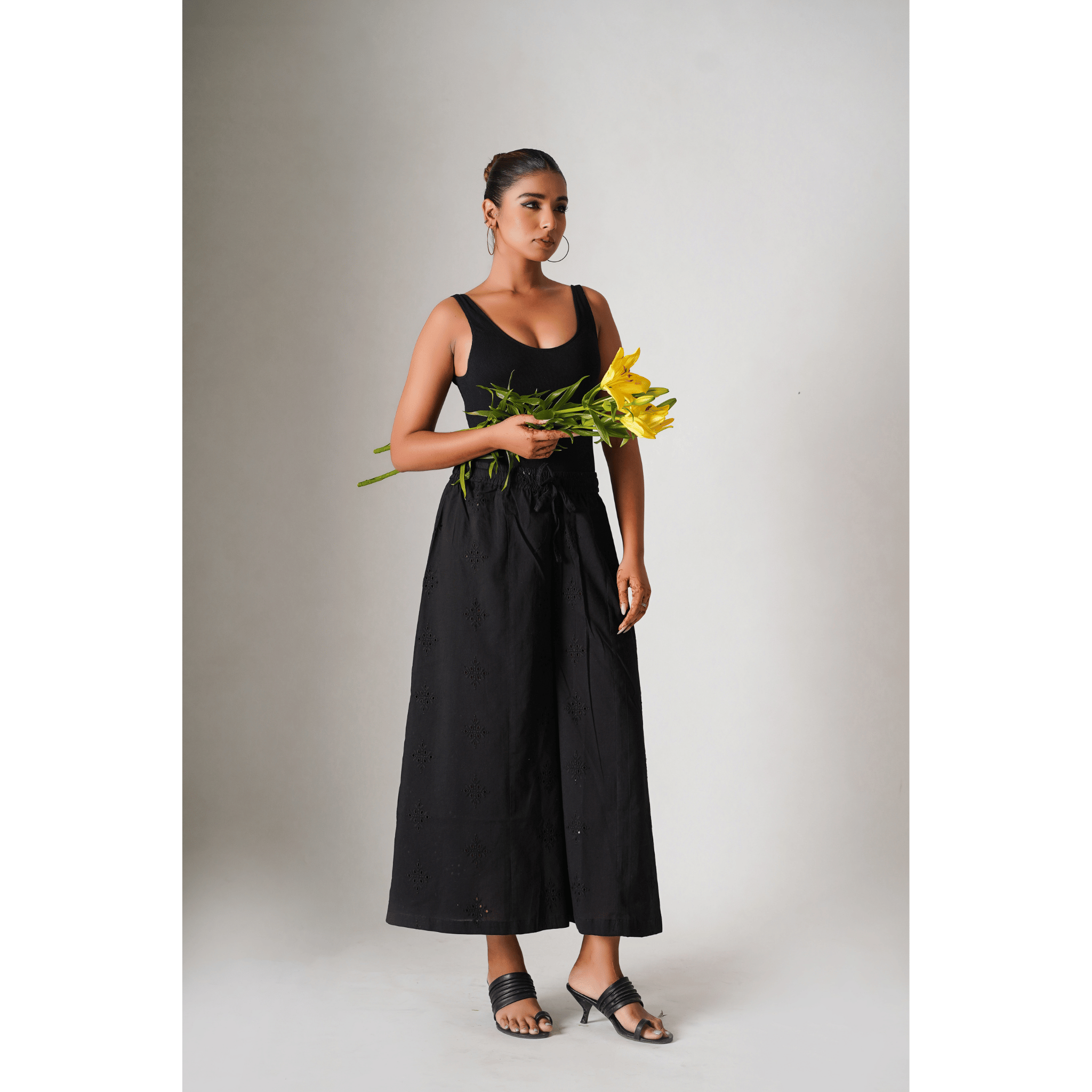
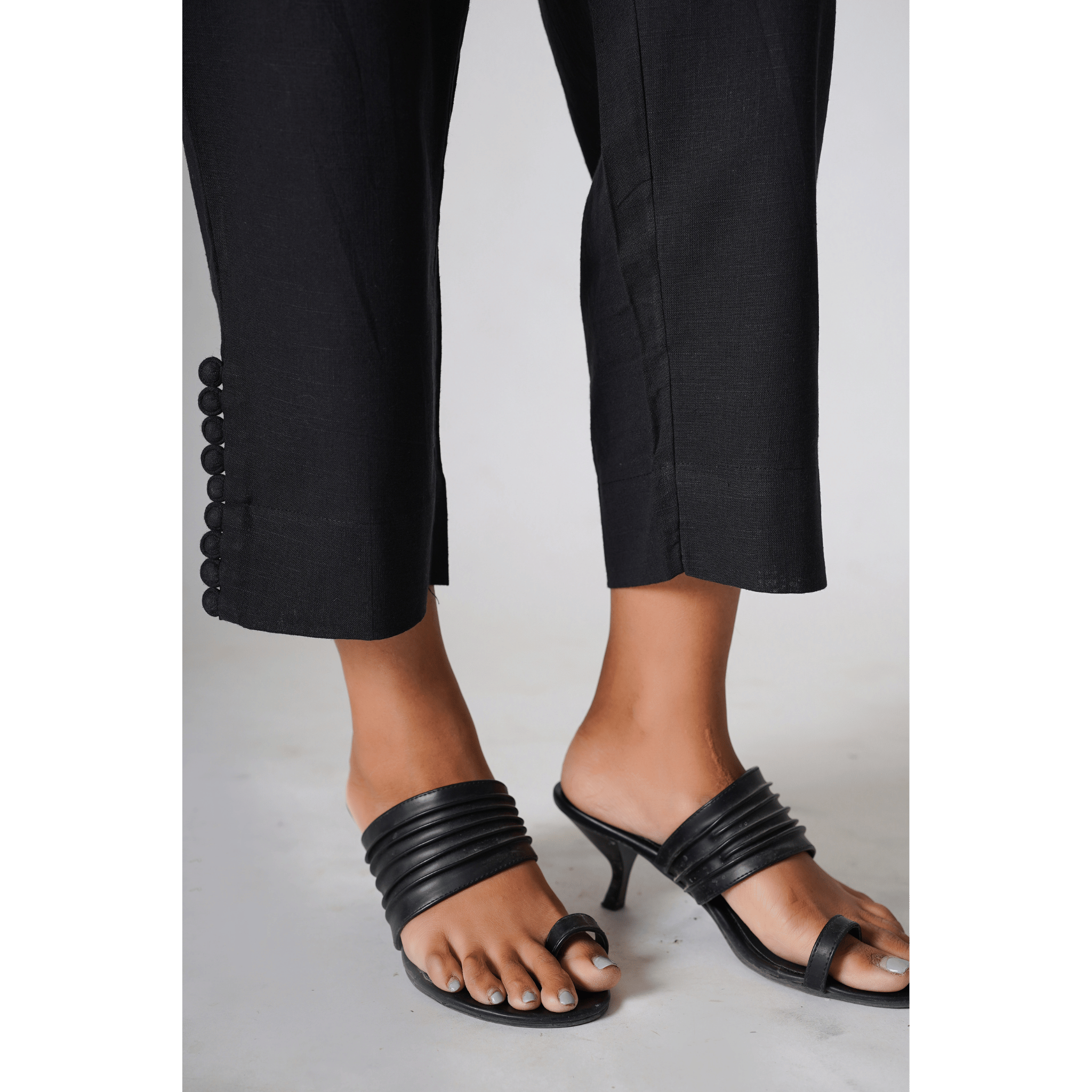
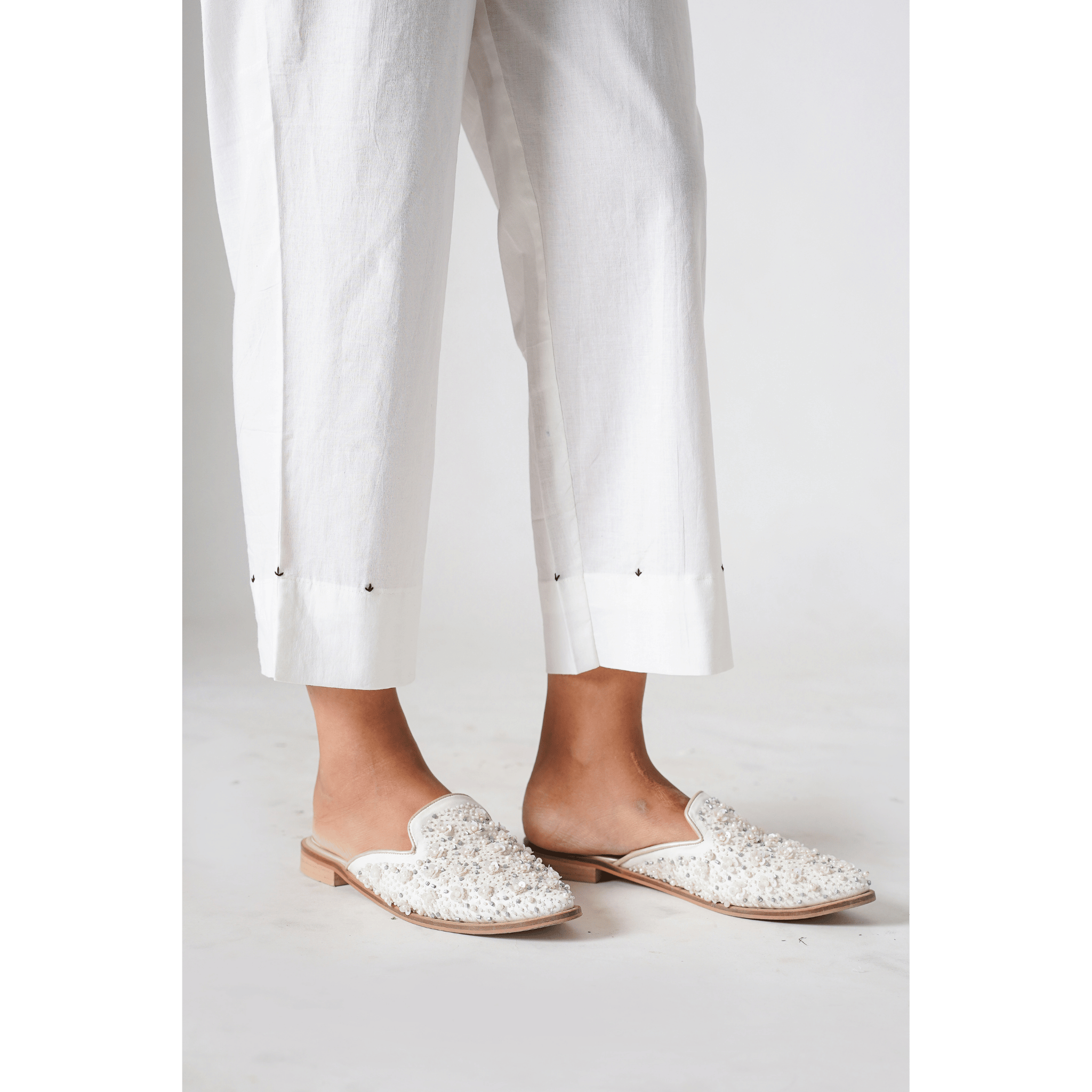
Our cotton basics, the Classic Black Cotton Pants, the Arabis White Cotton Pants, the Dahlia Wide-Legged White Cotton Pants, and the Oyster White Cotton Summer Pants, are made in 100% breathable cotton that gets softer with every wash, does not trap heat against the skin, and will biodegrade at the end of its useful life. These are not qualities you get from a Rs. 299 synthetic alternative. They are what cotton does, when cotton is made well.
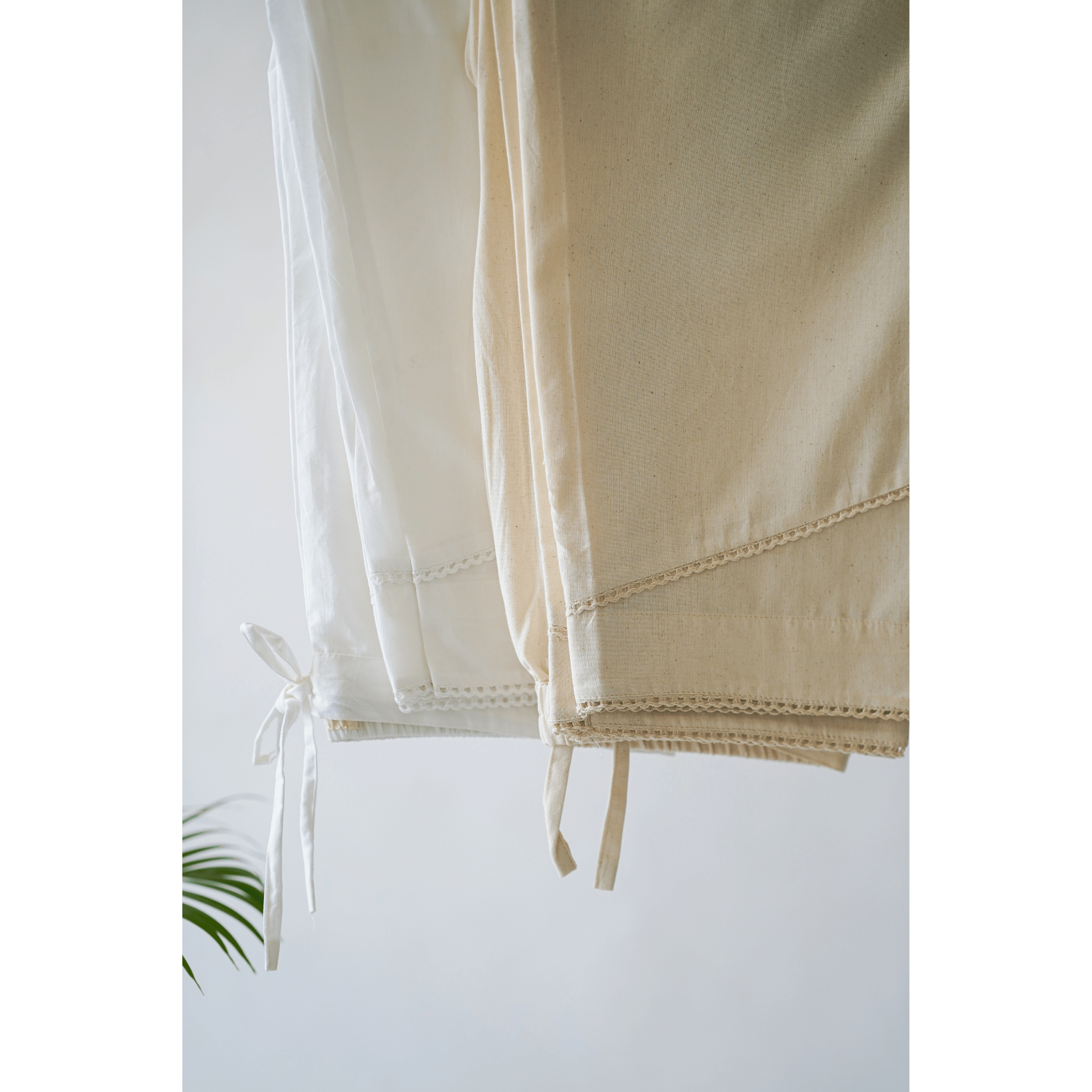
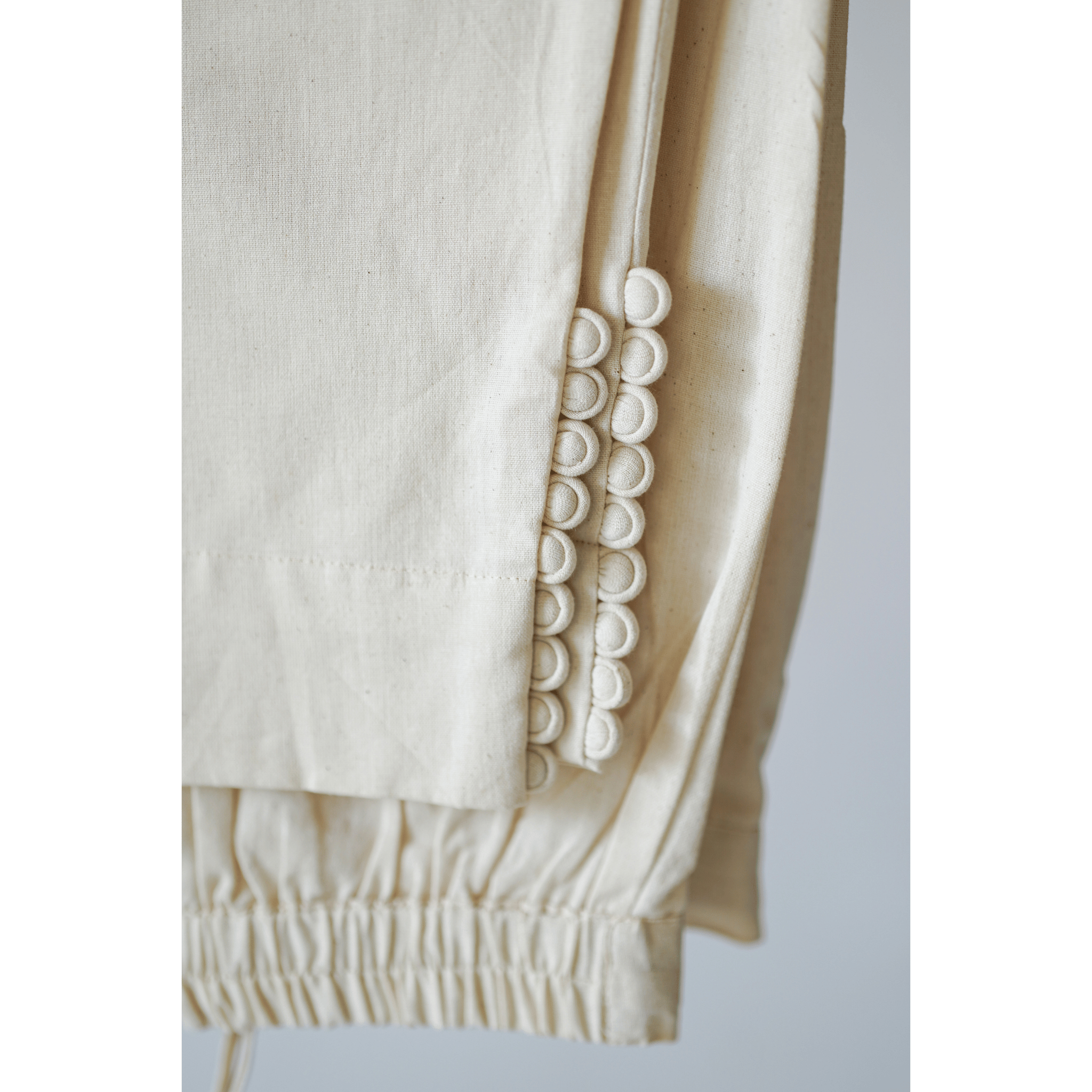
Our cotton-linen range, the Ajmer Cotton Linen Beige Pants, the Ayanna Cotton Linen Beige Pants, and the Bikaner Cotton Linen Beige Pants, offers the structure and elegance of linen combined with the softness of cotton, in natural fibre that is as appropriate for a working day as it is for a festive evening. The lace detailing on the Ajmer is hand-finished, and the fabric itself has the slightly textured, honest quality that only a natural weave can produce.
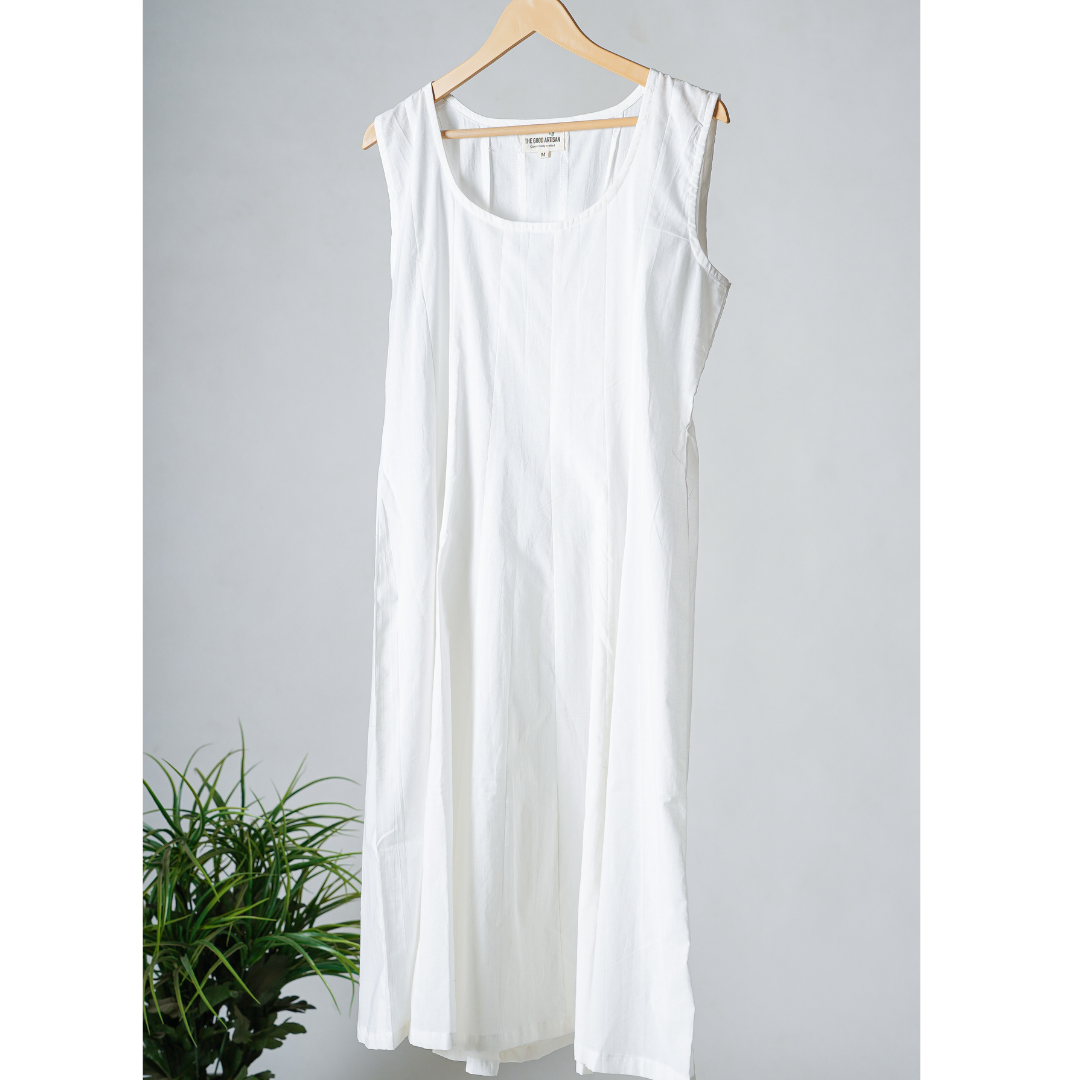
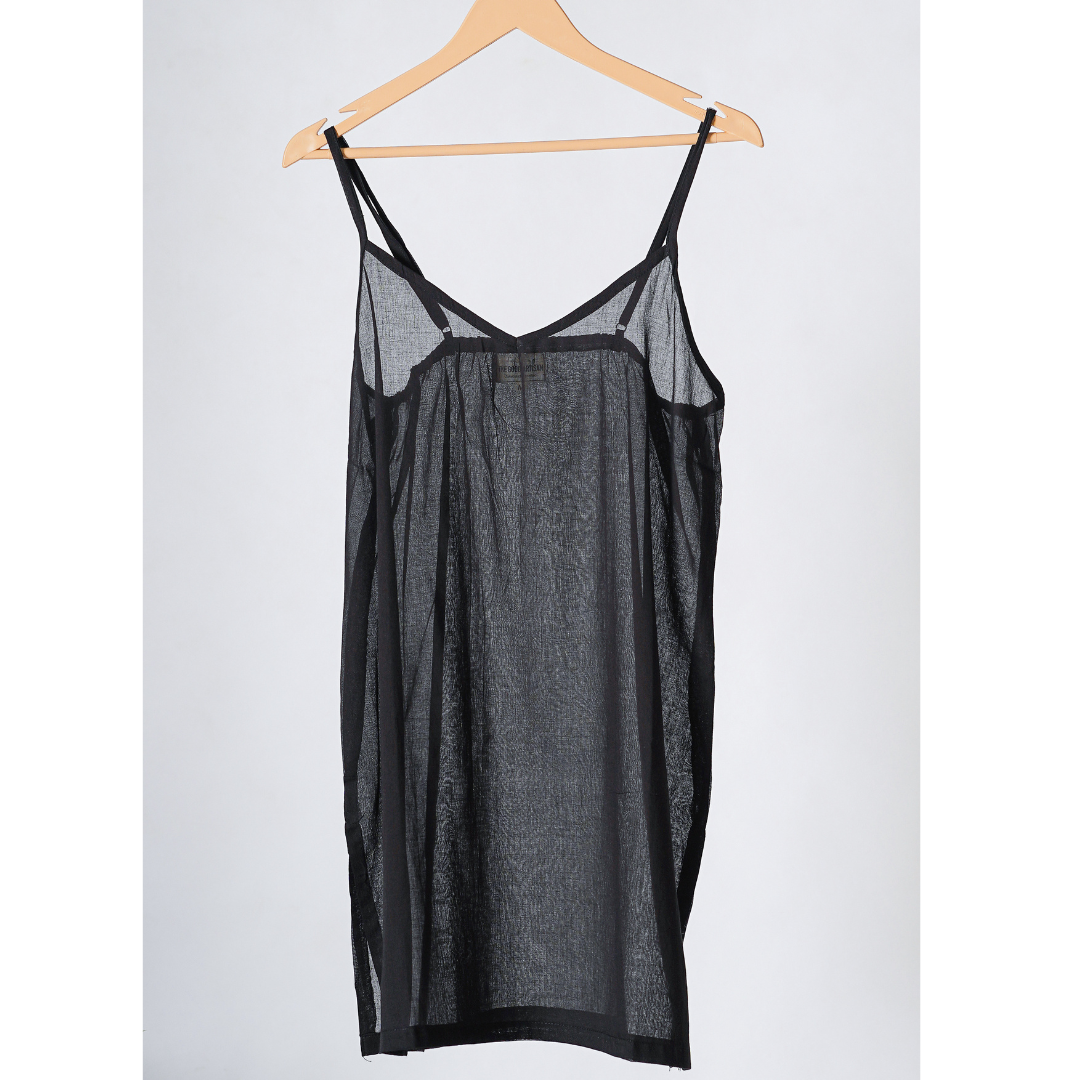
Our mulmul range, the Sahaba Black Mulmul Dhoti Pants, the Khejdi White Mulmul Dhoti Pants, and the mulmul cotton slips, is made in genuine mulmul: the real thing, not synthetic chiffon. The difference in how it feels against the skin in a Jaipur summer is not small. It is the difference between a fabric that breathes with you and one that seals you in.
For festive and embellished pieces, the Jaipur Gotta-Patti Black Cotton Pants, the Siyah Black Scalloped Pants with their pearl detailing, the Northern Lights Black Cotton Pants with pintuck finishing, the base fabric is always natural. The embellishment is added to something that has integrity as a garment in its own right, not to a cheap synthetic shell designed to hold a decoration for a season.
All of our pieces are priced to be accessible. The point is not to make natural fibre a luxury only available to those who can pay a premium for it. It is to make it the default, the obvious choice, at a price point where the comparison with synthetic alternatives is genuinely possible.
Here is the arithmetic that fast fashion never shows you. A synthetic kurta at Rs. 299 that you wear eight times before it degrades, fades, or pills beyond reasonable use costs you approximately Rs. 37 per wear. A cotton kurta at Rs. 999 that you wear sixty times over two years costs you approximately Rs. 17 per wear. The cotton kurta is two-thirds cheaper per use, in addition to being better for the environment, kinder to your skin, and made without the petrochemical footprint of the synthetic alternative.
This is before you account for the external costs of the synthetic garment, the microplastic pollution from its washing, the carbon emissions from its production, the landfill burden of its disposal, which are real costs, just not ones that appear on your receipt. If those costs were internalised into the price of synthetic clothing, as economists argue they should be, the price comparison would look very different. The Rs. 299 kurta would not be Rs. 299.
The calculation is not complicated. The cheap thing is not always the cheap thing. And the expensive thing, made in natural fibre, made to last, made by people paid fairly for their work, is often, in the fullest accounting, the affordable one.
Nobody is asking for perfection. Most people's wardrobes already contain synthetic garments, and throwing them out would create waste of its own. The goal is not a sudden total reinvention of what you own. It is a gradual shift in what you choose next - a preference, developed over time, for natural fibre over synthetic; for something made to last over something made to be replaced; for a garment whose full cost you can live with over one whose full cost is simply hidden from you.
That shift begins with knowing what polyester is, where it comes from, what it does while you wear it, and where it goes when you are done with it. Most people, once they know, find that the cheap clothes stop looking quite as cheap.
And the cotton ones - soft, breathable, honest, lasting- start looking like exactly what they always were: the obvious choice.
Explore The Good Artisan's complete collection of 100% natural-fibre clothing at www.thegoodartisanstore.com
Made in India · Mindfully Crafted · Natural Fabrics Only · Artisan Wear · Jaipur, Rajasthan