Cart
0
You may also like


There is a particular feeling that comes from holding a well-made piece of Indian handcrafted clothing. It is different from holding something that came off a factory line, even a good factory. The difference is not always easy to articulate, but it is always easy to feel. There is a weight to it, a consideration, a sense that someone's hands knew what they were doing when they made it. That feeling is not nostalgia and it is not romanticism. It is the natural response to encountering real skill.
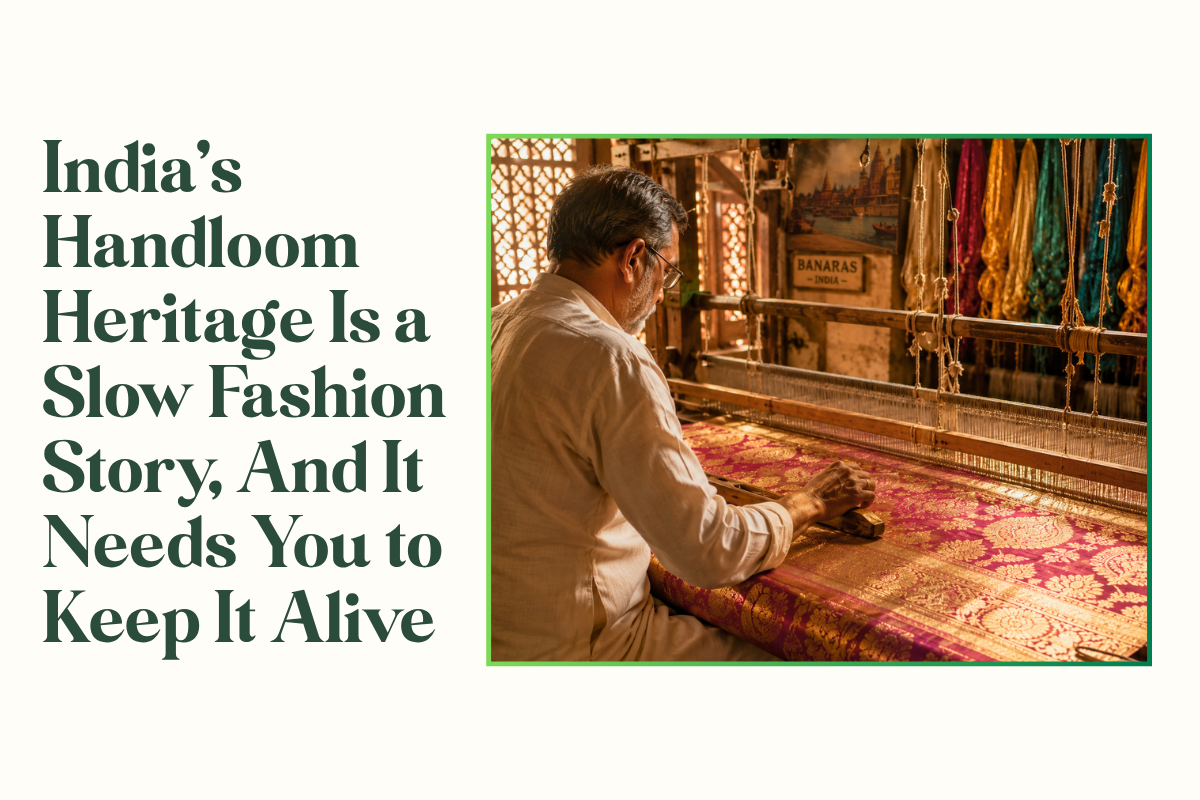
India is home to one of the oldest and most diverse textile traditions in the world. Block printing in Rajasthan, chikankari embroidery in Lucknow, ikat weaving in Odisha and Telangana, kalamkari in Andhra Pradesh, kantha in Bengal, bandhani tie-dye across Gujarat and Rajasthan, these are not folk relics preserved in museums. They are living crafts, practiced today by communities of skilled artisans who have spent years, often decades, learning to do what they do. And they are, without exaggeration, in danger.
The conversation about artisan-made clothing in India matters now more than it ever has. Not because the crafts are dead, they are not, but because the conditions that allowed them to flourish are being steadily eroded by the logic of fast fashion, which values speed and cheapness above everything else that a garment might be. This blog is about why that matters, what is at stake, and what it means in the most practical and personal terms to choose differently.
The phrase has become something of a marketing word, applied loosely enough that it has started to lose its meaning. An "artisan" label on a product does not, by itself, tell you very much. So it is worth being specific about what genuine artisan-made clothing involves, and why it is different from what most of us buy most of the time.
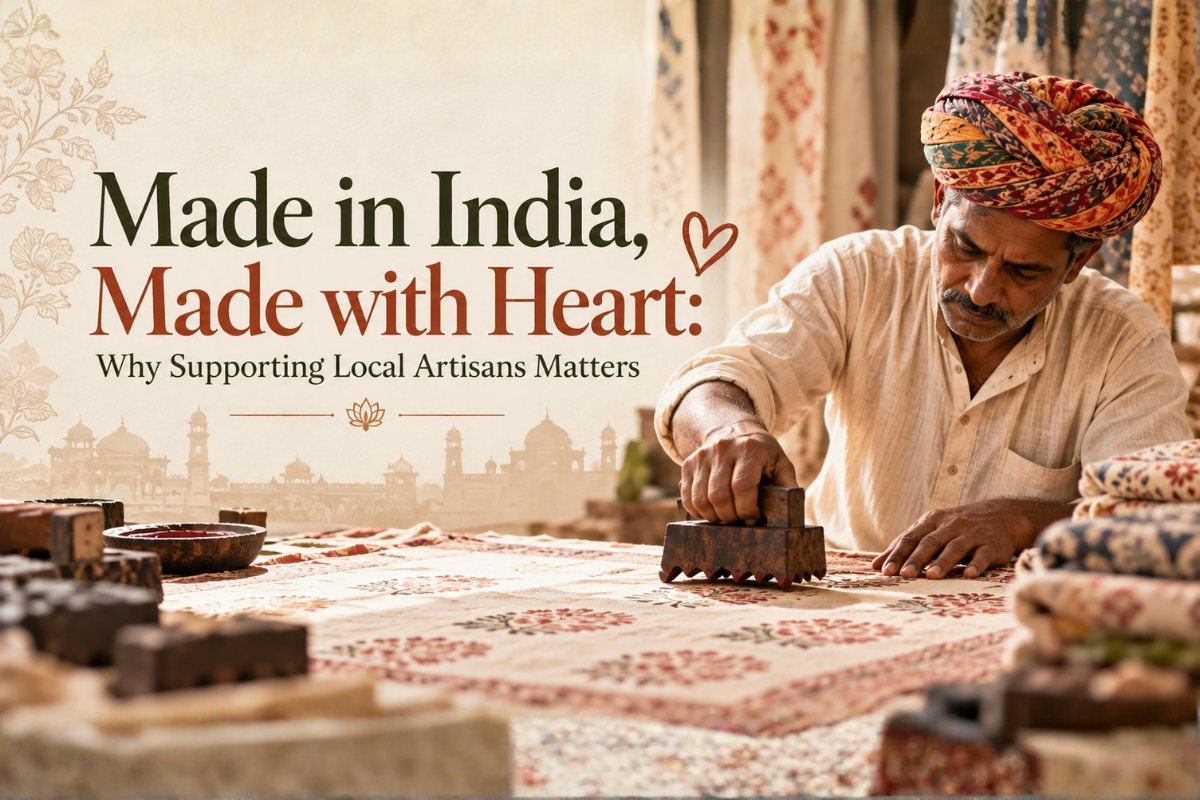
Artisan-made clothing is clothing where a skilled human being, not a machine, has performed the central act of making. This might mean a weaver on a handloom creating the fabric itself from thread. It might mean an embroiderer adding chikankari or gotta-patti detailing by hand, stitch by careful stitch. It might mean a block printer applying a carved wooden block to fabric repeatedly across a full length of cloth, aligning each impression by eye. It might mean a tailor cutting and assembling a garment according to a pattern they have refined through years of practice.
In each case, the essential quality is this: a person's judgment, skill, and time are embedded in the object. The outcome cannot be exactly replicated by a machine, and no two pieces from the same hand are ever perfectly identical. This is not a defect. It is evidence of the human origin of the thing.
The contrast with factory-produced clothing is not merely aesthetic. A factory garment is the product of optimised efficiency, the goal is to produce as many identical units as possible at the lowest possible cost per unit. An artisan garment is the product of something closer to the opposite: the goal is to produce something correct, something beautiful, something that will last. The two approaches produce different objects, even when they look superficially similar. And they produce different effects on the people doing the making.
When you buy a piece of handcrafted clothing from an Indian artisan or an artisan-backed brand, the economics work very differently from buying something mass-produced. A larger share of the price you pay goes directly to the person who made it, or to the small community workshop they are part of, rather than to a global supply chain optimised to extract value at every step.
This matters for a reason that goes well beyond individual purchases. India's handloom and handicraft sector employs approximately seventy lakh people directly, making it one of the largest sources of employment in the country after agriculture. The overwhelming majority of these workers are women, and a significant proportion are from rural communities where alternative employment is limited or unavailable. When this sector contracts, when fewer people buy handcrafted and handwoven goods, the impact is not absorbed evenly. It falls most heavily on the people who are already most economically vulnerable.
Fast fashion has not created this problem entirely on its own, but it has accelerated it dramatically. When a machine-made synthetic kurta sells for Rs. 299 and a hand-embroidered cotton one sells for Rs. 1,200, most buyers default to the cheaper option without thinking very hard about why the price difference exists. The cheaper price is not a miracle of efficiency. It is the result of paying less, sometimes far less, at every point in the chain, including to the person who actually made the garment. The real cost of the Rs. 299 kurta is simply being paid by someone who is not you, in a currency that never shows up on any receipt.
Choosing artisan-made clothing is not a solution to structural economic inequality. But it is a choice that participates in a different kind of economy, one where the value of skill is acknowledged, where the time it takes to make something well is factored into the price, and where the maker receives something closer to a fair return for their work.
Jaipur holds a particular place in India's textile story. The city has been a centre of craft production since the Mughal era, when it became known for its fine block printing, its gem-quality dyeing, and the remarkable skill of its textile artisans. The Pink City's colour is not merely architectural, it runs through the fabric of its economy and culture in the most literal sense.
Bagru and Sanganer, two towns on the outskirts of Jaipur, remain active centres of hand block printing. The craft families there have been printing cloth for generations, using carved wooden blocks and natural dyes in processes that have changed very little in centuries, because they did not need to. Gotta-patti, the metallic ribbon trim that characterises so much festive Rajasthani clothing, is made and applied by hand by specialist craftspeople whose skill is highly specific and not easily transferred. Bandhani tie-dye, though more broadly associated with Gujarat, has a significant tradition in Jaipur as well, practiced by communities of craftspeople who tie each tiny knot by hand before dyeing.
The sheer density of textile skill in and around Jaipur is extraordinary, but it is not immune to the pressures that have diminished craft traditions elsewhere. The younger generation in craft families sometimes chooses not to learn the family skill, because the economics of handcraft do not always make the case for themselves clearly enough against the alternatives available in a growing city. The workshops that remain active depend, more than they have in the past, on consumers who understand what they are buying and are willing to pay for it.
This is the context in which brands that work directly with Jaipur's artisan communities operate. And it is the context in which The Good Artisan was built.
There is something else at stake beyond economics, and it is harder to quantify but no less real. The textile traditions of India are not merely methods of making cloth. They are repositories of cultural knowledge, of aesthetic sensibility, of symbolic vocabulary, of ways of understanding and representing the natural world that have been accumulated over centuries. When a block-print tradition disappears because its practitioners can no longer earn enough from it to sustain their families, that is not merely a business failure. It is a form of cultural loss.
This is not a melodramatic claim. Across the world, craft traditions that were once living and widely practiced have been reduced to museum exhibits within the span of a single generation. India has lost several textile traditions already, weaves and embroidery styles that exist now only in archival photographs and the memories of the very old. The ones that survive today survive partly because of sustained consumer interest in what they produce.
Cultural pride in the context of fashion is not about nationalism or exclusivity. It is about recognising that the clothes you wear can carry meaning beyond their practical function, that a garment made using a technique developed over generations in your own cultural context connects you, however lightly, to that context. A block-printed cotton pant is not merely a pant. It is evidence of a way of seeing that someone in Jaipur or Bagru spent years learning to express through the medium of cloth. Wearing it is a small participation in that continuity.
The conversation about artisan-made clothing and the conversation about sustainable fashion are often held separately, but they belong together. They make the same argument from different angles.
Artisan-made clothing in natural fibres is almost inherently more sustainable than factory-produced synthetic fashion. The fibres are biodegradable, cotton, linen, mulmul, silk, and do not contribute to the microplastic pollution that every wash of a synthetic garment releases into water systems. The production volumes are lower, which means less waste at the manufacturing stage. The garments are made to last rather than to be replaced quickly, which means their environmental cost per wear is dramatically lower than that of fast fashion. And the communities that produce them tend to be embedded in local economies rather than global supply chains optimised for extraction.
None of this requires you to think of artisan-made clothing as a sacrifice. A well-crafted cotton kurta or pant is not a virtue purchase made in spite of quality, it is a quality purchase that happens to also be a virtue. The two things align, and it is worth being clear about that, because the sustainable fashion conversation sometimes implies that choosing ethically means accepting something lesser. It does not. It means choosing something better, and knowing why it is better.
The Good Artisan was founded in Jaipur because Jaipur is where the skill is. Everything we make is crafted by artisans based in and around the city, people with genuine expertise in the fabrics and techniques that define the TGA collection. Our pieces are not produced in large anonymous factories. They are made in smaller workshop settings where the people doing the making can be identified, paid fairly, and credited for what they do.
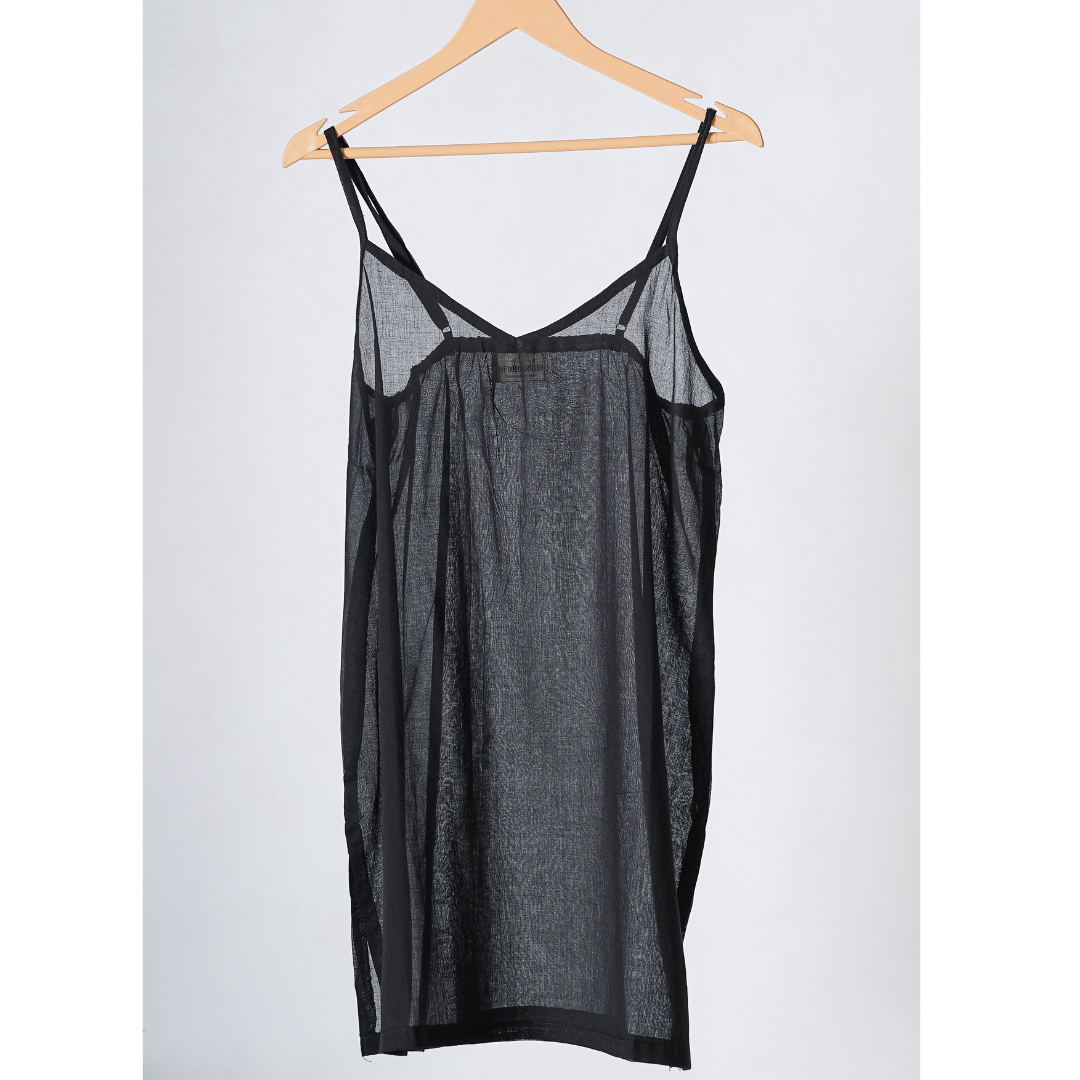
The fabrics we use are chosen because they are natural, breathable, and appropriate for the Indian climate and the Indian aesthetic. One hundred percent cotton is the foundation of the collection, soft, durable, biodegradable, and deeply embedded in the tradition of Indian everyday dress. Our cotton-linen blends bring structure and texture to styles where we want a slightly more formal quality without losing the ease of natural fibre. Mulmul, the ultra-fine, loosely woven cotton that is one of Jaipur's great contributions to Indian textile culture, appears in our dhoti styles and slip range, where its extraordinary lightness and softness are exactly what is needed.
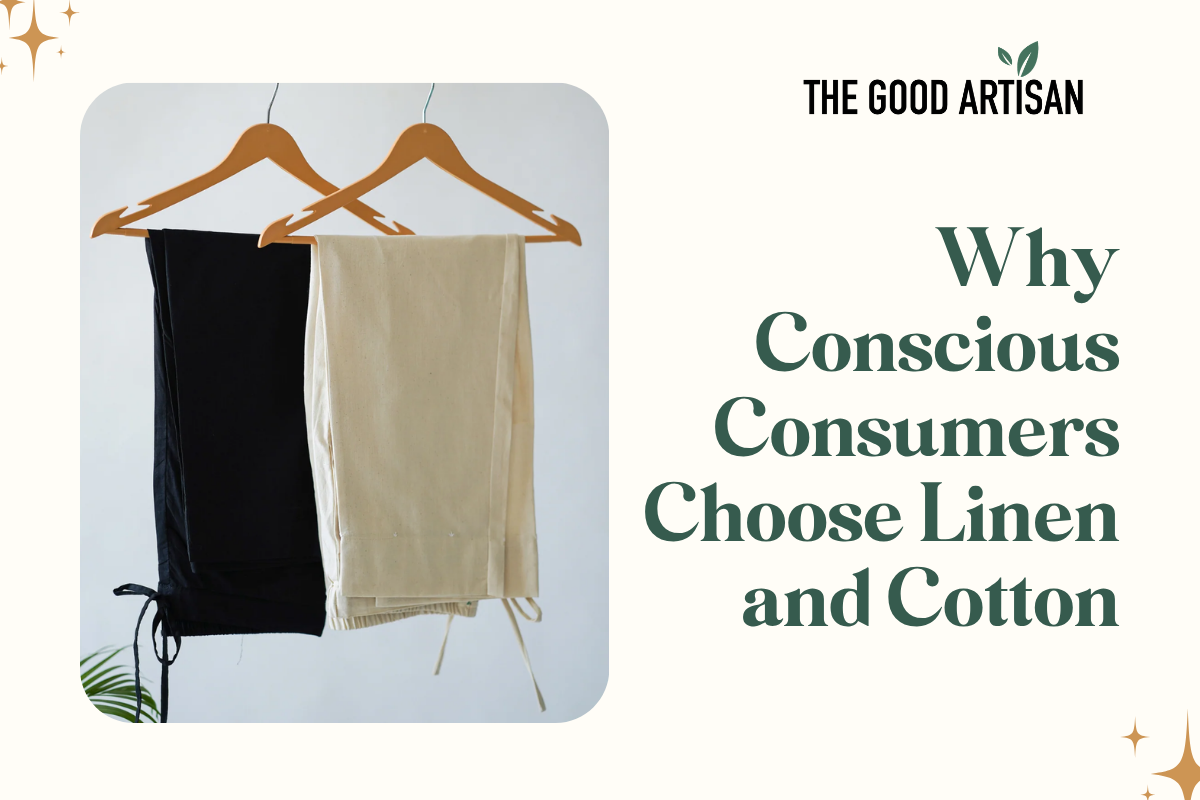
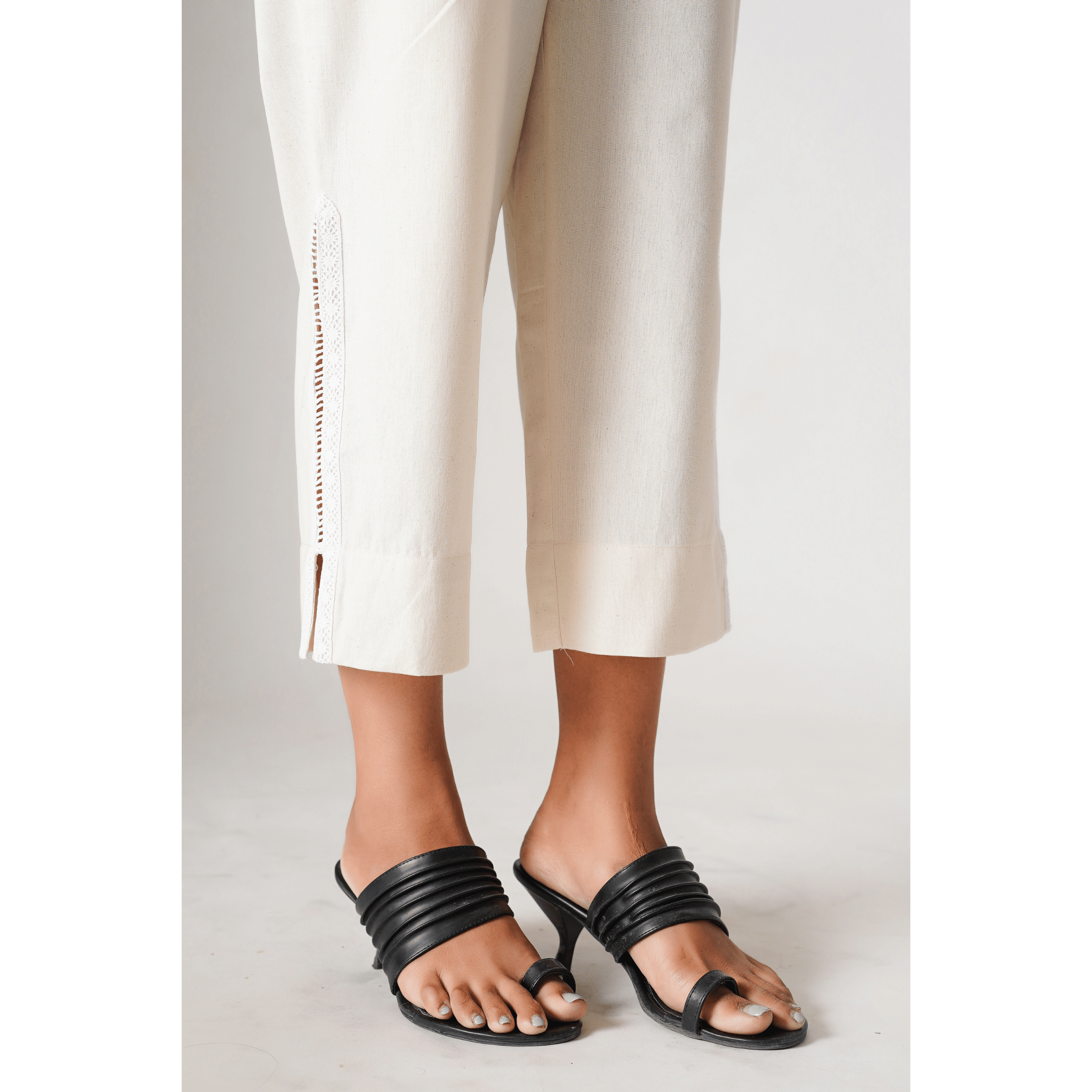
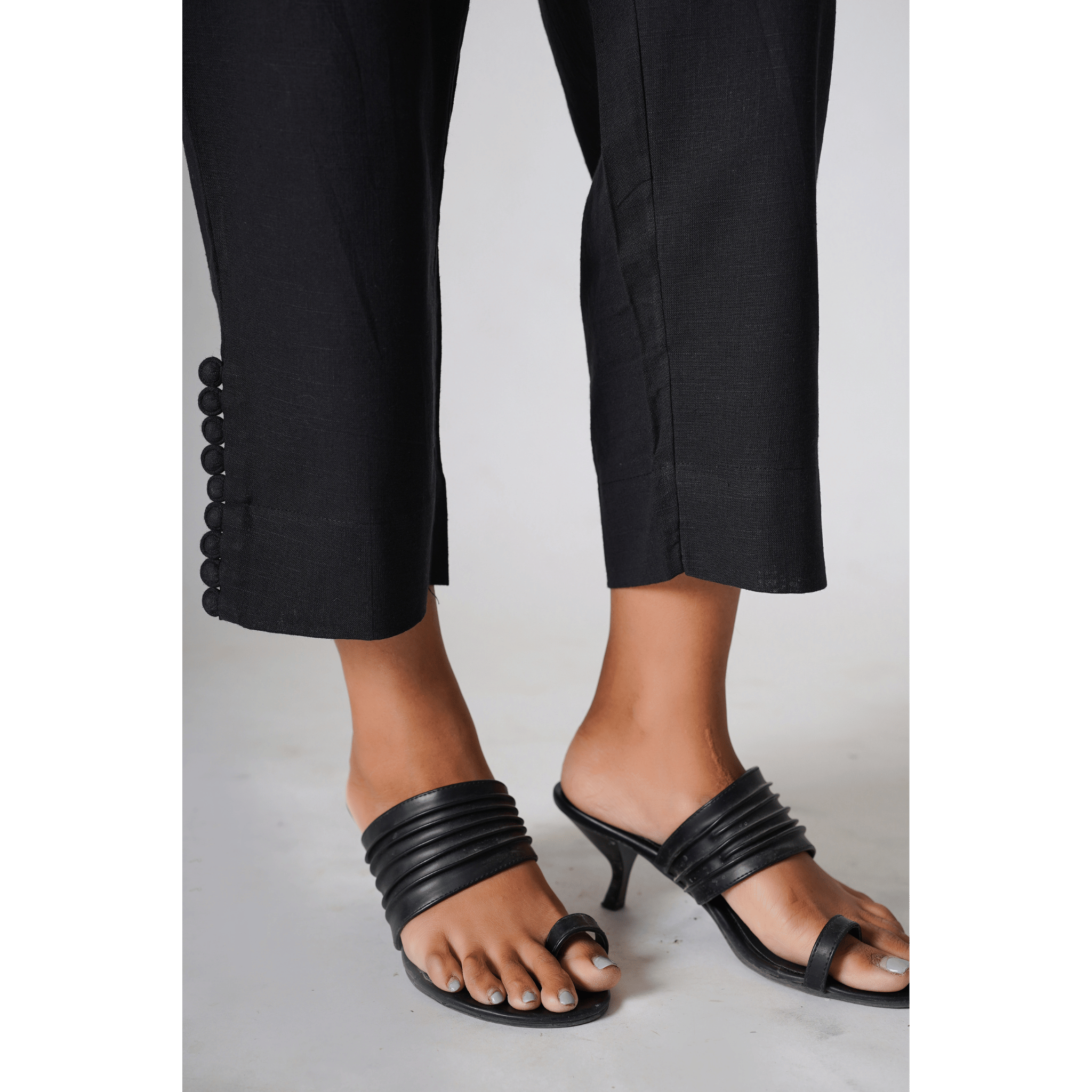
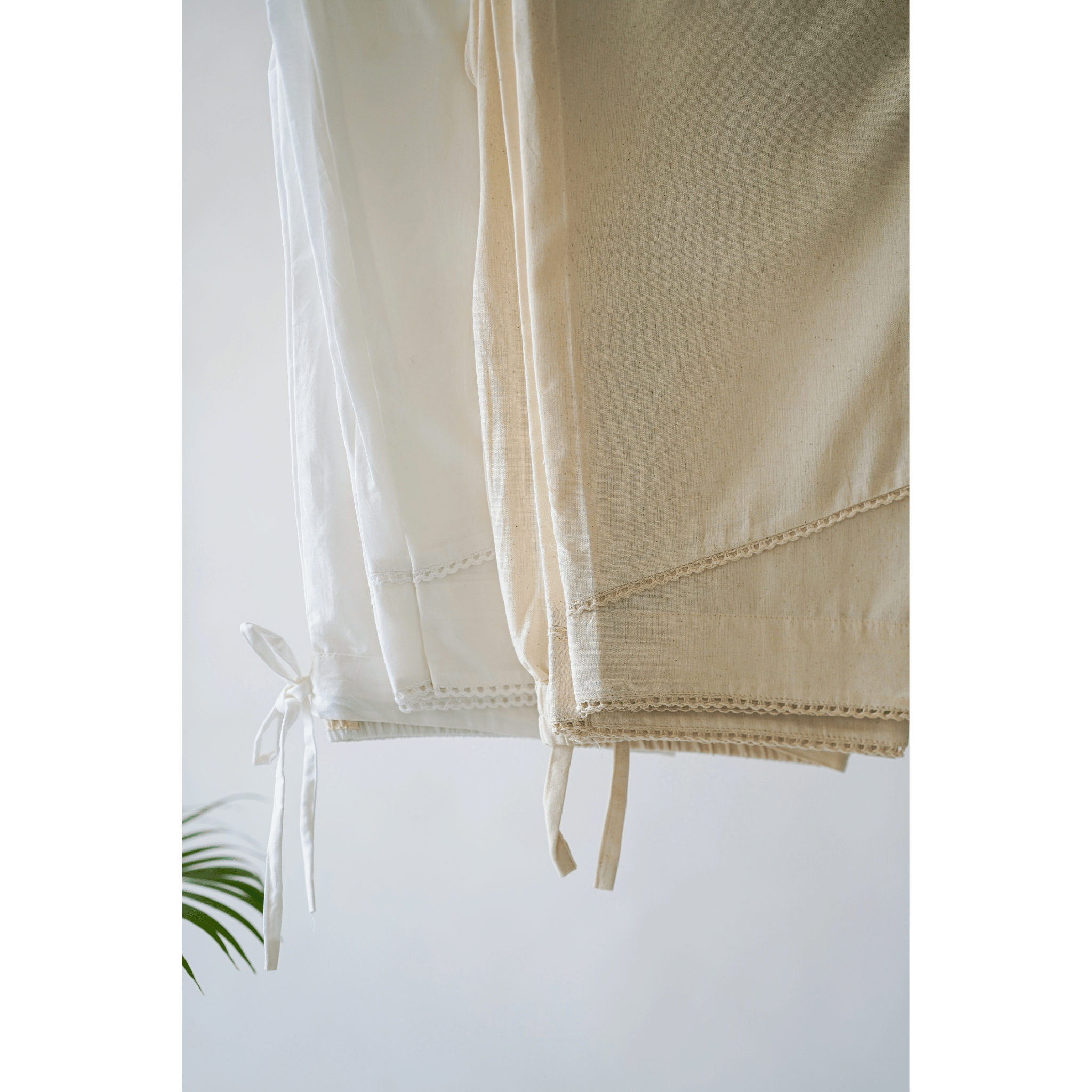
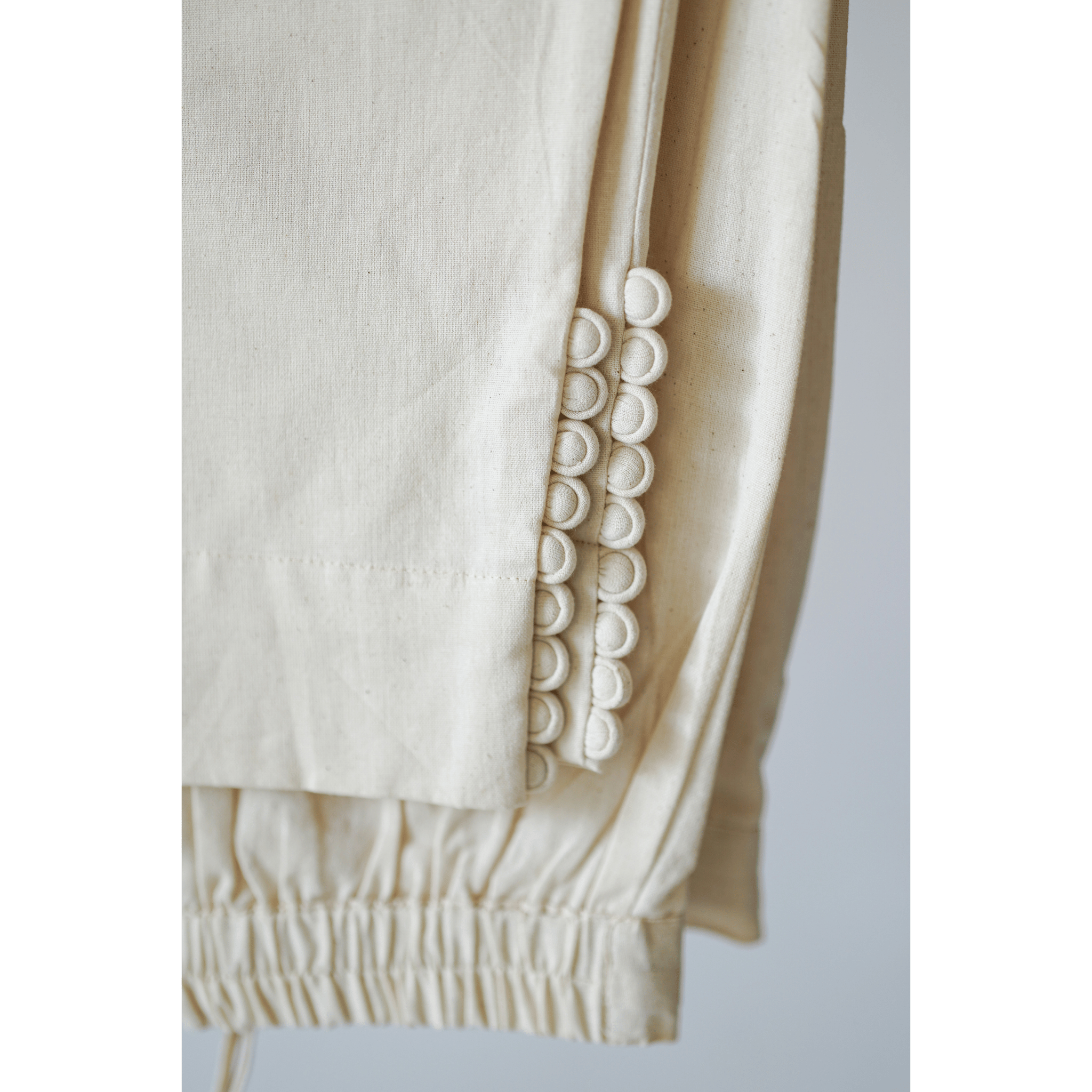
Within this material foundation, the artisan input is visible in the details that distinguish each piece. The scalloped edges on the Siyah Black Cotton Pants are finished by hand, and the pearl detailing along the scallop line is applied individually. The gotta-patti trim on the Jaipur Gotta-Patti Black Cotton Pants is applied by specialist craftspeople whose knowledge of working with metallic ribbon is specific and accumulated, it cannot be approximated by someone without it. The lace detailing along the hem of the Ajmer Cotton Linen Beige Pants is delicate work that requires both skill and patience, and it is the kind of detail that makes the pant look, when you receive it, like someone genuinely cared about the outcome.
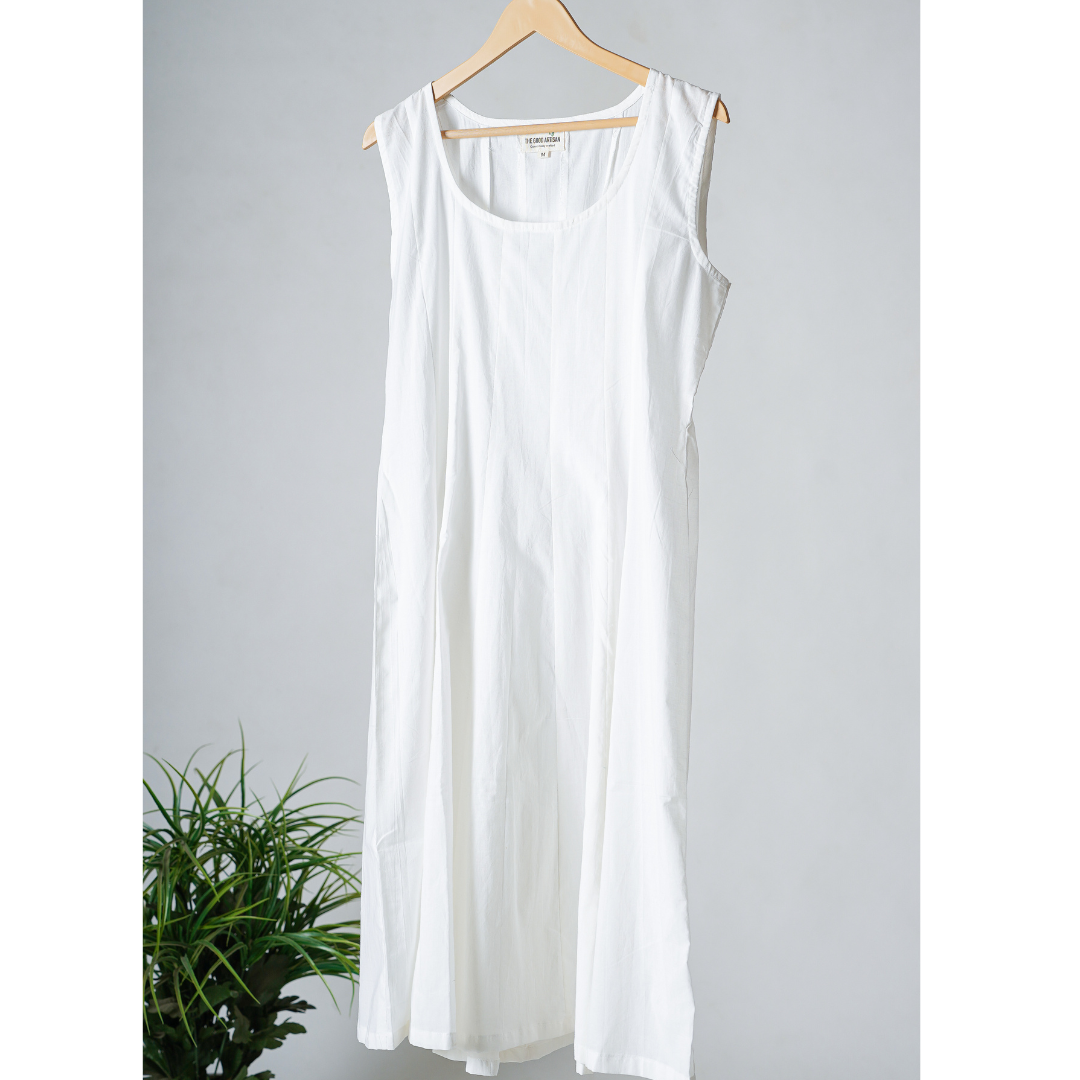
The pintuck detailing on the Northern Lights Black Cotton Pants, the Hakoba weave used in the Amara Black Cotton Palazzo, the kali cuts that give the Anarkali White Cotton Slip its distinctive flare and volume, each of these is evidence of the artisan input that differentiates a TGA piece from a mass-produced alternative. They are not decorative extras. They are what the garment is.
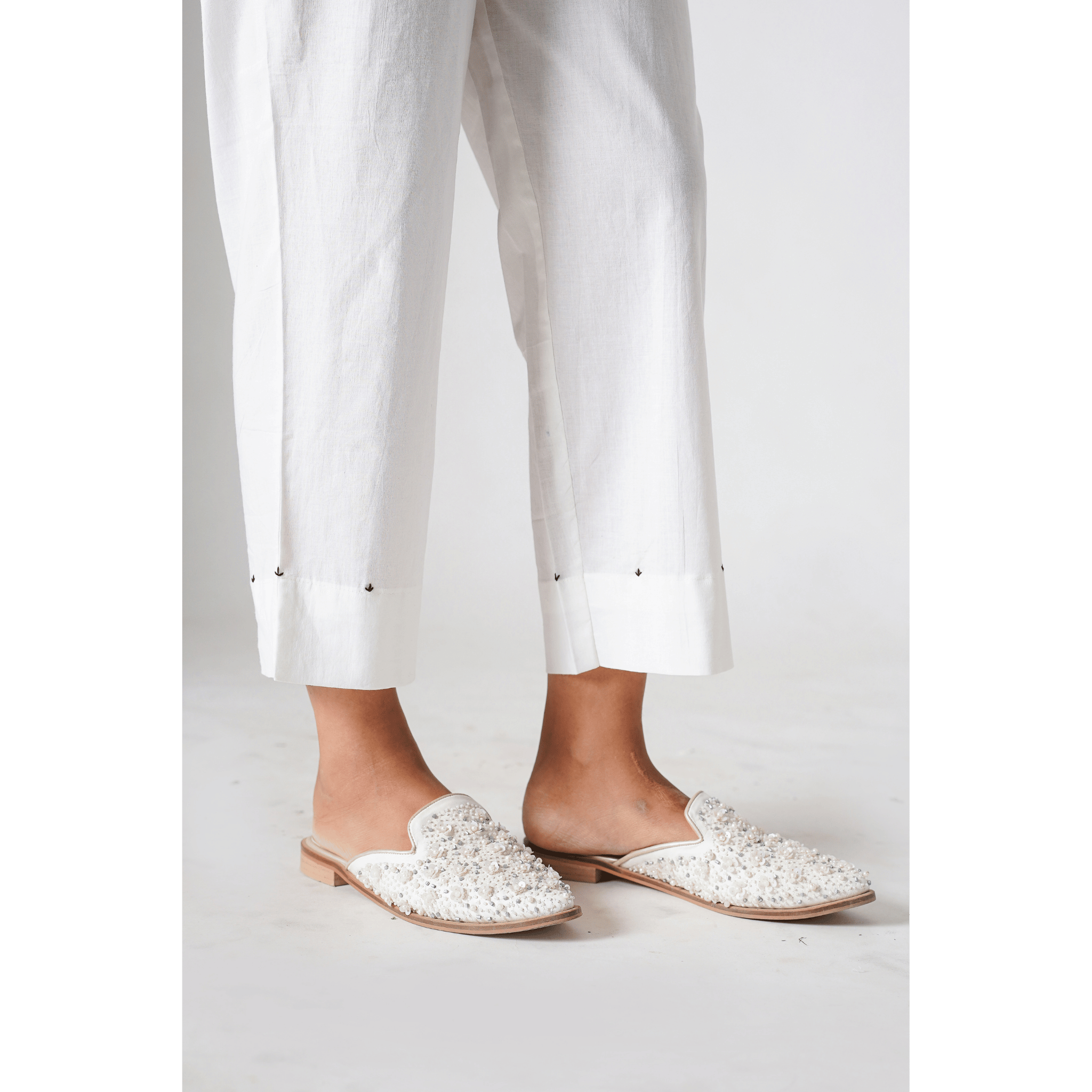
Our white cotton range, including the Arabis White Cotton Pants, the Classic White Cotton Pants, and the Snowdrop White Cotton Lace Pants, represents the simplest expression of this philosophy. There is no embellishment that distracts from the quality of the fabric and the care of the cut. The artisan's contribution is entirely in the making itself: in the selection and preparation of the cotton, in the precision of the stitching, in the finishing that makes the garment feel complete rather than merely functional. This is, in some ways, the hardest thing to do well, because there is nowhere to hide.
The beige cotton-linen range, the Ajmer, Ayanna, Bikaner, and Daisy pants, is where the material itself speaks most clearly. Cotton-linen blend has a natural, slightly textured quality that looks expensive without being elaborate. The artisans who work with it understand how it behaves, how it falls, how it changes from bolt to finished garment. That understanding is in the clothes.
It would be dishonest not to address this. Artisan-made clothing in natural fibres costs more than fast fashion. Not by as much as people sometimes assume, a basic TGA cotton pant starts below Rs. 1,000, which is accessible by any reasonable measure, but it costs more than the cheapest synthetic alternatives. It is worth understanding why, and whether that difference is justified.
The price of an artisan-made garment reflects several things that the price of a fast fashion garment deliberately erases. It reflects the cost of natural fibre rather than synthetic. It reflects the time of a skilled person who was paid fairly for their work rather than minimally. It reflects the smaller production run, which does not allow for the per-unit cost reductions available to mass producers. And it reflects the intention that the garment will be worn for years rather than months, which, if that intention is realised, means its actual cost per wear is lower than many cheaper alternatives.
This is not an argument that everyone should always pay more for clothing regardless of their circumstances. Budget is real and constraints are real. But for those who do have some flexibility in their clothing choices, the question is not whether artisan-made costs more. It is whether that cost is better distributed, between the maker and the buyer, between the current generation and the environment that future generations will inherit, than the cost of the alternative.
The argument that artisan-made clothing is worth the price is ultimately the same argument that any quality purchase makes: that it is better to own fewer things that last longer and were made with care than to own many things that do not. It is not a novel argument. But in the context of Indian craft traditions and the communities that sustain them, it carries a weight that goes beyond personal wardrobe logic.
Supporting local artisans does not require a wholesale reinvention of how you shop. It does not require a commitment to buying only handmade or spending more than you can afford. It requires, more than anything else, a shift in attention, a willingness to ask where something was made, by whom, in what materials, and under what conditions, before you decide whether to buy it.
It requires being willing to wait for a good thing rather than defaulting to an instant, cheap alternative. It requires looking at the details of a garment, the quality of the stitching, the feel of the fabric, the evidence of care in the finishing, and recognising those details as the sign of something worth having, rather than dismissing them as irrelevant to a utilitarian purchase.
And it requires recognising that the clothes you wear are not politically or culturally neutral objects. They come from somewhere. They were made by someone. They carry the consequences, economic, environmental, cultural, of the decisions that produced them. Buying from a brand like The Good Artisan is not a statement and it is not a performance. It is simply the decision to let those consequences be ones you are comfortable with.
The artisans of Jaipur are still here. The skills are still alive. The fabrics are still extraordinary. The question of whether they remain so, a generation from now, is partly a question of what Indian consumers choose to value, and to spend their money on, in the years between now and then.
There is a reason people keep coming back to the phrase "made with heart" when they describe genuine craft. It is not a sentimental expression. It is a description of something real: the fact that when a person makes something with skill and care, some quality of that care is transmitted into the object itself. You can feel it in the weight of a well-woven fabric, in the precision of a hand-finished hem, in the way a well-cut garment falls when you put it on for the first time.
This is what India's textile artisans have been producing for centuries. It is what The Good Artisan exists to bring to as many wardrobes as possible. And it is what every considered, conscious purchase of artisan-made Indian clothing helps to sustain.
That is not a small thing. It is, in fact, one of the most significant things a piece of clothing can be.
Explore The Good Artisan's full collection of artisan-crafted, natural-fibre clothing at www.thegoodartisanstore.com
Made in India · Mindfully Crafted · Artisan Wear · Jaipur, Rajasthan