Cart
0
You may also like

Something is shifting in the way Indian women dress. Not loudly, not all at once, and not because of a single trend cycle, but steadily, purposefully, and with the kind of conviction that does not reverse itself when the next season arrives. Women are looking at their wardrobes and asking a question that was not widely asked five years ago: what is this actually made of, and what did making it cost the world?
The answer, for a growing number of conscious consumers across India, has led them to the same two fibres: linen and cotton. Not because these are new discoveries, cotton has been woven in India for over four thousand years and linen has clothed civilisations across centuries, but because in a market saturated with polyester, viscose blends, and synthetic stretch fabrics dressed up in natural-sounding names, linen and cotton have come to represent something rarer than novelty. They represent integrity.
This is the story of why that shift is happening, what it means, and why the fibres your grandmother reached for without a second thought are the most forward-thinking choices you can make today.
To understand why linen and cotton matter, you have to understand what they are replacing.
The fashion industry is the second largest consumer of water and one of the most chemically intensive industries on the planet. A significant and growing proportion of that impact comes from synthetic fibres, polyester, nylon, acrylic, and their blends, which now account for the majority of global textile production. These fibres are derived from petrochemicals. They do not biodegrade at end of life. Every time they are washed, they release microscopic plastic particles, microplastics, into water systems, where they accumulate in aquatic ecosystems and eventually enter the human food chain. A single wash cycle of a synthetic garment can release hundreds of thousands of microplastic fibres.
In India, this problem is compounded by the speed at which synthetic fast fashion has penetrated the market. The same country that gave the world khadi, handloom cotton, and block-printed textiles is now one of the largest consumers of synthetic apparel. The price point of synthetic fast fashion makes it accessible; the volume at which it is produced makes it feel abundant. What it also makes it is disposable, and disposable, at this scale, means environmentally catastrophic.
Linen and cotton do not solve every problem in the fashion supply chain. But they solve this one: at end of life, they return to the earth. They biodegrade. They do not persist in landfills for centuries or fragment into microplastics that outlast every generation that wore them. This single fact, that natural fibres are part of a biological cycle rather than a petrochemical dead end, is the foundational reason that conscious consumers choose them.
Cotton is not a trend. It is a relationship between this land and its people that is older than recorded history. The Indus Valley Civilisation was spinning and weaving cotton over four thousand years ago, making India one of the earliest and most sophisticated cotton cultures the world has ever seen. When Mahatma Gandhi chose the spinning wheel as the symbol of India's independence movement, he was not reaching for an abstraction. He was reaching for the fibre that had clothed and employed India for millennia, and whose destruction by colonial textile policy had impoverished millions.
That history matters because it tells you something about cotton's relationship to this climate and this culture. Indian cotton has been selected, cultivated, and woven over thousands of years to perform in Indian conditions. It breathes in Indian heat. It absorbs Indian monsoon humidity. It survives Indian washing habits, the vigorous hand wash, the hard water, the sun drying on a terrace in forty-degree heat, and comes out softer each time. No synthetic fibre has four thousand years of adaptation to this environment. Cotton does.
For conscious consumers, cotton's appeal goes beyond its climate performance. Cotton is a renewable resource. When grown without excessive pesticide and water use, as responsible sourcing practices increasingly require, it is one of the more sustainable agricultural products available. It employs millions of people across India's cotton belt. It supports a craft ecosystem of weavers, dyers, block printers, and garment makers whose skills are among the most refined in the world. Choosing cotton is not just choosing a fabric. It is choosing to participate in a supply chain that has sustained Indian livelihoods for longer than most nations have existed.
There are honest caveats here. Conventional cotton farming has real environmental costs: water-intensive irrigation, pesticide use, and soil depletion are genuine issues that the industry is working to address through organic and regenerative farming practices. The conscious consumer's job is not to pretend these challenges do not exist, but to ask the brands they buy from what they are doing to address them, and to choose brands that can answer specifically rather than vaguely.
Linen has an image problem in India that it does not deserve. It is sometimes perceived as a fabric for European summer holidays or as something that looks beautiful for exactly forty-five minutes before it becomes a crumpled mess. Both perceptions miss the point.
Linen comes from the flax plant, which has one of the lowest environmental footprints of any fibre crop. Flax requires significantly less water than cotton to grow and can be cultivated without pesticides on land unsuitable for food crops. Every part of the flax plant is used in its processing, leaving almost no agricultural waste. The retting process, in which the flax stalks are soaked to separate the fibres, can be done with water alone, without chemicals, when conditions allow. Linen is, by most environmental metrics, the cleanest large-scale textile fibre available to the market.
Beyond its environmental credentials, linen has physical properties that make it particularly well-suited to conscious, long-term dressing. It is considerably stronger than cotton, linen fibres are among the strongest plant-based fibres available, which means linen garments hold their structure through hundreds of wash cycles without degrading. It is highly breathable, with moisture-wicking properties that outperform cotton in humid conditions. And it has the quality that polarises people: it creases. Beautifully, characterfully, in a way that looks less like carelessness and more like lived experience.
The crease of linen is worth addressing directly, because it is the quality most often cited as a reason not to wear it and it is, in fact, one of linen's most important properties for the conscious consumer. A fabric that resists wrinkling does so either because it has been treated with chemical finishes, formaldehyde-based wrinkle-resistant treatments are common in the textile industry, or because it contains synthetic fibres. Natural linen creases because it has not been chemically interfered with. Its wrinkles are evidence of its integrity. And they soften and settle with wearing in a way that, once you have experienced it, becomes one of the most satisfying qualities a garment can have.
The conscious consumer who chooses linen is choosing a fibre that was grown cleanly, processed without chemical shortcuts, and built to last. The wrinkles are not a compromise. They are part of the agreement.
For many conscious consumers, the question is not cotton or linen but cotton and linen, specifically, the cotton-linen blend that combines the softness and moisture absorption of cotton with the structure, strength, and breathability of linen.
A well-made cotton-linen blend is greater than the sum of its parts. The cotton component softens the linen's initial stiffness, making the fabric comfortable from the first wear rather than requiring a breaking-in period. The linen component gives the fabric body, reduces the cotton's tendency to wrinkle into soft shapelessness, and improves the overall moisture management of the cloth. The result is a fabric that drapes cleanly, holds a silhouette through a full day of wear, and performs across a wider range of Indian climate conditions than either fibre alone.
For the conscious consumer, the blend also preserves both fibres' environmental advantages. It remains natural, plant-based, and biodegradable. It does not introduce synthetic components that would compromise its end-of-life credentials. And because it is more durable and more versatile than either fibre alone, it supports the slow fashion argument for longevity: a cotton-linen garment, well made and well cared for, will be worn for years and will improve with each wearing.
The cotton-linen blend is increasingly the fabric of choice for Indian women who want to dress with both comfort and conviction, who want to look polished through a full working day and still be confident that the clothes on their bodies are doing no harm to the world outside.
The phrase "conscious consumer" has become almost as overused as "sustainable fashion," so it is worth being precise about what it actually means to make a conscious fabric choice.
A conscious consumer is not someone who buys only the most expensive organic garments or who has achieved perfect sustainability in every purchase. That person does not exist. A conscious consumer is someone who asks questions before buying, who considers the full life of a garment, where it was made, from what, by whom, and what will happen to it when it is no longer wanted, and who makes purchasing decisions that reflect those considerations as best they can within the constraints of their budget, access, and circumstances.
For fabric choices, conscious consumption means understanding that the fibre content of a garment is one of the most consequential decisions in that garment's environmental profile. A piece of clothing made from natural fibres that is worn for five years and then composts back into the earth has an entirely different environmental trajectory from a synthetic piece that is worn for a season, discarded, and persists in a landfill for centuries. That difference does not require a certification or an audit to understand. It requires only the willingness to read a label and think one step further than the price tag.
Choosing linen and cotton is not a sacrifice. These are fabrics that perform better in the Indian climate than their synthetic alternatives. They are more comfortable, more breathable, and more pleasant against the skin. They get better with age rather than pilling, fading into dull grey, or losing their shape. The conscious choice and the comfortable choice are, in this case, identical. That alignment of ethics and experience is rare enough to be worth noting, and worth building a wardrobe around.
No conversation about conscious fabric choices in India is complete without discussing the artisan economy that natural fibres sustain.
India has one of the most extraordinary textile craft ecosystems in the world. Block printing, hand weaving, natural dyeing, gotta patti embroidery, chikankari, jamdani, these are not museum traditions. They are living skills practised by millions of skilled and semi-skilled artisans across the country, many of them women, most of them in smaller cities and rural areas where the craft cluster is the primary economic engine of the community. These artisans work almost exclusively with natural fibres. Block printing requires cotton to accept the dye correctly. Handloom weaving produces cotton and linen cloth. Chikankari is worked on cotton voile. The craft and the fibre are inseparable.
When you choose a garment made from natural fibres by a brand that works with artisans rather than factories, you are not making one sustainable choice. You are making several simultaneously. You are choosing a biodegradable fibre over a petrochemical one. You are choosing skilled hand labour over automated production. You are choosing a business model that keeps money within craft communities rather than concentrating it in industrial supply chains. And you are choosing to preserve techniques that, if the market for them disappears, will disappear with it, because craft skills that are not practised are skills that are lost.
This is the fullest version of conscious consumption in Indian fashion: not just the fibre, but the hands that worked it, the community that trained those hands, and the cultural heritage those hands are keeping alive.
At The Good Artisan, everything we make is built on these two fibres. Not as a marketing decision, but as a founding one.
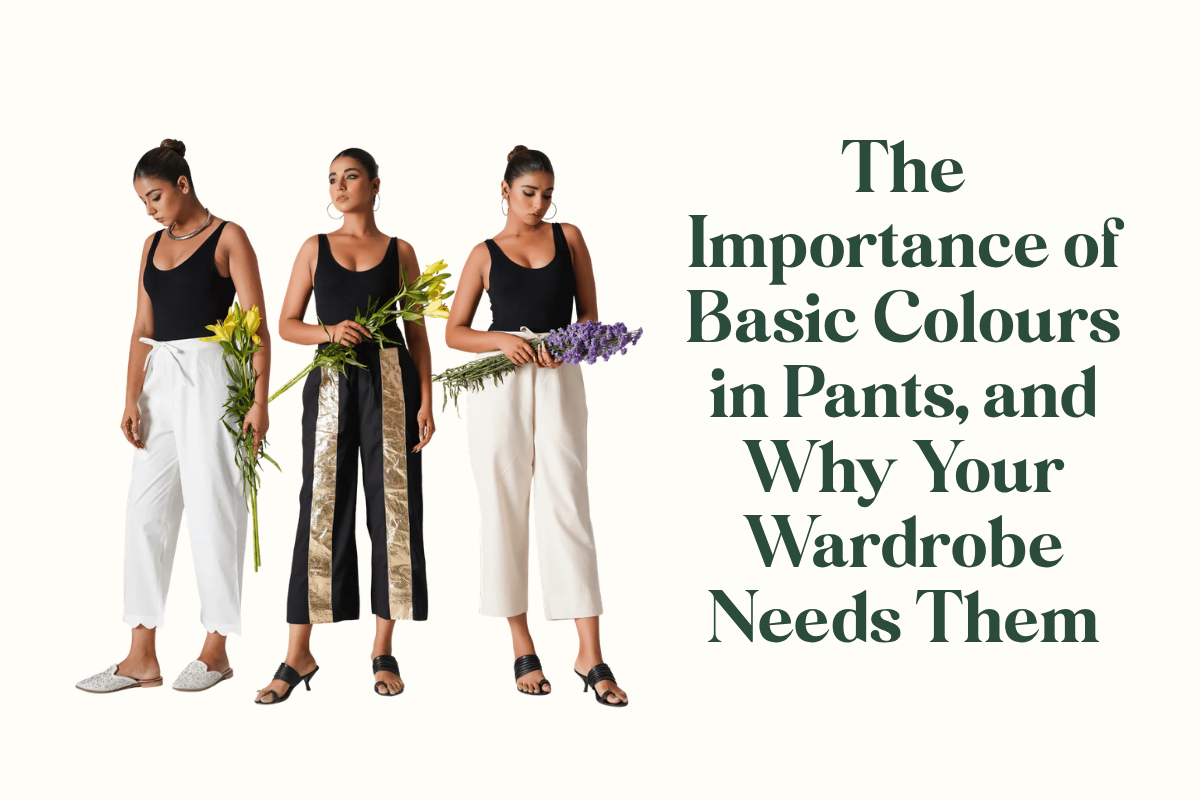
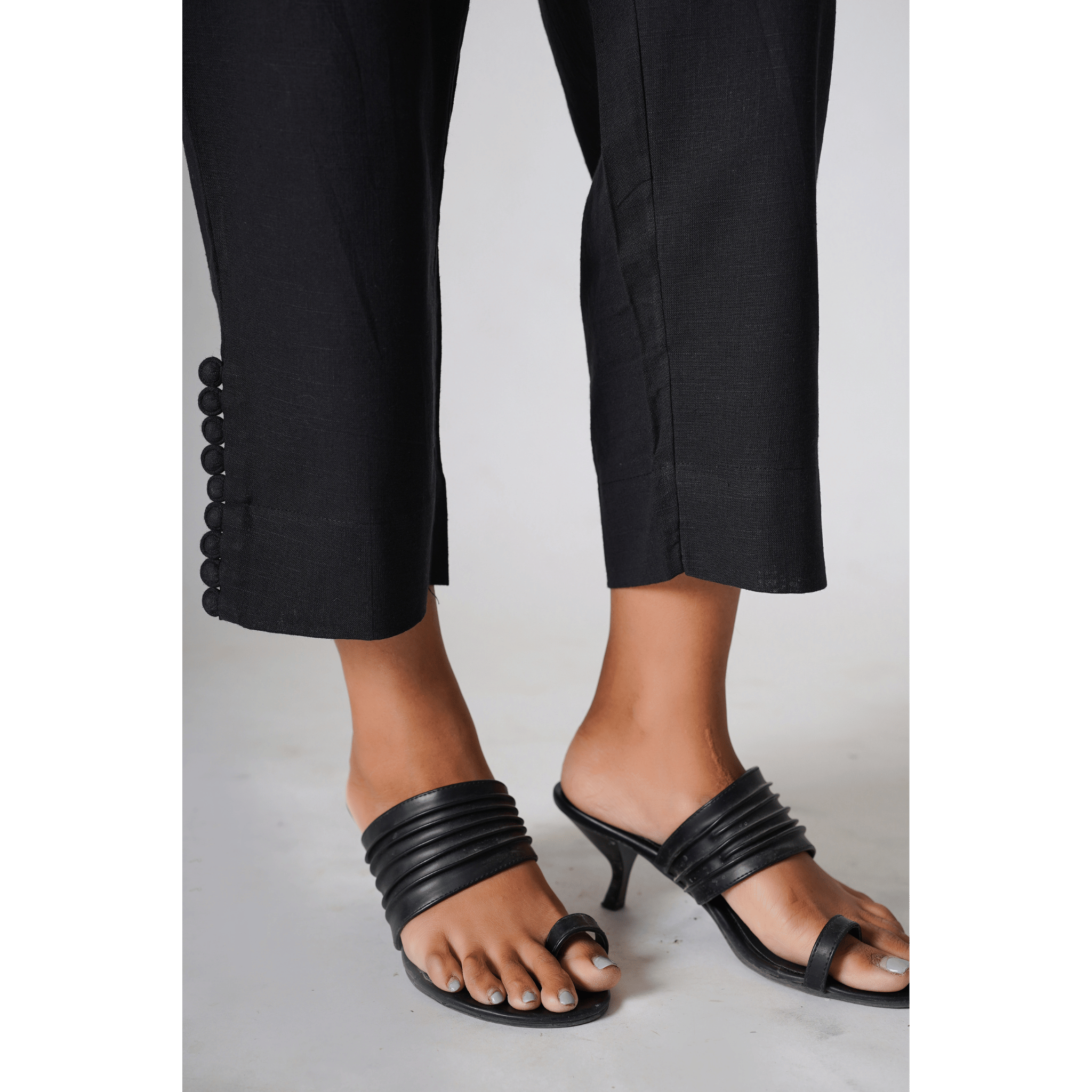
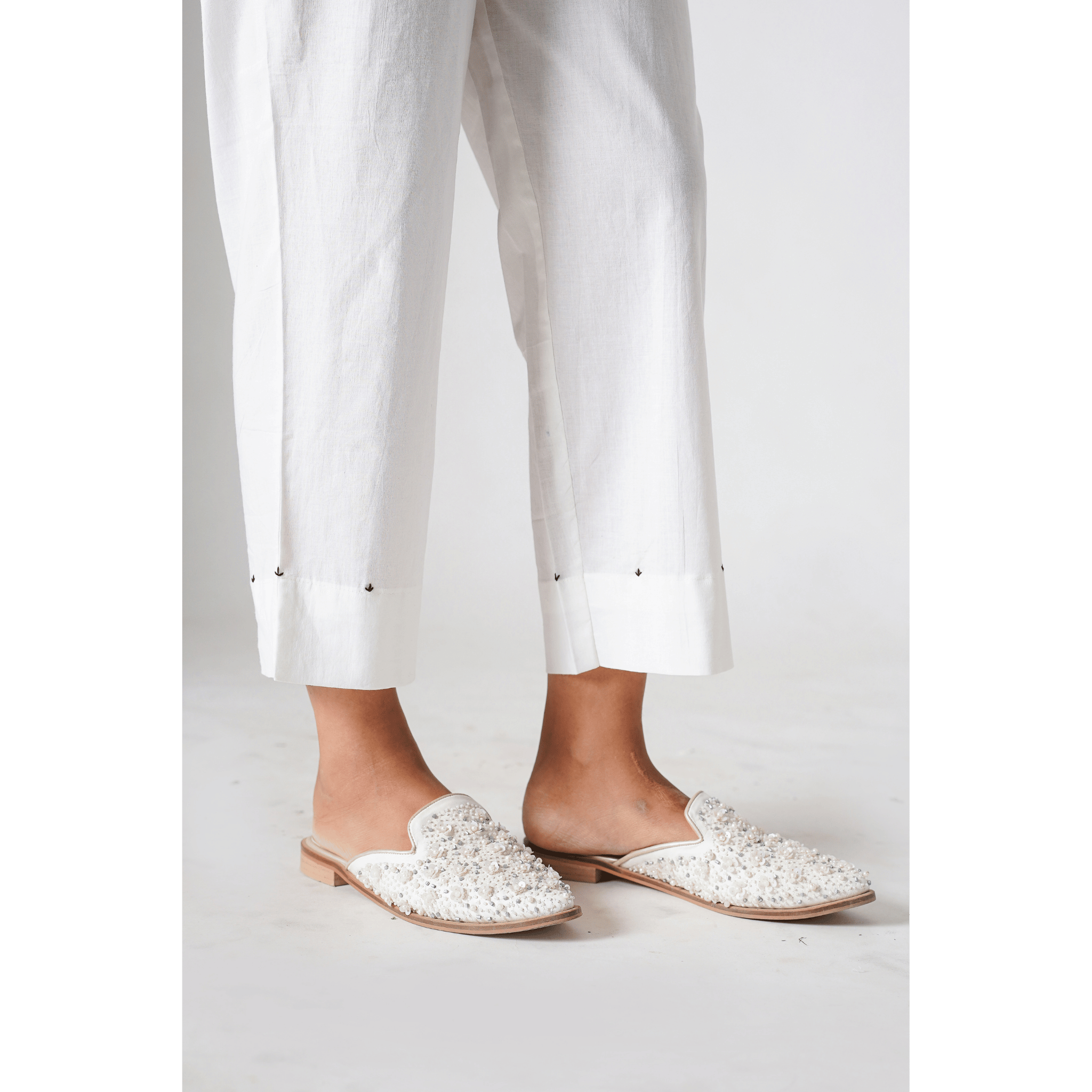
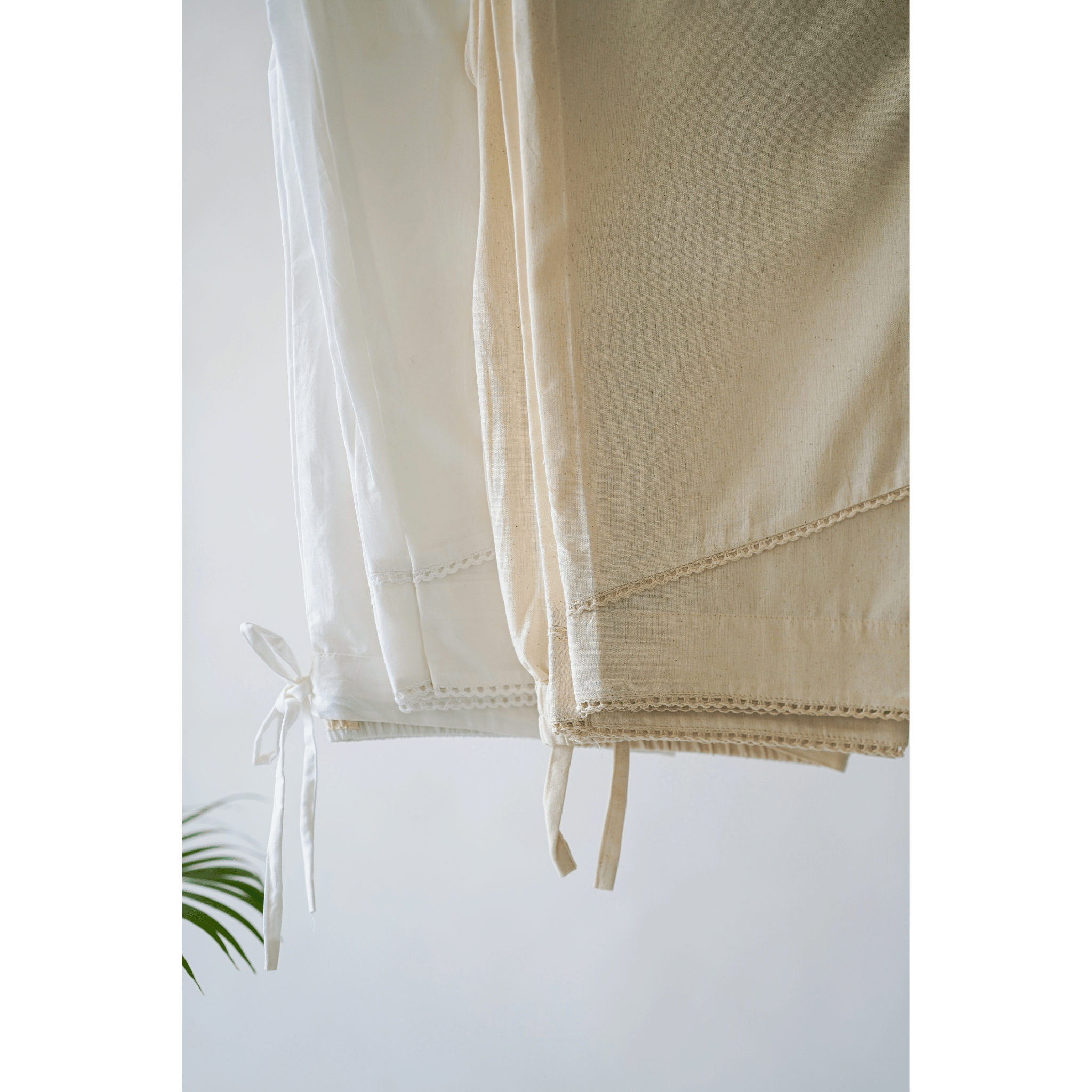
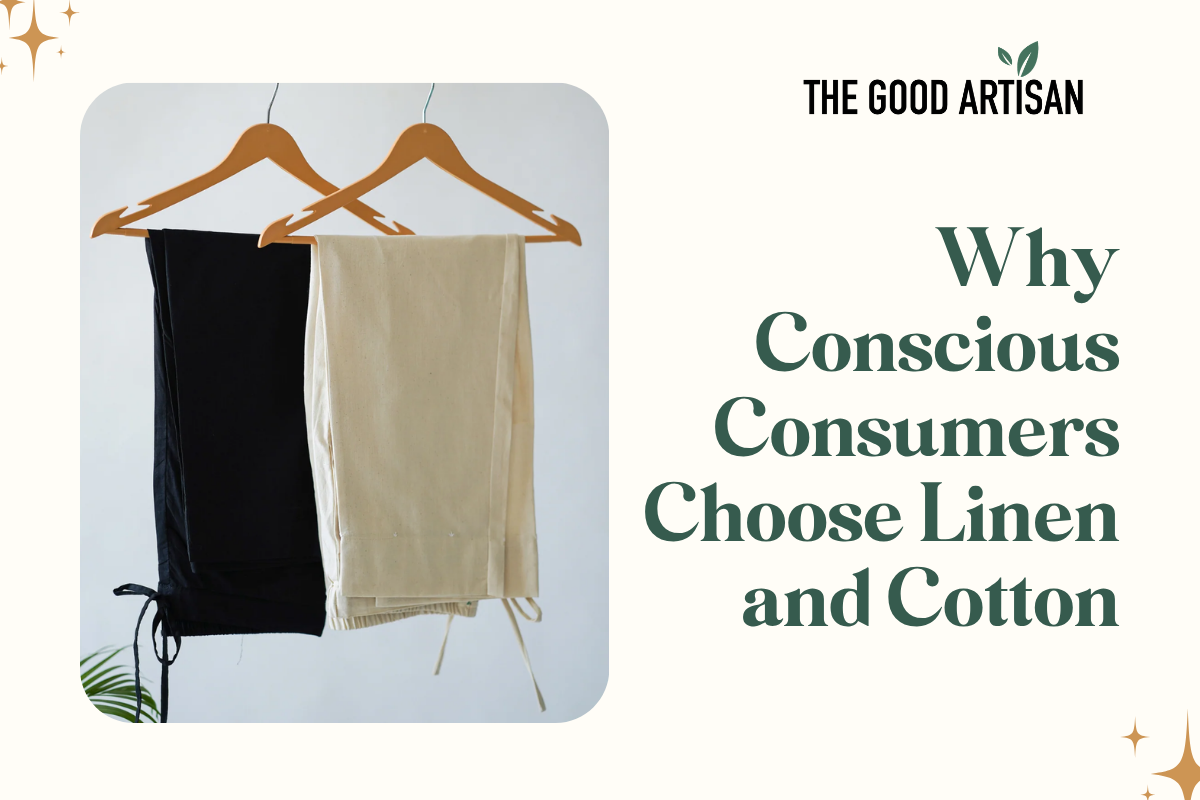
Our Victoria Black Cotton-Linen Pants and Ramgarh Ash Brown Cotton-Linen Pants are the clearest expression of what we believe a well-made natural fibre garment should be: structured enough for a professional setting, relaxed enough for a full Indian summer day, and built to last through years of wearing and washing. The cotton-linen blend we use is sourced from Indian mills and processed without synthetic finishes. These are pants you will reach for every week for the next five years, and they will be better at the end of that time than they are now.
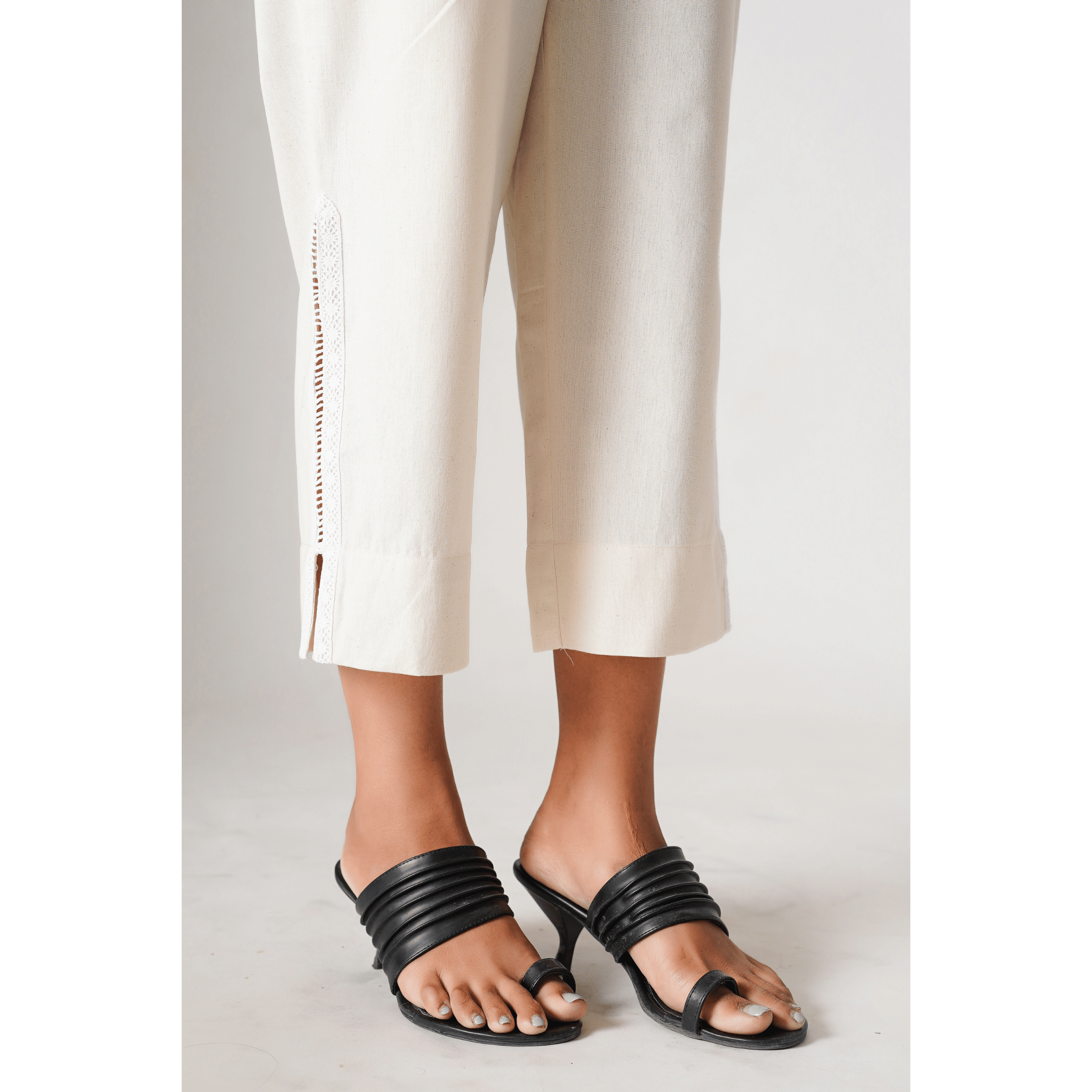
Our Jasmine White Cotton Pants and Dausa Straight Fit Cotton Pants are 100% cotton, the straight-cut, breathable, easy-care everyday garment that the Indian wardrobe has been built around for generations and that no synthetic alternative has ever genuinely replaced. The Blossom Beige Cotton-Linen Pants sit in the same family: a warm neutral that travels from the office to the weekend without asking anything of you.
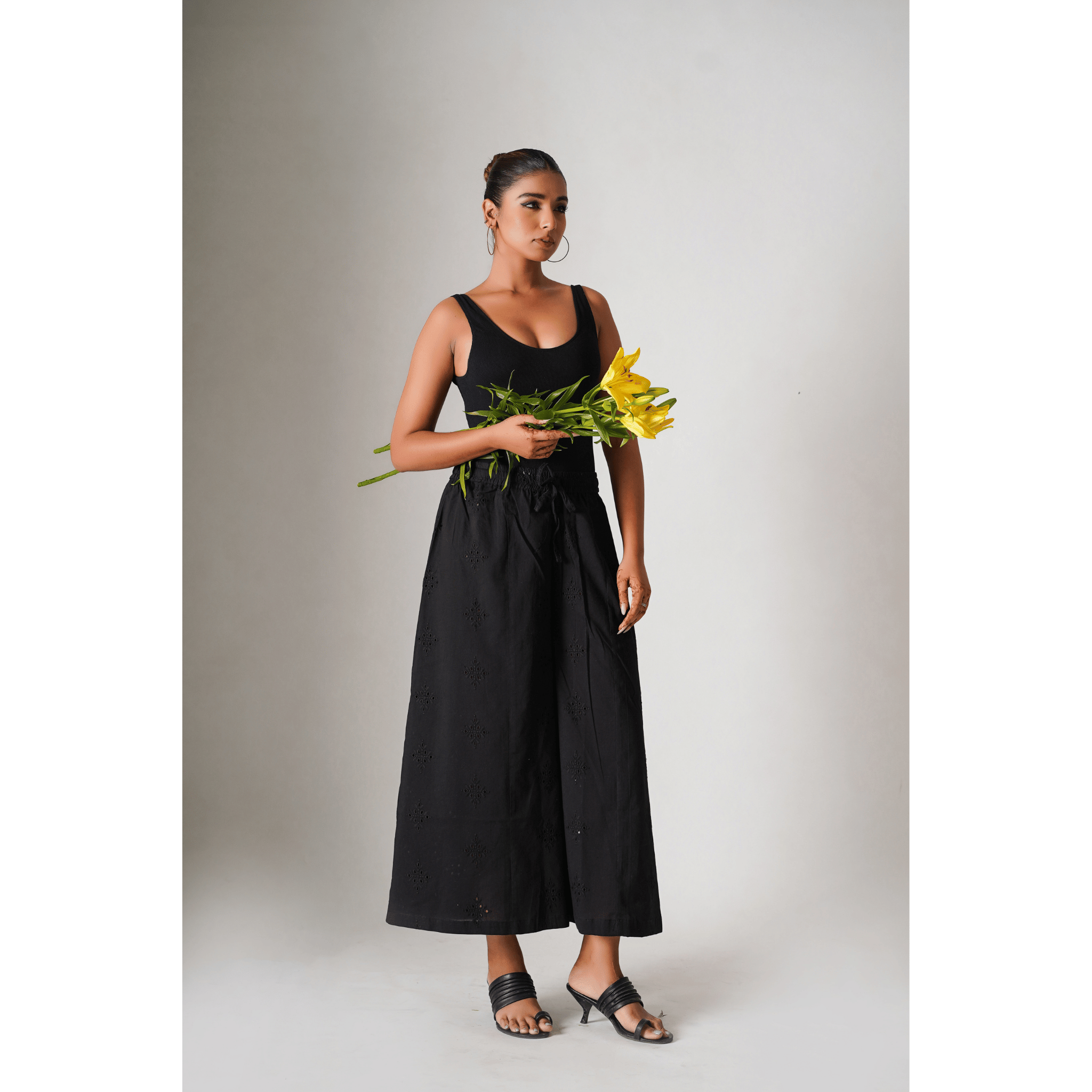
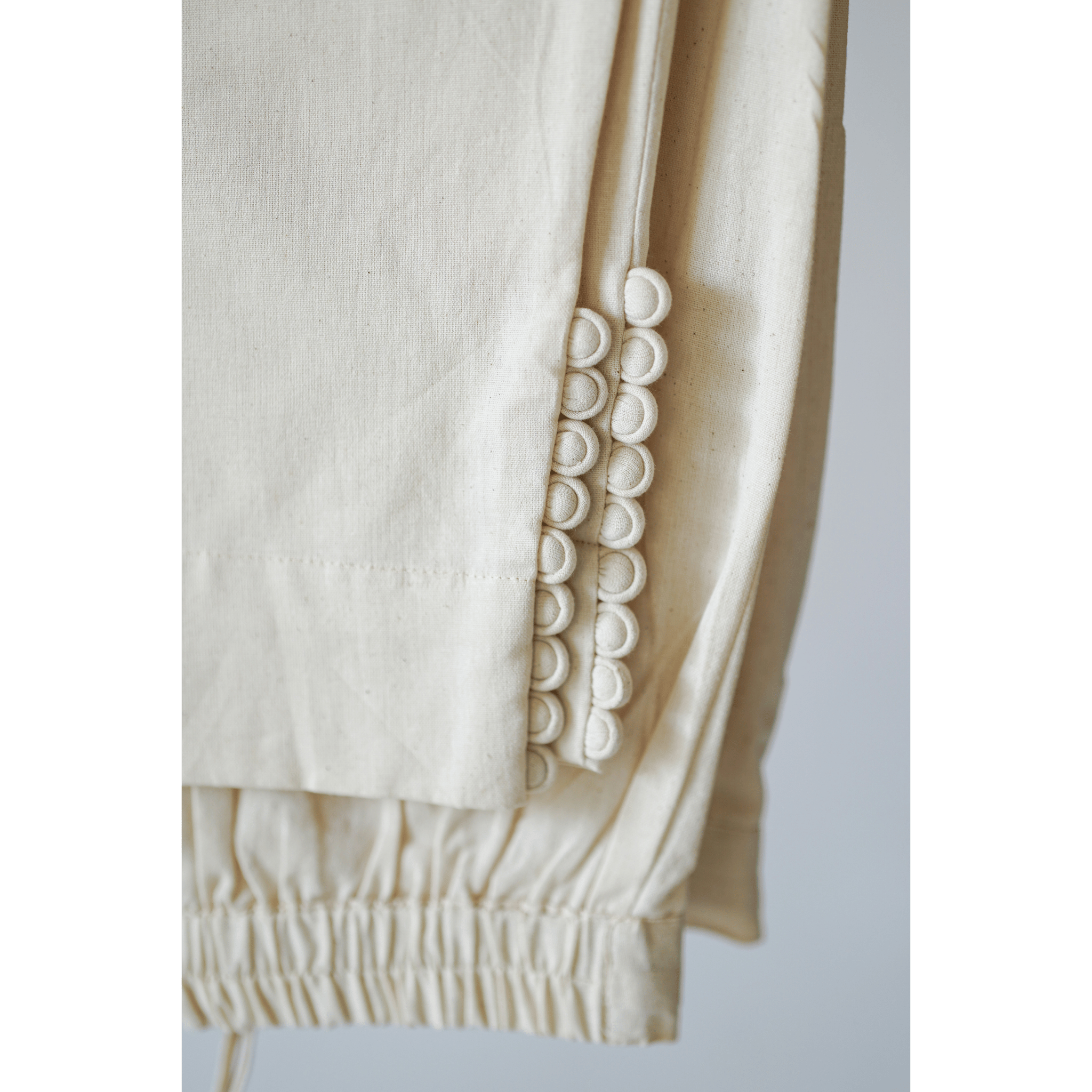
For those who want the craft dimension alongside the fibre story, our Dholpur Gotta Patti Pants bring Jaipur's gotta patti embroidery tradition to a 100% cotton base, the artisan's hand and the natural fibre working together in the way they always have. The Phulera Hand Block Printed Pants carry the Bagru block printing tradition on cotton slub, each piece slightly different from the last because each block is pressed by hand. The Jaipur Gotta Patti Kurta and the Aira Hand Block Printed Kurta extend the same philosophy into the upper half of the wardrobe.
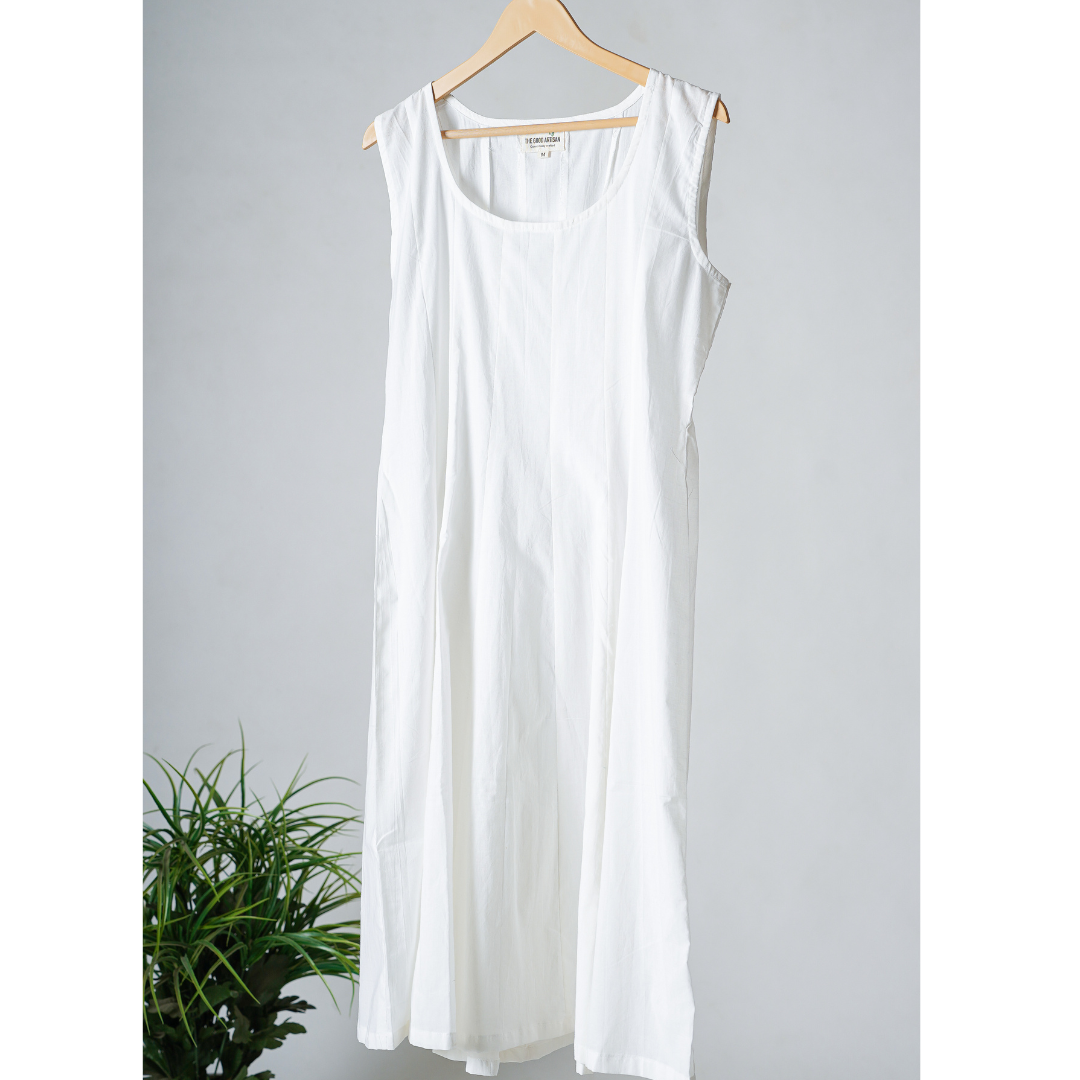
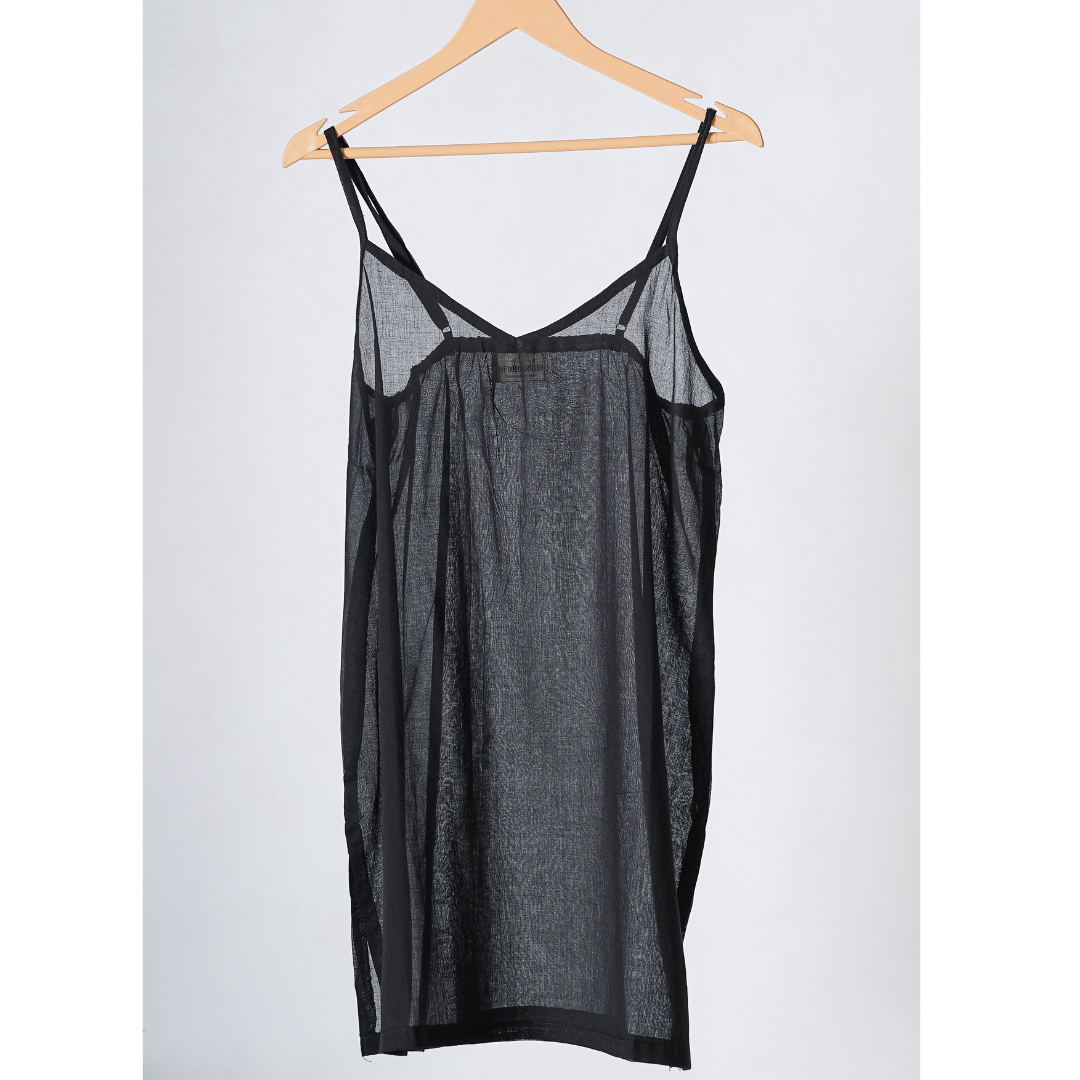
Our Cotton Slips in White and Off-White, in both mulmul and regular cotton complete the picture: the inner layer made from the same natural fibre as the outer garment, because what you wear against your skin matters as much as what the world sees.
Every one of these pieces is made in small batches at our production unit in Jaipur. Every one is made with natural fibre and without synthetic dyes or finishes. Every one is designed to be worn for years, to soften and improve with washing, and to return to the earth cleanly at the end of its life. That is not a product description. It is a position. And it is the position that conscious consumers, the ones who have read the label, asked the question, and decided that the answer matters, are increasingly choosing to stand behind.
There is a particular pleasure in owning clothes that improve with time. Most modern fashion is designed for the opposite trajectory: to look best when new and to decline from there, encouraging replacement and the next purchase. Natural fibres refuse this logic. Cotton softens. Linen develops a beautiful patina. A cotton-linen blend that has been washed a hundred times moves differently on the body than it did on its first day, more fluidly, more naturally, as if it has learned the shape of the person who wears it.
This is the final argument for linen and cotton, and it is perhaps the most personal one. These are materials with a relationship to time that synthetic fibres cannot replicate. They do not just last. They evolve. They accumulate the history of the person who wears them in a way that makes them more valuable, not less, as the years pass.
A conscious consumer who builds a wardrobe around natural fibres is not just making a choice about what their clothes are made of. They are making a choice about what kind of relationship they want to have with their clothes, one of depth, durability, and genuine care, rather than novelty, disposal, and replacement. That is a different relationship with fashion entirely. And it is the one that linen and cotton, better than any other material available, make possible.