Cart
0
You may also like


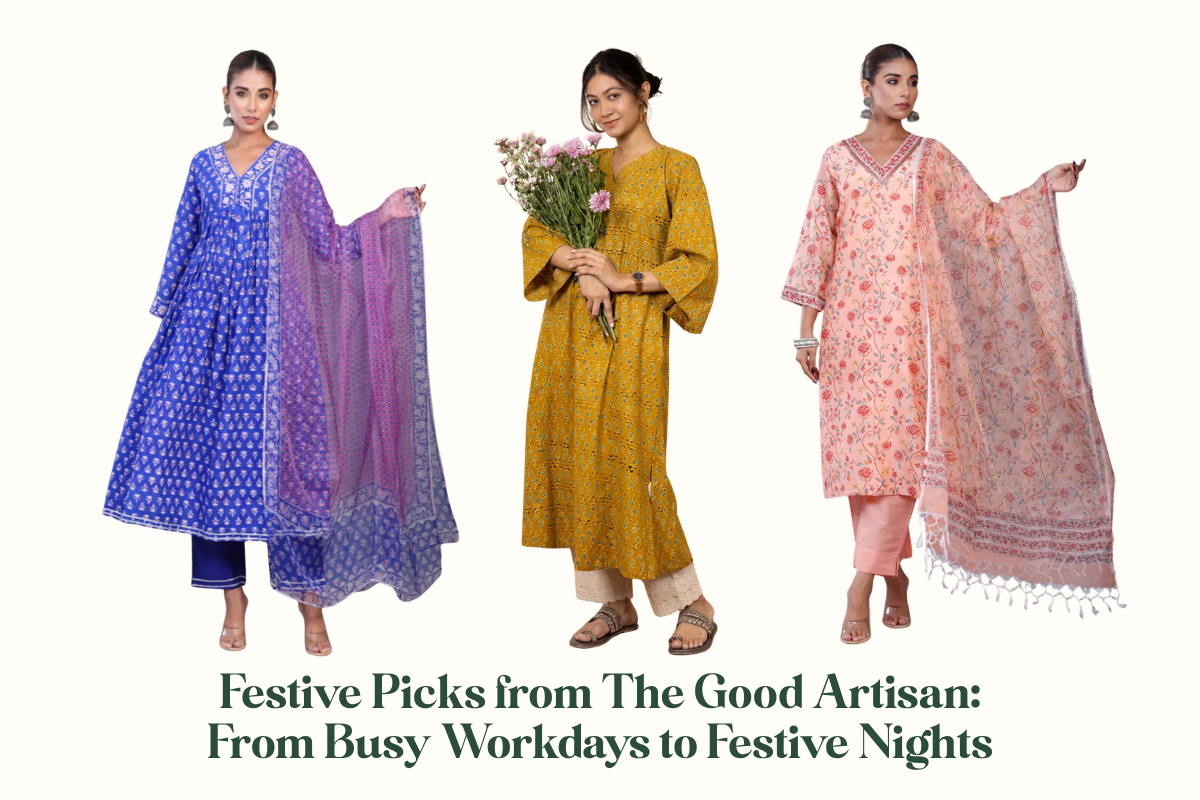
The kurta is one of the few garments that has never needed reinventing. It has been worn for centuries, in every region of the country, by women of every age and in every kind of fabric. It changes its length, its neckline, its sleeve, its print and its embroidery, but the essential idea stays the same: a comfortable, flattering tunic that works for almost any occasion. Whatever else is happening in fashion, the kurta stays.
What changes, season after season, is what we are told to wear it with. One year it is cigarette pants, the next it is patialas, then it is flared palazzos, then it is something with a name nobody quite remembers. Trends in bottomwear arrive loudly and leave quietly, and the woman who followed all of them is usually left with a cupboard full of pants that no longer feel right with any of her kurtas.
This blog is about the other approach: the pants that do not go out of date. The silhouettes that have worked with kurtas for generations, and that will go on working long after the current trend has been forgotten. If you are building a wardrobe that you want to still love in five years, these are the styles worth knowing.
It is worth being clear about what "timeless" actually means, because it is easy to confuse it with "boring". A timeless pant is not one without character. It is one whose character does not depend on the moment.
A timeless style has a few things in common. Its shape is simple enough to work with many different kurtas, so it never needs a specific partner. Its colour comes from the quiet end of the palette, which means it does not clash with what you already own. Its fabric is good enough to age gracefully, softening with washing rather than wearing out. And its proportions are balanced, neither so narrow that it fights the kurta nor so wide that it swallows it.
When a pant has these qualities, it stops being a seasonal purchase and starts being a wardrobe foundation. You stop thinking about whether it is in fashion, because you have stopped needing it to be.
Every timeless kurta wardrobe starts with a well-made straight-fit pant, and for good reason. It follows the line of the leg without clinging, it gives a kurta a clean base to sit on, and it works with every length from a short kurti to a knee-length kurta. It is the pant that does not draw attention to itself, which is precisely why the kurta above it looks so good.
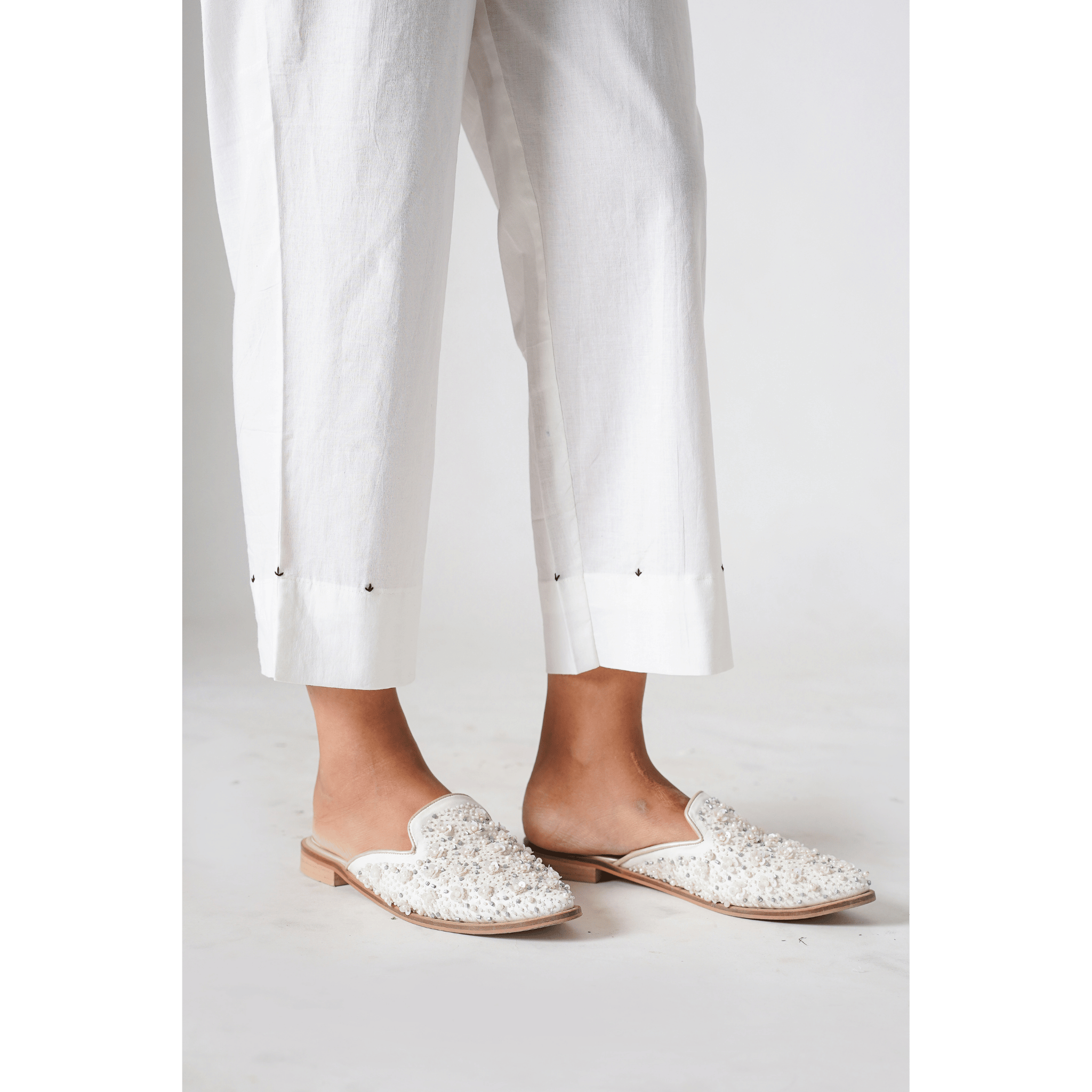
At The Good Artisan, the Classic Black Cotton Pants (from Rs. 1,050) and the Classic White Cotton Pants (from Rs. 1,100) are the clearest expressions of this idea. Both are made in 100% cotton, with an elasticated waist for ease, and both are exactly what they say they are: classics. The Arabis White Cotton Pants (from Rs. 999) offer the same simplicity with an elasticated waist and drawstring, and sit at the most accessible price point in the range.
These are the pants you reach for without thinking. A black cotton pant under a block-printed kurta, a white cotton pant under a coloured one, and the outfit is complete. It is not a complicated formula, and it has not needed updating in a very long time.
If the straight cotton pant is the backbone of a kurta wardrobe, the cotton-linen pant is its polished cousin. Linen brings a little structure and a natural, slightly textured quality to the fabric, while the cotton keeps it soft. The result is a pant that looks put-together without trying, and that drapes well rather than hanging limp.
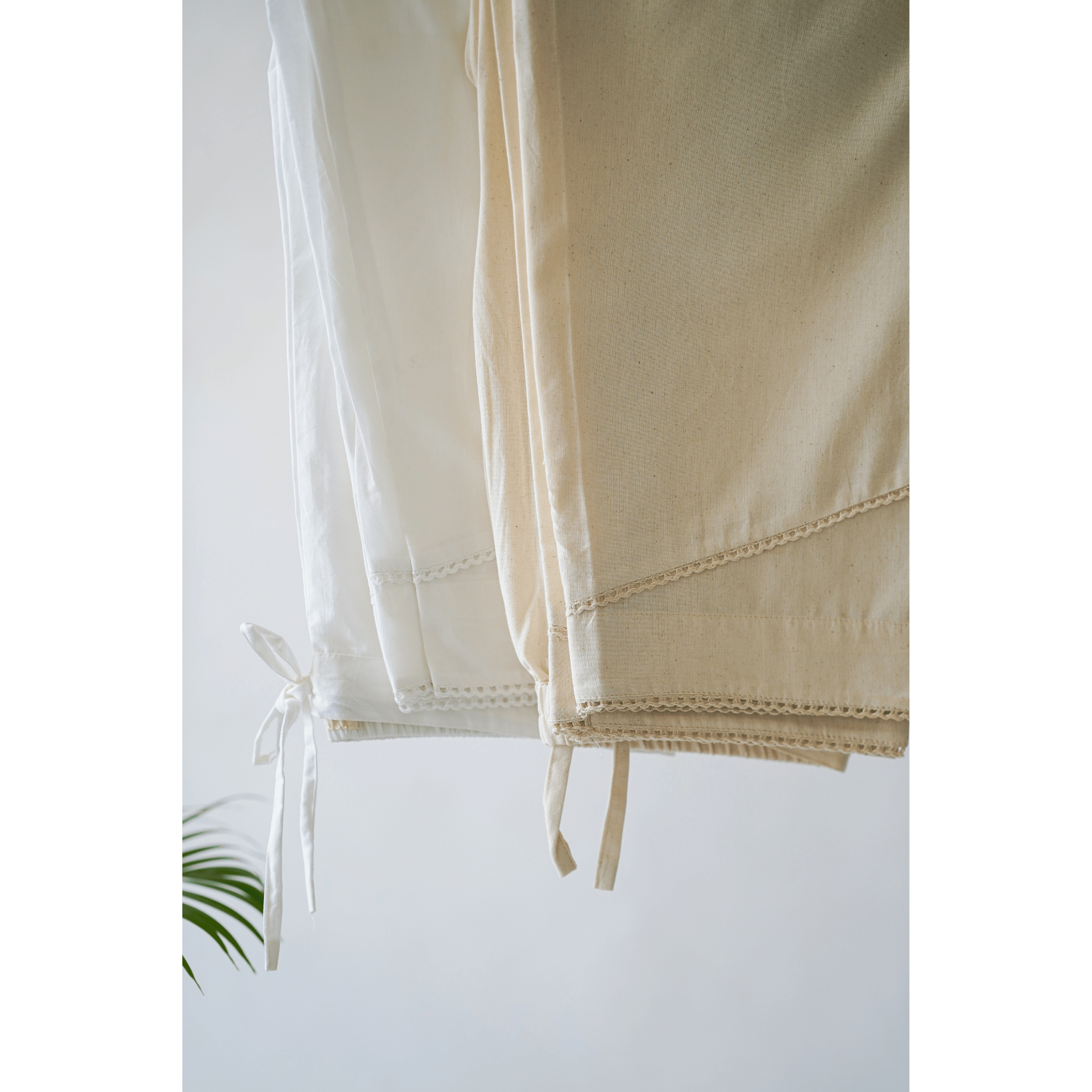
Beige is where this fabric shines most. The Ajmer Cotton Linen Beige Pants (from Rs. 1,550) have a regular fit and a lace detail along the hem, a small touch that lifts the pant above a plain basic. The Ayanna Cotton Linen Beige Pants (from Rs. 1,499) and the Bikaner Cotton Linen Beige Pants (from Rs. 1,499) are made in the same breathable blend and are a little simpler, ideal for women who prefer a cleaner finish. The Classic Beige Cotton-Linen Pants (from Rs. 1,250) are the most accessible way into the range. For those who like a slightly wider choice, the Dune, Daisy, Pansy and Boondi pants are also made in cotton-linen beige.
Beige pairs beautifully with the earthy palette that so much Indian block print and hand-dyed fabric is built on: terracotta, rust, olive, indigo and mustard. It also sits comfortably under ivory and cream kurtas for a soft, tonal look. If you own many printed kurtas and are not sure which colour of pant to buy, beige is very often the answer.
In black, the Mia Black Cotton-Linen Pants (from Rs. 1,500) bring the same quality to a darker palette, and are a smart choice for work kurtas, evening wear, and anything in a strong colour.
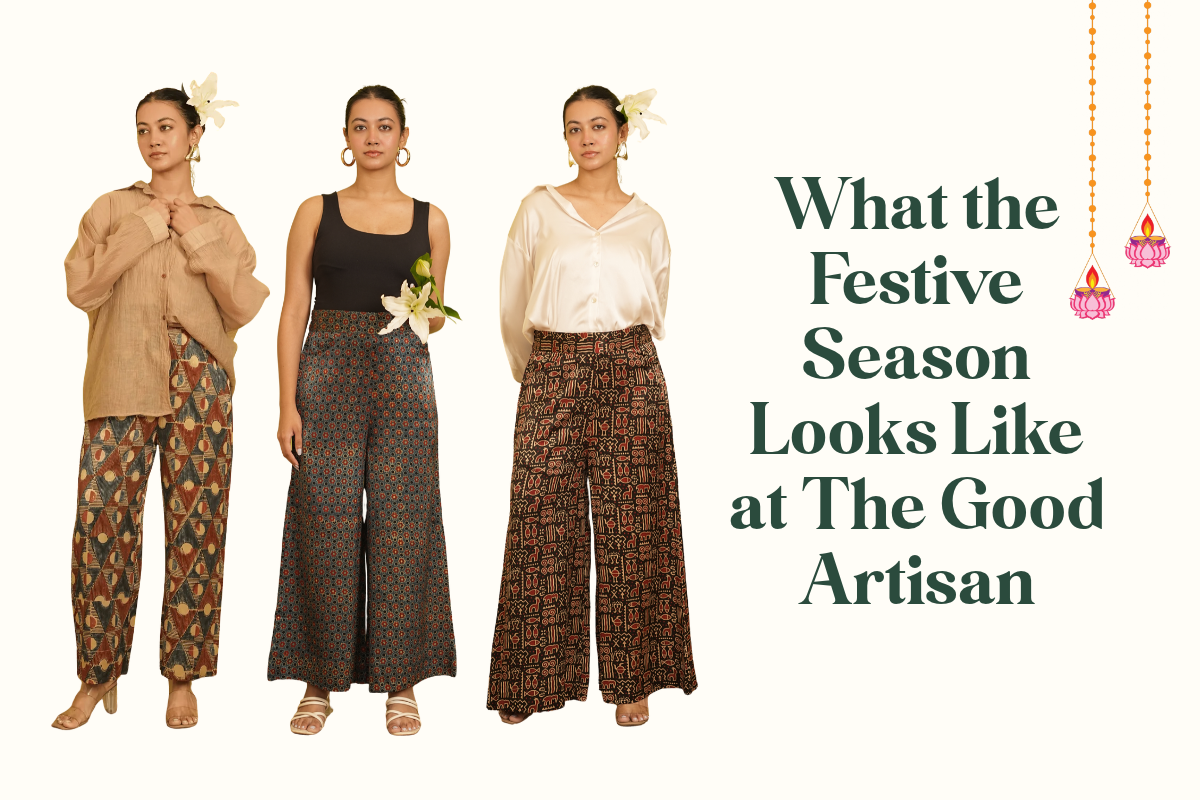
Wide-legged pants have been paired with kurtas for as long as kurtas have been worn in their modern form. The palazzo has gone in and out of the spotlight, but it has never really gone out of use, because it solves a real problem: it is cool, comfortable and flattering on almost every body type, and it gives a short or fitted kurta a graceful, flowing balance.
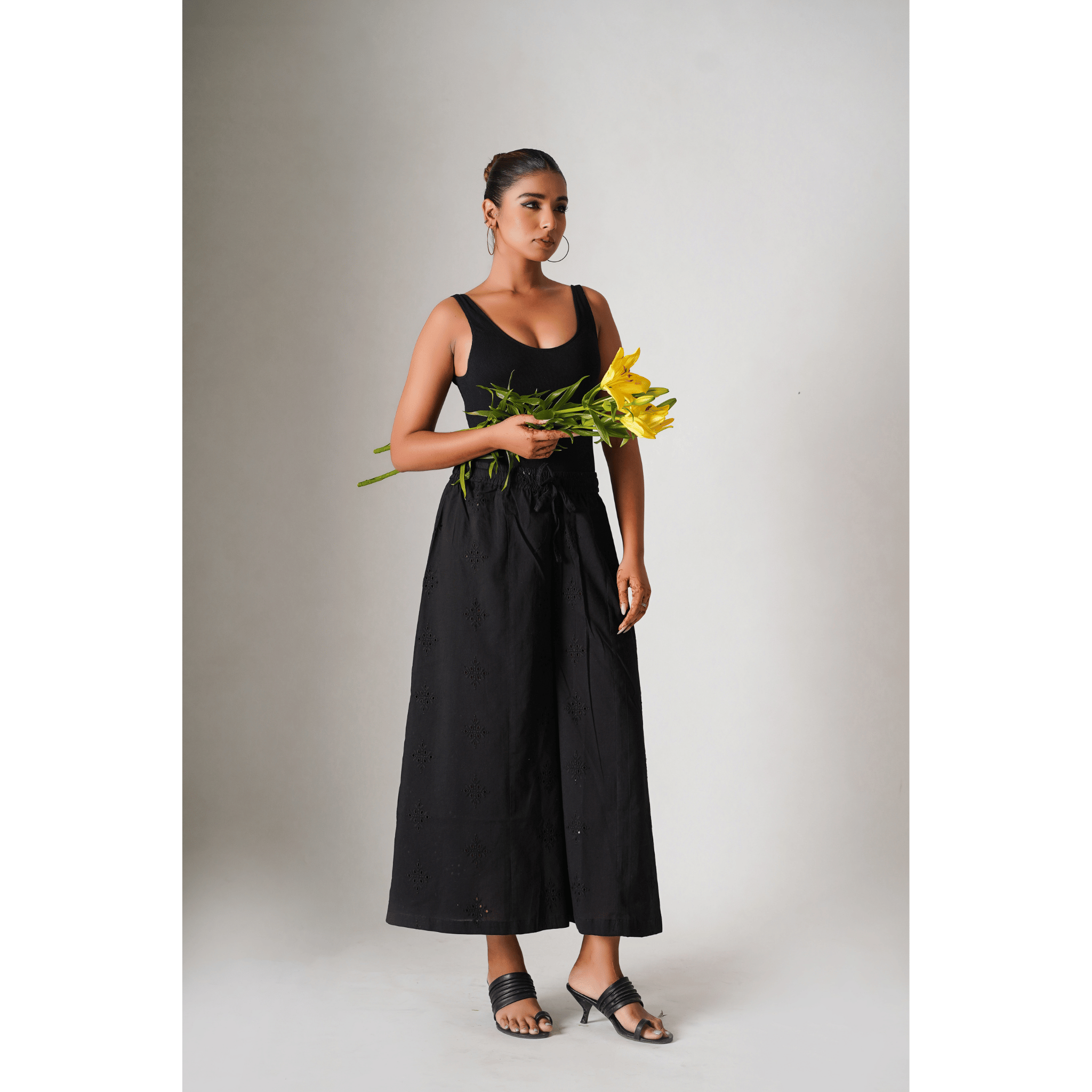
The Amara Hakoba Black Cotton Palazzo (from Rs. 1,799) is the most distinctive of our wide-legged styles, with its textured Hakoba fabric adding quiet interest to a simple black shape. The Victoria Black Cotton Linen Pants (from Rs. 1,700) take the wider-leg approach in cotton-linen and are described on our site as great to style with a short ethnic kurta. For a lighter, more summery version, the Dahlia Wide-Legged White Cotton Pants (from Rs. 1,199) are made in 100% cotton and are one of the most comfortable options in the range for hot weather.
The rule with a palazzo is balance. Because the pant carries volume, the kurta should be shorter or more fitted, so that the whole outfit does not become shapeless. A hip-length or just-below-hip kurta in a fitted or semi-fitted cut is the classic partner, and it has worked for decades.
The tulip pant is the choice for the woman who wants a little more shape in her bottomwear. Its overlapping front panel and tapered ankle create a gentle, petal-like silhouette that is flattering and a little different, without being tied to any particular year. It has the grace of a classic and the interest of a design.
The Twilight Black Tulip Pants (from Rs. 1,599) and the Orchid White Tulip Pants (from Rs. 1,599) bring this shape to our collection in two timeless colours. Because the pant itself is the detail, the kurta above should stay simple. A plain cotton kurta, a quiet print or a fitted tunic lets the silhouette speak. If you are choosing between a tulip and a straight pant for a particular kurta, a good rule is this: the busier the kurta, the simpler the pant, and the plainer the kurta, the more room there is for a tulip.
Of all the shapes in this blog, the dhoti pant has the longest history. Its gathered, draped form has been worn across the subcontinent for centuries, and it has a way of making any kurta feel dressed up. It is tapered at the ankle and soft at the front, and it moves beautifully when you walk.
Our dhoti pants are made in mulmul, which suits the shape perfectly. The fabric is light and breathable enough to let the dhoti fall in soft folds, and fine enough to feel almost weightless in a warm climate. The Sahaba Black Mulmul Dhoti Pants (from Rs. 1,800) and the Khejdi White Mulmul Dhoti Pants (from Rs. 1,600) are the two options, one dark and grounded, the other light and fresh.
A dhoti works best with a kurta that is short to mid-length and relatively fitted through the body. A crop-length kurta, a short kurti or a kurta with a side slit all work well. Worn this way, a dhoti suits festive and semi-formal occasions, and in a plain colour it is subtle enough to wear more often than people expect.
Not every timeless pant is plain. Some of the most lasting styles carry a small detail, and what separates a lasting detail from a passing one is restraint. A detail that is part of the craft of the garment, such as lace, scalloping, a button or a pintuck, tends to age better than a trend-led print or embellishment.
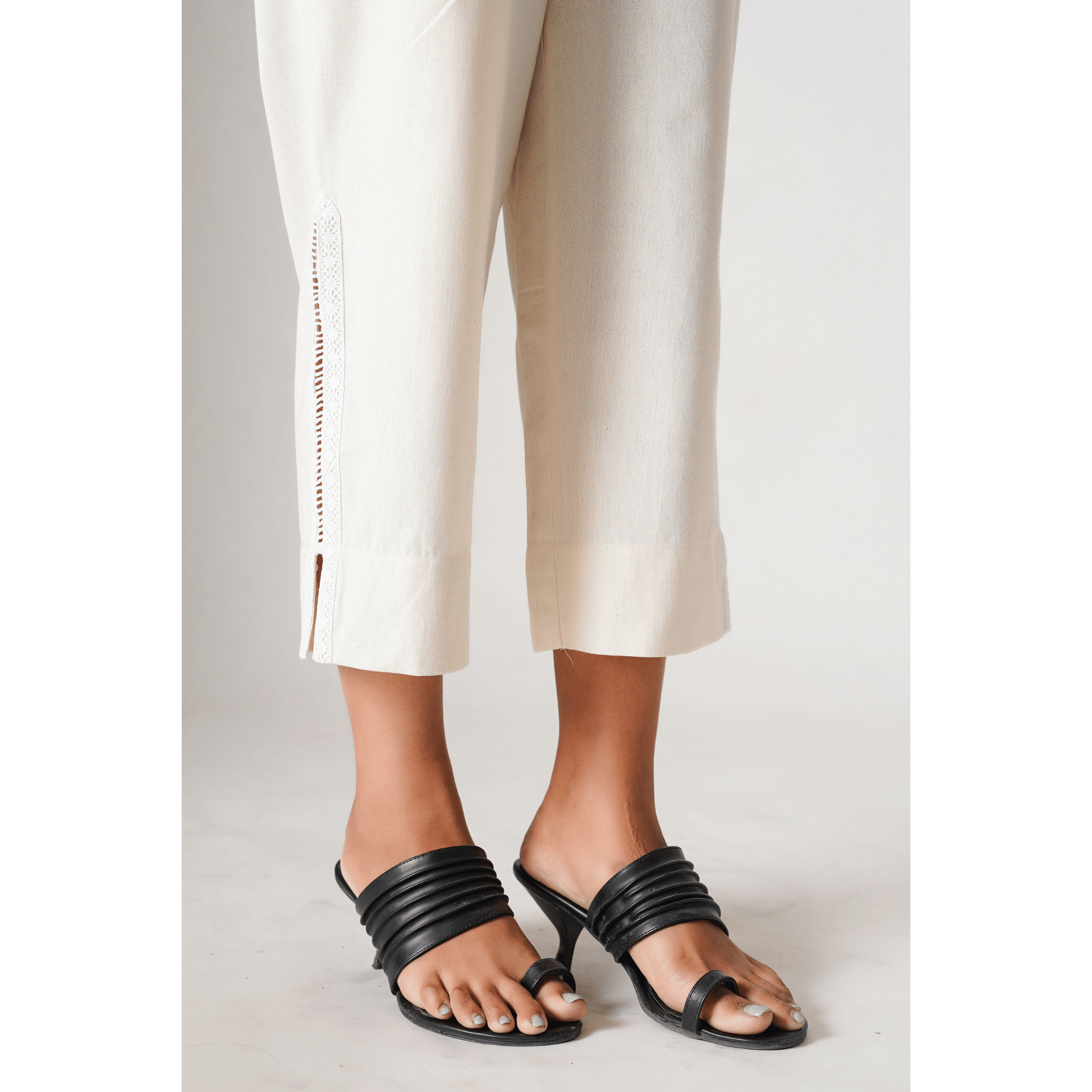
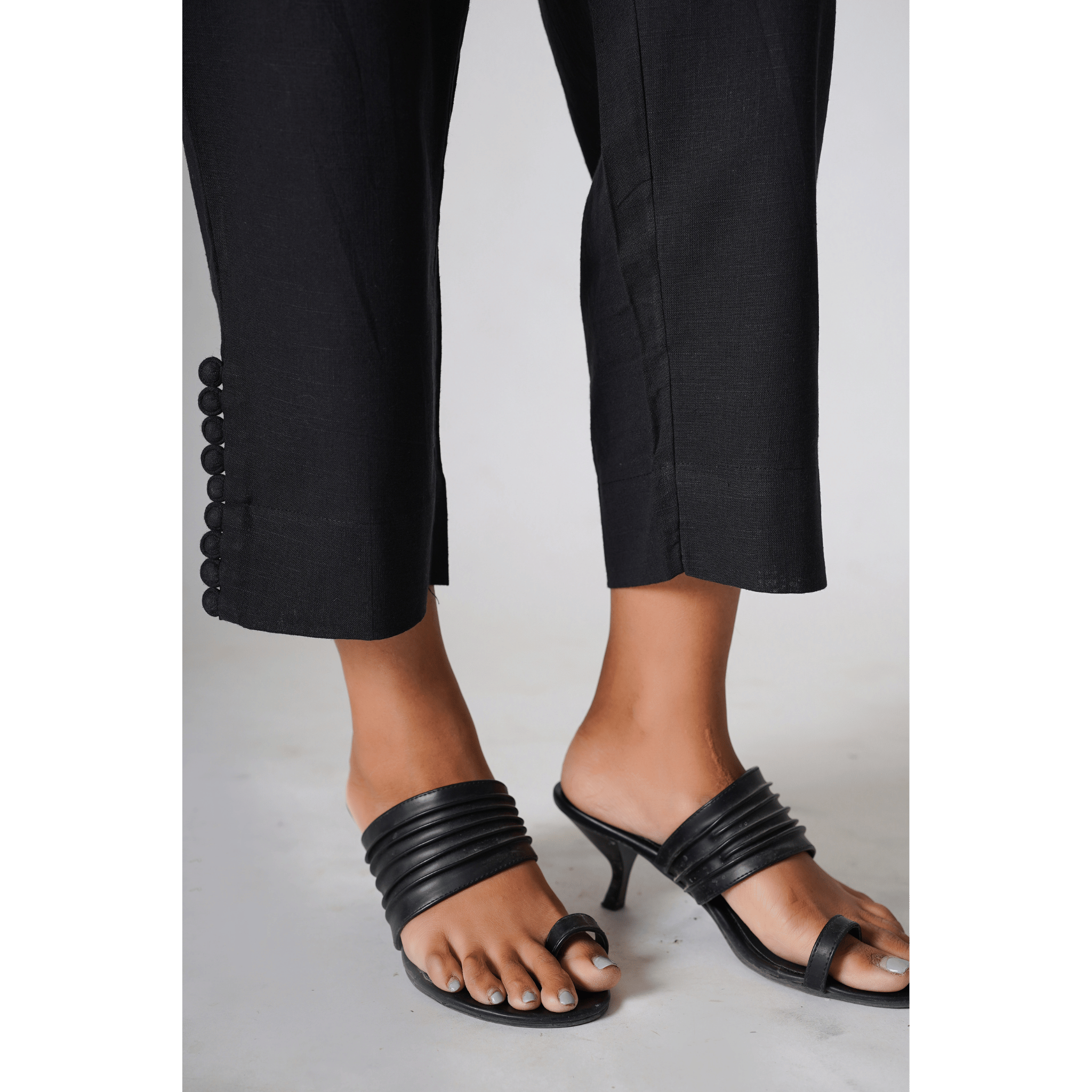
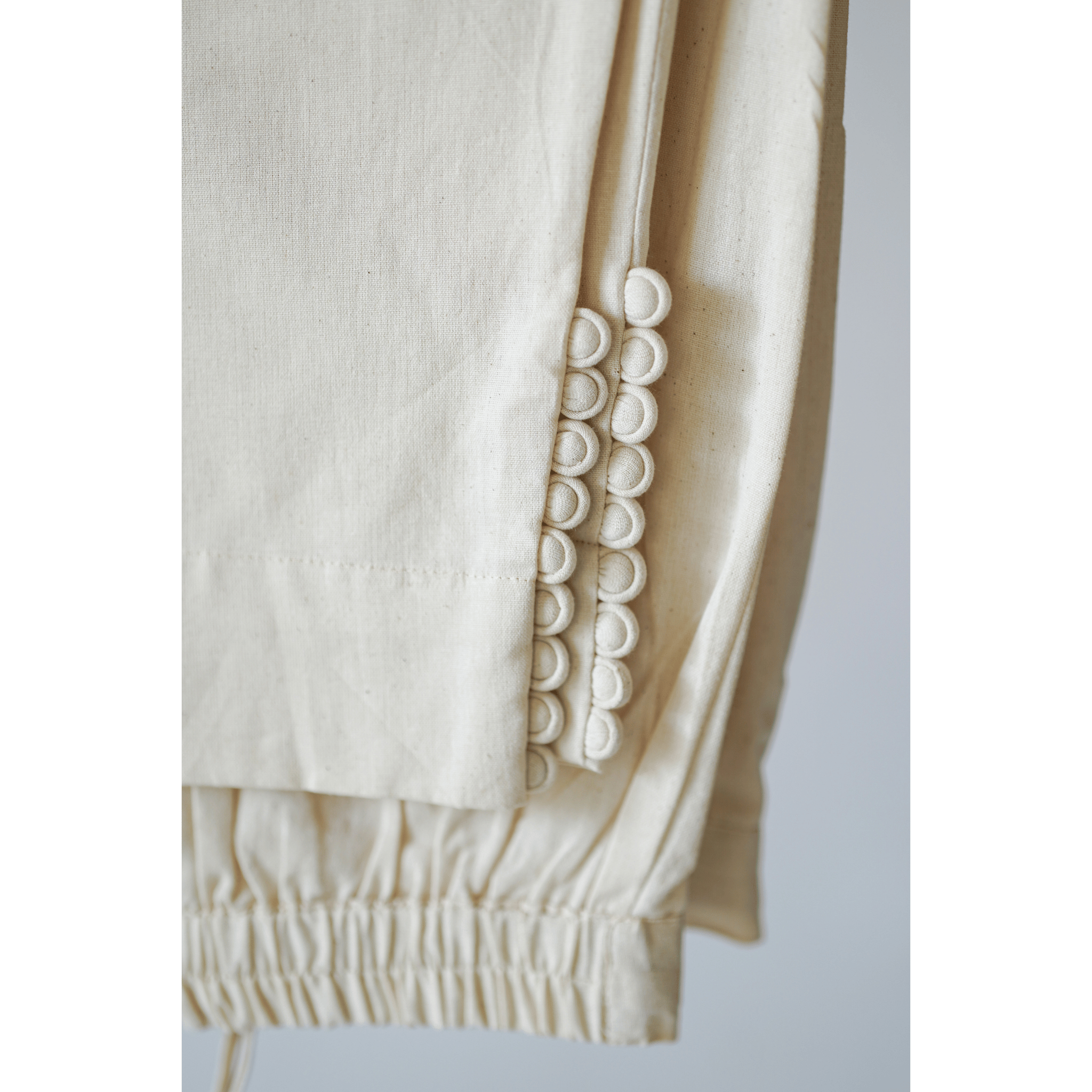
The Siyah Black Cotton Scalloped Pants (from Rs. 1,500) are a good example, with scalloped edges highlighted with white pearl detailing. The Ebony Scalloped Black Cotton-Linen Pants (from Rs. 1,499) take the same idea in a cotton-linen blend. For white, the Snowdrop White Cotton Lace Pants (from Rs. 1,599) and the Mehru White Cotton Lace Pants (from Rs. 1,399) use delicate lace, and the Iris White Cotton Scalloped Pants (from Rs. 1,400) pair scalloping with a silk chanderi detail. The Amina Black Cotton Pants with Potli Buttons (from Rs. 1,499) bring a traditional fabric-covered button to a black cotton pant, and the Northern Lights Black Cotton Pants (from Rs. 1,499) use fine pintucks for texture.
What these have in common is that the detail is small and built into the pant, so the kurta above can stay as expressive as you like. A lace-hem white pant under a plain pastel kurta, or a scalloped black pant under a printed one, looks considered every time.
Beyond choosing the pant, how you pair it matters. A few principles have held up across generations of kurta styling, and they are worth keeping in mind.
Let one piece lead. If the kurta is heavily printed or embroidered, choose a plain pant. If the pant has a detail, keep the kurta simple. An outfit with two competing statements usually looks busy rather than beautiful.
Mind the length. Short kurtas and kurtis suit almost any pant, including wide-legged ones. Knee-length kurtas look balanced with straight, tulip or tapered pants. Longer kurtas generally look best with narrower bottoms so the proportions do not get lost.
Match the mood. A structured cotton-linen pant belongs with a crisp, formal kurta. A soft mulmul dhoti belongs with something flowing. A casual cotton pant suits a relaxed print. When the texture of the pant and the kurta agree, the outfit feels effortless.
Respect the undertone. Warm kurtas, in rust, mustard, terracotta and olive, look best with beige and black. Cool or pastel kurtas look best with white and black. Black is the exception that goes with nearly everything.
If you are starting from scratch, or editing what you have, you do not need many pieces. A small, well-chosen set of pants will carry almost every kurta you own.
Begin with the three neutrals. One black cotton pant, one white cotton pant and one beige cotton-linen pant will work with the great majority of kurtas. The Classic Black, Classic White and Classic Beige Cotton-Linen Pants make an easy and affordable trio. From there, add one shape that suits your lifestyle: a palazzo if you love flow, a tulip if you like structure, a dhoti if you dress up often. Finally, add one pant with a quiet detail, such as lace or scalloping, for the days you want something a little special.
If you would rather buy in pairs, our combos make this easier. The Basic Pants Combo in Black and White (from Rs. 1,850) and the Basic Pants Combo in Black (Cotton) and Beige (Cotton-Linen) (from Rs. 2,049) give you two neutrals in one purchase, and the Black and White Pants Combo with Potli Buttons (from Rs. 2,699) adds a traditional detail. The store also offers 5% off when you buy two cotton pants and 10% off when you buy three, with free shipping across India on prepaid orders.
There is a particular kind of ease that comes from owning pants you trust. You open the drawer, reach for one, and know before you even look in the mirror that it will work with the kurta you have chosen. You are not experimenting, and you are not hoping. You are simply dressed.
That ease is what timeless style really offers. It is not about wearing the same thing forever. It is about building a foundation solid enough that you can play with everything above it, with prints, colours, embroidery and fabrics, while the pants quietly do their job.
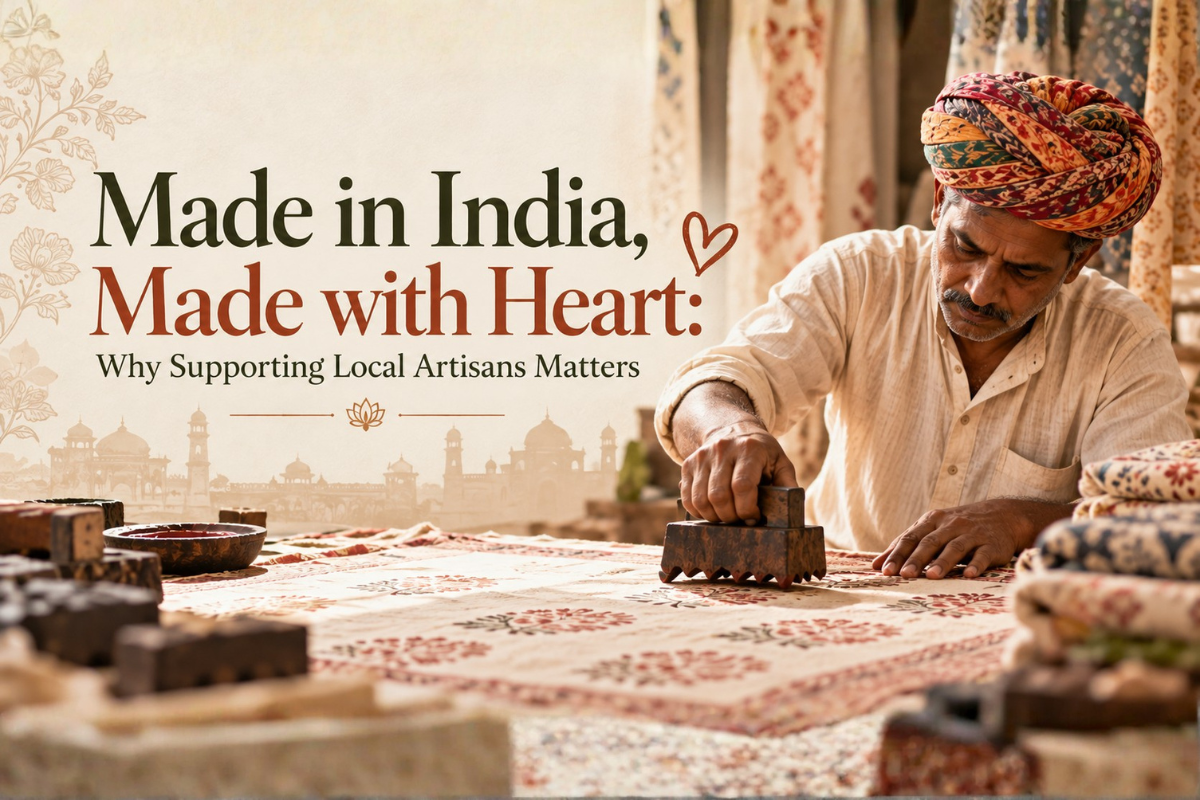
Our pants are made in natural fibres by skilled artisans in Jaipur, designed to be worn often and to soften with every wash. They are, we hope, the kind of pieces you will still be reaching for years from now, long after the latest trend has come and gone.
Explore the full collection of pants for your kurtas at www.thegoodartisanstore.com
Made in India · Handcrafted in Jaipur · Natural Fabrics · Artisan Wear