Cart
0
You may also like




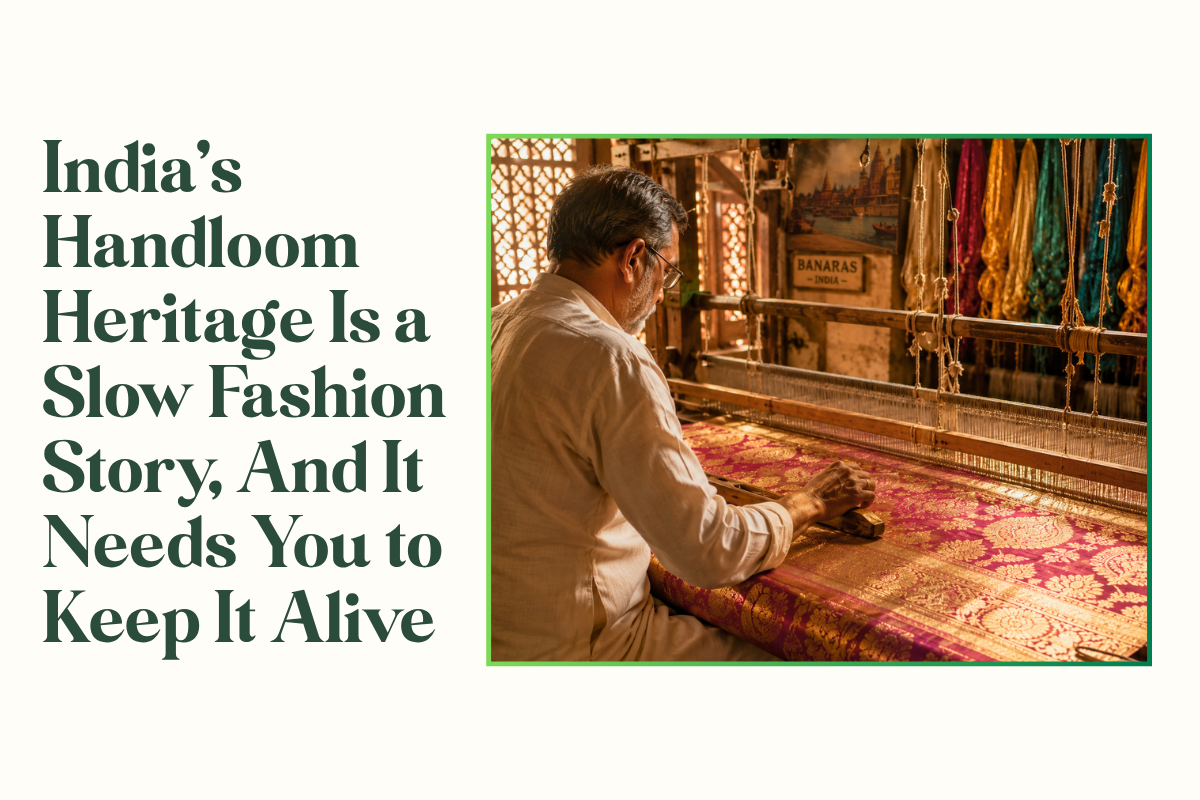
A Loom That Has Been Running for Four Thousand Years
There is a loom somewhere in Varanasi that has been running, in some form, since before the Roman Empire existed. There is a block printer in Bagru whose hands carry a technique that predates the printing press by centuries. There is a woman in a village outside Jaipur folding and pressing gotta patti ribbon along the hem of a garment with movements so practised and so precise that they have become a kind of muscle memory inherited across generations, mother to daughter, grandmother to granddaughter, craft cluster to craft cluster, century to century.
India's handloom and textile heritage is not a historical artefact. It is a living system, one of the most extraordinary concentrations of material knowledge, ecological wisdom, and human skill that exists anywhere in the world. It has survived invasions, colonialism, industrialisation, and the disruption of globalisation. What it has not yet survived, and what it is currently struggling against with increasing urgency, is indifference.
This piece is about that struggle. About what is at stake when craft traditions die. About the specific and irreplaceable things that are lost when a block printer's workshop closes, when a handloom weaver's children choose factory work instead, when a natural dyeing tradition loses its market and its practitioners disperse. And about why the choice to buy handcrafted, naturally made Indian clothing is one of the most direct and consequential acts of sustainability that a conscious consumer can make.
What the Industrial Revolution Could Not Replicate
The British colonial dismantling of India's textile industry in the eighteenth and nineteenth centuries was not simply an economic intervention. It was, as historians have increasingly recognised, a deliberate assault on one of the most sophisticated material cultures in the world.
At its peak, Indian textile production was the envy of every trading nation on earth. Dacca muslin, the legendary fabric so fine it was called woven air, was produced by weavers whose skill had been refined over generations to achieve thread counts that modern industrial machinery has never been able to replicate. The block-printed cottons of Gujarat and Rajasthan were the most sought-after printed textiles in European and Asian markets. The silk weaving traditions of Varanasi, the handloom traditions of Andhra Pradesh and Odisha, the natural dyeing knowledge of Kutch, each of these represented centuries of accumulated expertise in working with natural materials, natural dyes, and the specific ecological conditions of their home regions.
When colonial policy deliberately undercut these traditions, through tariffs that made Indian textiles expensive in their own market while flooding it with cheap British mill cloth, the damage was not only economic. Skills that had taken generations to develop were lost within a single generation when the demand for them disappeared. Weavers who could produce cloth of extraordinary refinement had no choice but to abandon their looms. Dyers who understood the precise alchemy of plant-based colourants had no students to teach because there was no livelihood in the teaching.
Gandhi understood this when he made khadi the symbol of the independence movement. The spinning wheel was not a nostalgic gesture. It was a declaration that India's textile knowledge, its ability to clothe itself from its own soil, by its own hands, according to its own accumulated wisdom, was worth recovering and worth defending. That declaration remains as relevant now as it was in 1930. The threat has changed its shape, but the stakes are the same.
The Geography of a Living Craft Ecosystem
India's handloom and textile traditions are not evenly distributed across the country. They are concentrated in specific places, specific communities, and specific landscapes that shaped them, and that they, in turn, shaped.
Rajasthan is the heartland of block printing. The towns of Bagru and Sanganer, both within easy distance of Jaipur, are the centres of two distinct block printing traditions that have existed for centuries and that remain active today. Bagru printing uses a mud-resist technique in which a paste of clay and gum resists dye penetration, creating patterns of extraordinary subtlety and depth. Sanganer printing uses direct application of natural and chemical dyes onto cotton through carved wooden blocks, creating the bright, floral, and geometric prints that have become one of the most recognisable visual languages of Rajasthan. Both traditions are worked by communities, primarily the Chippa caste, for whom block printing is not a craft hobby but an ancestral identity.
Jaipur itself is the home of gotta patti, the appliqué embroidery in which strips of metallic ribbon, traditionally gold and silver, now in a range of metallic colours, are folded and stitched onto fabric in intricate floral and geometric patterns. Gotta patti originated in the royal courts of Rajasthan as an embellishment for ceremonial and bridal garments. It remains technically demanding work: the precision required to fold and stitch the ribbon into consistent, symmetrical patterns is not easily acquired, and the artisans who practice it at the highest level have typically been trained from childhood.
Further afield, Varanasi's silk weaving tradition has produced the Banarasi brocade, arguably the most technically complex handwoven textile produced in India, for over five hundred years. Lucknow's chikankari embroidery, worked on fine cotton voile and muslin by tens of thousands of predominantly female artisans, is one of the most labour-intensive hand embroidery traditions in the world, with over thirty distinct stitch types each requiring a different technique and level of skill. Kutch in Gujarat is the centre of a natural dyeing tradition that uses plant materials, indigo, pomegranate rind, turmeric, madder, in combination with mineral mordants to produce colours of astonishing richness and complexity. Andhra Pradesh and Telangana are home to the Pochampally and Gadwal handloom traditions, in which silk and cotton are woven with ikat patterns, resist-dyed before weaving, that require the weaver to anticipate the pattern across hundreds of individual threads before a single one is placed on the loom.
Each of these traditions is geographically specific, ecologically embedded, and technically irreplaceable. You cannot move Bagru block printing to a factory in another city and preserve what makes it Bagru block printing. The technique is inseparable from the community, the water, the knowledge network, and the physical landscape that produced it. When the tradition dies, it dies completely and it dies locally. There is no backup.
What Is Actually Lost When a Craft Tradition Dies
The loss of a craft tradition is commonly framed as a cultural loss, the disappearance of a beautiful art form, a heritage practice, a link to the past. This framing is accurate but incomplete. What is lost when a craft tradition dies is larger and more consequential than the loss of beauty alone.
The first loss is ecological knowledge. India's traditional textile crafts are, among other things, sophisticated systems for working with the natural environment. Natural dyers know which plants grow in their region, which conditions affect the quality of the dye, how to prepare the fibres to accept colour, how to fix the colour without toxic chemicals, how to dispose of the dyeing waste in ways that do not damage the soil or the water table. This knowledge was developed over centuries through careful observation and refinement, and it represents a body of ecological intelligence that is genuinely relevant to the challenge of making textile production less harmful. When a natural dyeing tradition is abandoned, this knowledge is not preserved in a book. It disperses with the practitioners and, within a generation, is gone.
The second loss is economic. India's handloom sector is, after agriculture, the largest employer of rural labour in the country. It supports an estimated forty-three lakh weavers and millions of additional workers in allied trades, dyers, block carvers, embroiderers, finishers, traders. For the communities in which these crafts are practised, the craft cluster is not one economic option among several. It is the economic foundation of the community. When demand for handloom products declines, the first response is a reduction in wages, then a reduction in employment, then the departure of younger workers to cities in search of factory work, then the erosion of the skill base as there are fewer experienced practitioners to train the next generation, and finally the collapse of the tradition altogether. This is not a gradual cultural shift. It is an economic crisis with social consequences that ripple across entire communities.
The third loss is irreversibility. Skills that require years or decades to develop and that are transmitted through direct apprenticeship, watching, practicing, being corrected, practicing again, over thousands of hours, cannot be reconstituted from documentation. You can photograph a block printer's work. You can record descriptions of the technique. You can archive samples of the fabric. What you cannot preserve is the embodied knowledge of a practitioner who has spent thirty years refining their understanding of how a particular block interacts with a particular fabric on a particular day in a particular humidity. That knowledge lives in hands and eyes and judgment, and it dies with the person who holds it if there is no one to pass it on to.
The Slow Fashion Framework and Why Handloom Belongs at Its Centre
The contemporary slow fashion movement, broadly defined as a commitment to fewer, better, longer-lasting garments made under fair conditions from sustainable materials, is sometimes presented as a new idea. It is not. It is a rediscovery of the principles that governed textile production for most of human history, and those principles have never been more coherently embodied than in India's handloom traditions.
Handloom production is, structurally, slow fashion. A handloom weaver produces fabric at a rate that is a fraction of what an industrial power loom can achieve. This is not a limitation to be overcome. It is the condition that produces the qualities, the density of weave, the irregularity of thread, the texture and drape, that make handloom fabric distinctively beautiful and durable. A handloom Pochampally saree that takes a skilled weaver two weeks to produce will last a generation if cared for correctly. A power-loom imitation produced in a day will not.
Block printing is slow fashion in the same structural sense. Each print is applied by hand, one block at a time, with the printer adjusting pressure and alignment by eye and experience. A skilled block printer might produce forty to sixty metres of fabric in a full working day. A rotary printing machine can produce the same quantity in minutes. The difference is not just speed. It is quality, character, and the presence of human judgment at every stage of the process. No two metres of hand block-printed fabric are identical. The slight variations in pressure, the occasional ghost print, the way the colour deepens or lightens across a length of fabric as the day progresses and the dye consistency changes, these are not flaws. They are the evidence of a human hand, and they are what distinguishes hand block-printed fabric from its industrial imitation.
The slow fashion movement's core argument, that quality, longevity, and fair production are more important than cheapness and volume, is precisely the argument that handloom artisans have always made about their work, not as a philosophy but as a description of what they do. Bringing these two conversations together is not difficult. It requires only the recognition that the oldest textile traditions in the world were practising slow fashion before the term existed.
The Colonialist Wound That Has Not Fully Healed
It would be dishonest to write about the current challenges facing India's handloom sector without acknowledging that the industry is still recovering from a wound inflicted two centuries ago and never fully dressed.
The deliberate destruction of India's indigenous textile economy under British colonial rule left a structural damage that persisted through Independence and continues to shape the landscape today. The generation of weavers and artisans who survived the colonial period transmitted their skills under conditions of impoverishment and marginalisation. The post-Independence government made significant efforts to support handloom through cooperative structures, government procurement, and export promotion, and these efforts preserved traditions that might otherwise have been lost. But they also created dependencies and institutional rigidities that have made parts of the handloom sector slow to adapt to changing markets and consumer expectations.
The result is a sector that contains extraordinary skill and extraordinary fragility in the same breath. Master weavers of genuine brilliance working in poverty. Block printing traditions of international renown supported by daily wages that would not cover a cup of coffee in the cities where their work is sold. Embroiderers producing pieces of museum quality for prices that reflect the low bargaining power of rural women workers rather than the genuine market value of what they make.
This is not a problem that conscious consumers can solve alone, and it would be wrong to suggest otherwise. It requires policy intervention, structural reform, and a rethinking of the economics of craft at a systemic level. But it is also a problem that consumer behaviour can meaningfully influence, because the most direct lever available to change the economics of handloom production is to change the demand for it to make it more consistent, more fairly priced, and more broadly distributed across markets that can support better wages and more stable livelihoods for the artisans who produce it.
What Buying Handcrafted Actually Means at the Human Level
Abstract arguments about cultural preservation and economic sustainability matter, but the most honest argument for buying handcrafted Indian textiles is also the most personal one.
When you buy a hand block-printed cotton garment from a brand that works directly with Bagru or Sanganer printers, a specific set of things happen. A block printer receives payment for skilled work at a price that reflects the time and craft involved. That payment sustains a livelihood that makes it worth passing the skill to a child or apprentice. The continued demand for the work justifies the maintenance of the block carver's trade, because blocks wear out and must be replaced by another craftsperson with another specialised skill. The block printer's success within their community makes the craft a viable option for the next generation in a way that it would not be if the economics were always marginal and uncertain.
This is a supply chain, but it is not the supply chain most people visualise when they think about fashion. There are no factories, no anonymous contractors, no workers in conditions that cannot be spoken about. There are named people in specific places practising specific skills that have been developed over generations. The garment you hold carries the mark of those people in a way that is literal, the block print is the direct impression of a hand-carved wooden block pressed by a human hand onto a fabric held by another human hand. The embroidery stitch was made by a specific person on a specific day. The weave was created thread by thread on a loom operated by someone who learned from their parent how to set it up and read its rhythms.
This is what handcrafted means at the human level. Not a quality descriptor or a marketing category. A direct relationship, mediated through the object, between the person who made it and the person who wears it. That relationship is what slow fashion, at its most meaningful, is trying to recover, and it is what India's handloom traditions have never lost.
The Jaipur We Work From, and What It Teaches Us
At The Good Artisan, we are based in Jaipur for reasons that are not incidental to what we make.
Jaipur is one of the most concentrated craft ecosystems in India. Within a thirty-kilometre radius of our production unit, you can find master block printers working in traditions that are centuries old, gotta patti embroiderers whose families have practised the craft for generations, cotton mills producing fabric in the natural fibre traditions that the city has always favoured, and a network of allied craftspeople, block carvers, dyers, finishers, tailors, whose skills are interdependent and mutually sustaining. The craft is not a feature of Jaipur. It is, in important ways, what Jaipur is.
Working in this environment teaches you things about craft that cannot be learned from a distance. You learn that the quality of a block print is affected by the weather on the day it is printed, that humidity and temperature change the way the dye sits on the fabric, and that a skilled printer adjusts their technique accordingly. You learn that gotta patti embroidery done at speed and gotta patti done with full attention look superficially similar and are completely different objects. You learn that the artisans who have been practising these crafts for thirty years carry knowledge in their hands that you cannot acquire from any other source, and that your job is to create the conditions in which that knowledge can be expressed and valued and passed on.
This is what it means to be genuinely rooted in a craft tradition rather than aesthetically inspired by it. The difference is the difference between using craft as a design language and being in genuine relationship with the people who practise it. At The Good Artisan, the relationship is the foundation. The garments are what the relationship produces.
The Products That Carry This Story
We said at the outset that this would not be a product pitch, and we mean that. But the honest version of this piece acknowledges that the argument for handloom and handcraft can only be made credibly by a brand that is actually doing what it says, and part of demonstrating that is being specific about what we make and how.
Our Phulera Hand Block Printed Pants carry the direct impression of Jaipur's block printing tradition on cotton slub, each pair slightly different from the last because each block impression is different, made by a specific hand on a specific day. Our Aira Hand Block Printed Kurta and Chidiya Print Kurta extend the same craft into the upper body, bringing block printing's graphic vocabulary into contemporary silhouettes that are designed for a working woman's daily life.
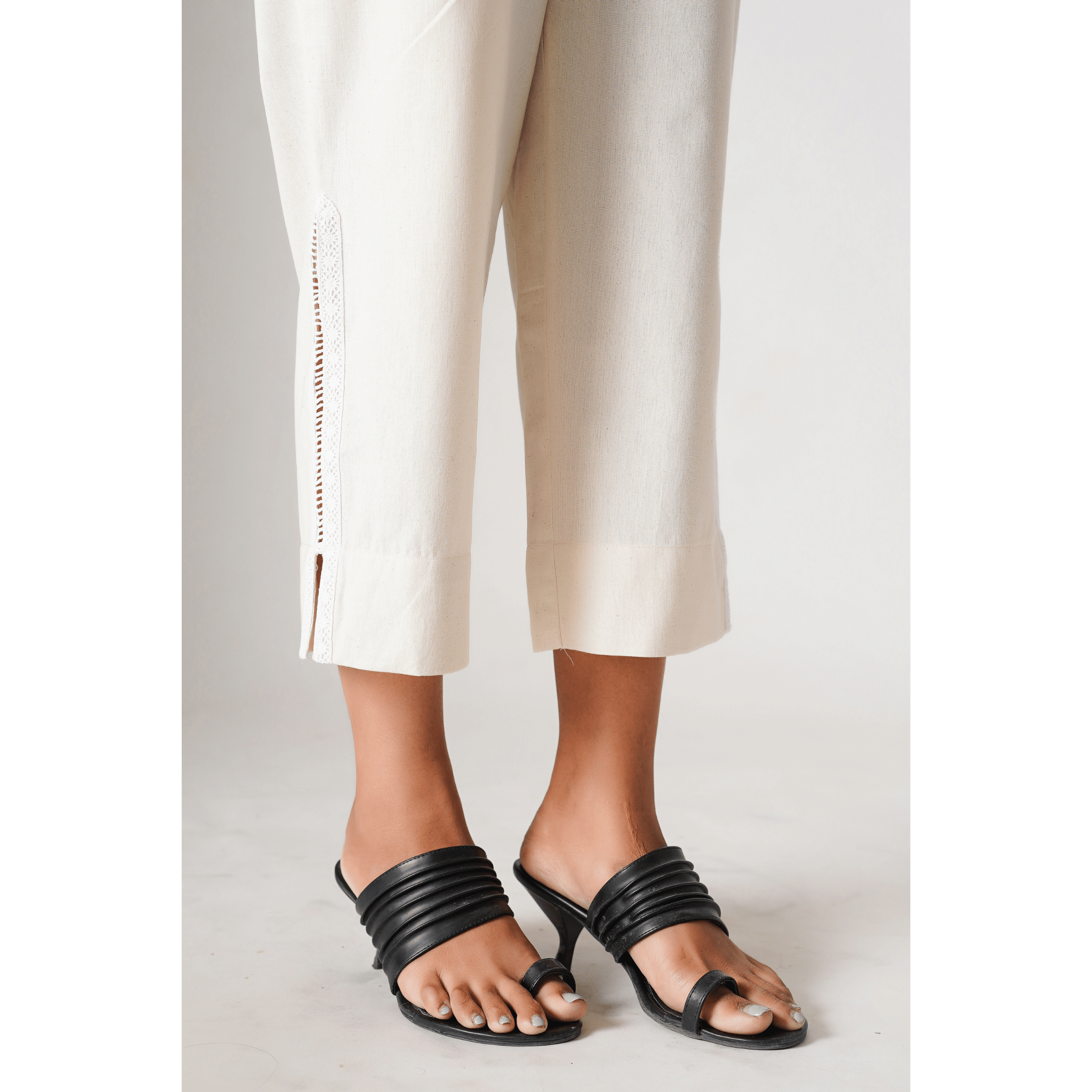
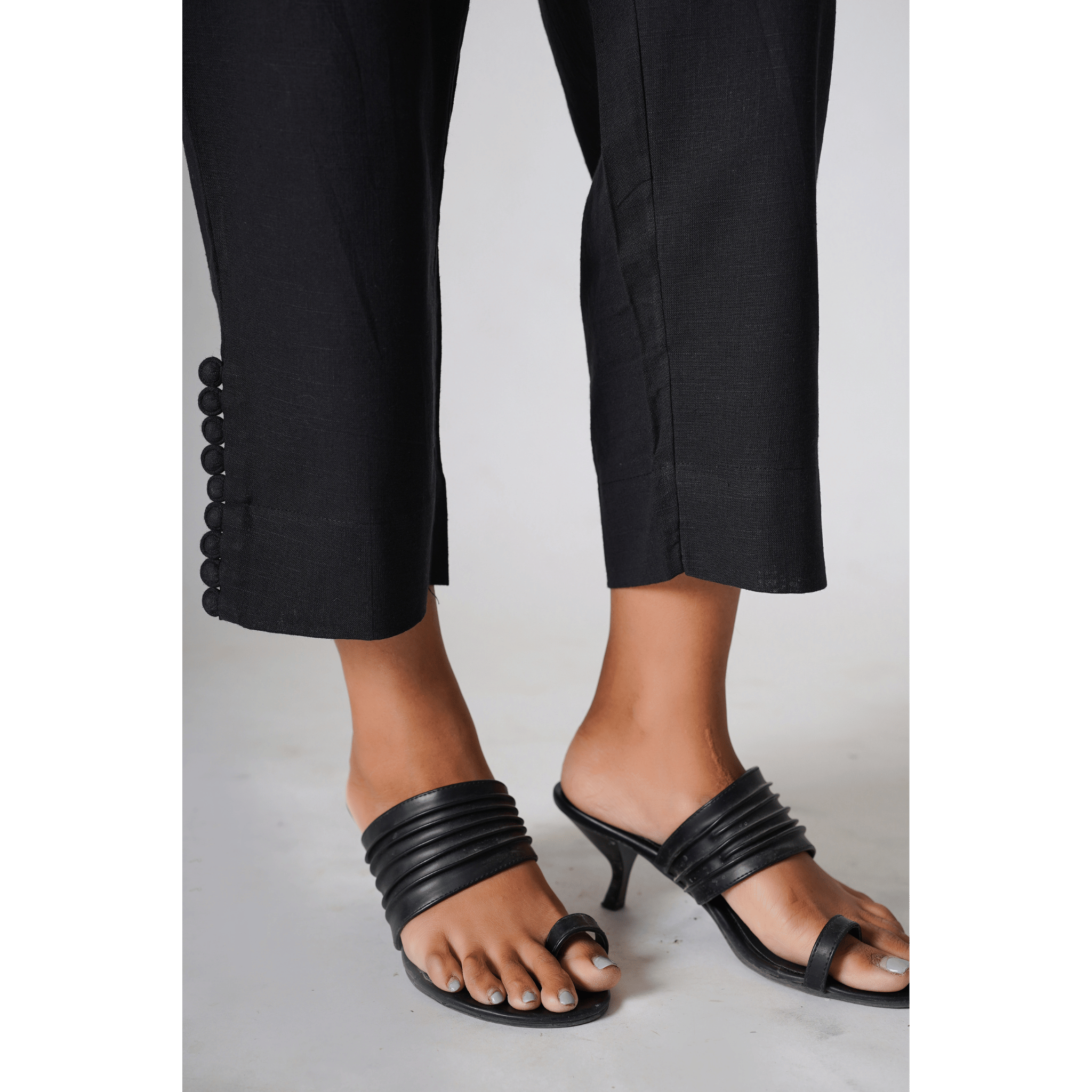
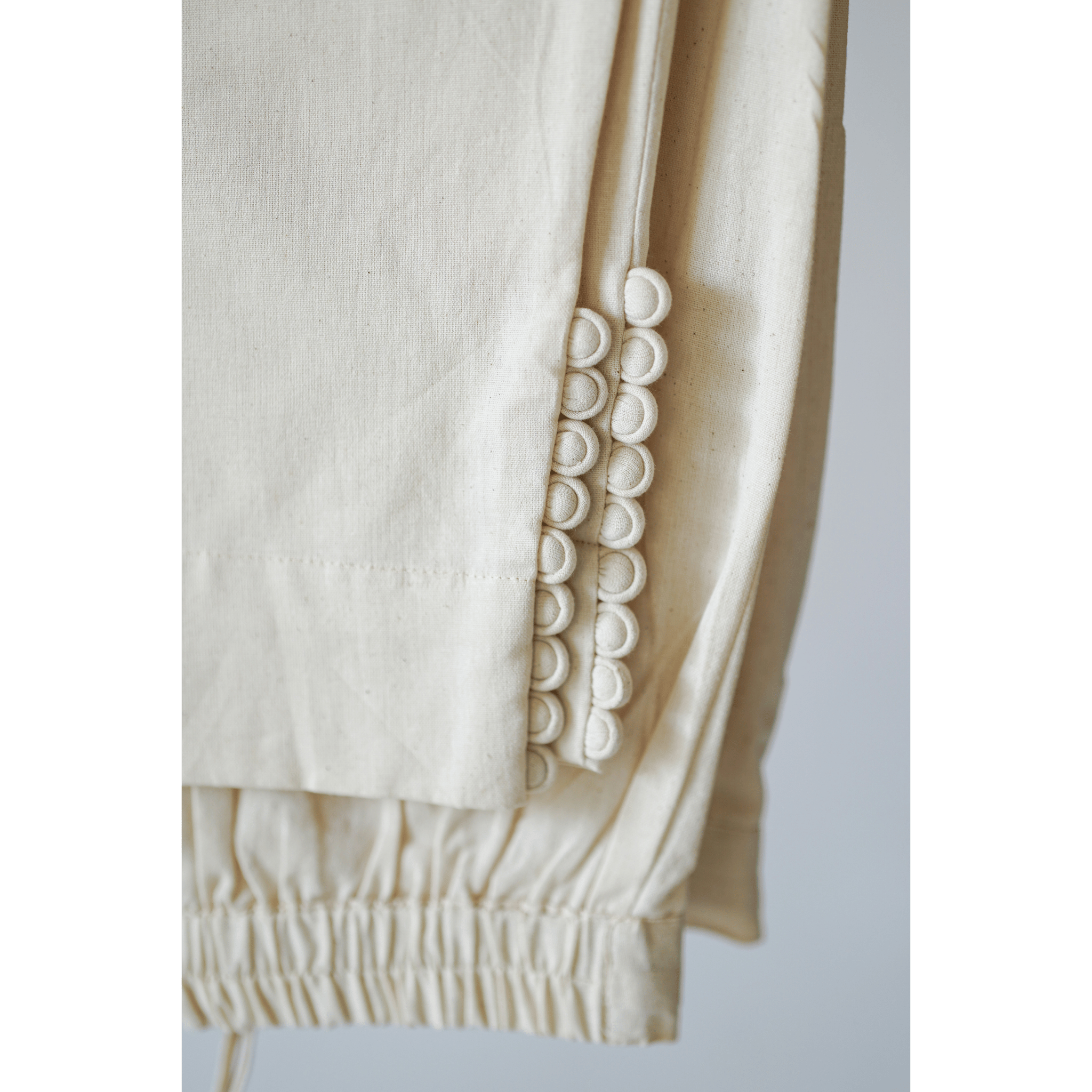
Our Dholpur Gotta Patti Pants and Jaipur Gotta Patti Kurta bring gotta patti embroidery, Jaipur's most distinctive textile tradition, into pieces designed to be worn not just for festivals and weddings but for the full range of occasions that make up a life. The Dholpur Gotta Patti Pants in particular are our attempt to answer the question of whether a craft that originated in royal courts can live comfortably in an everyday wardrobe. We believe it can, and the answer is in the wearing.
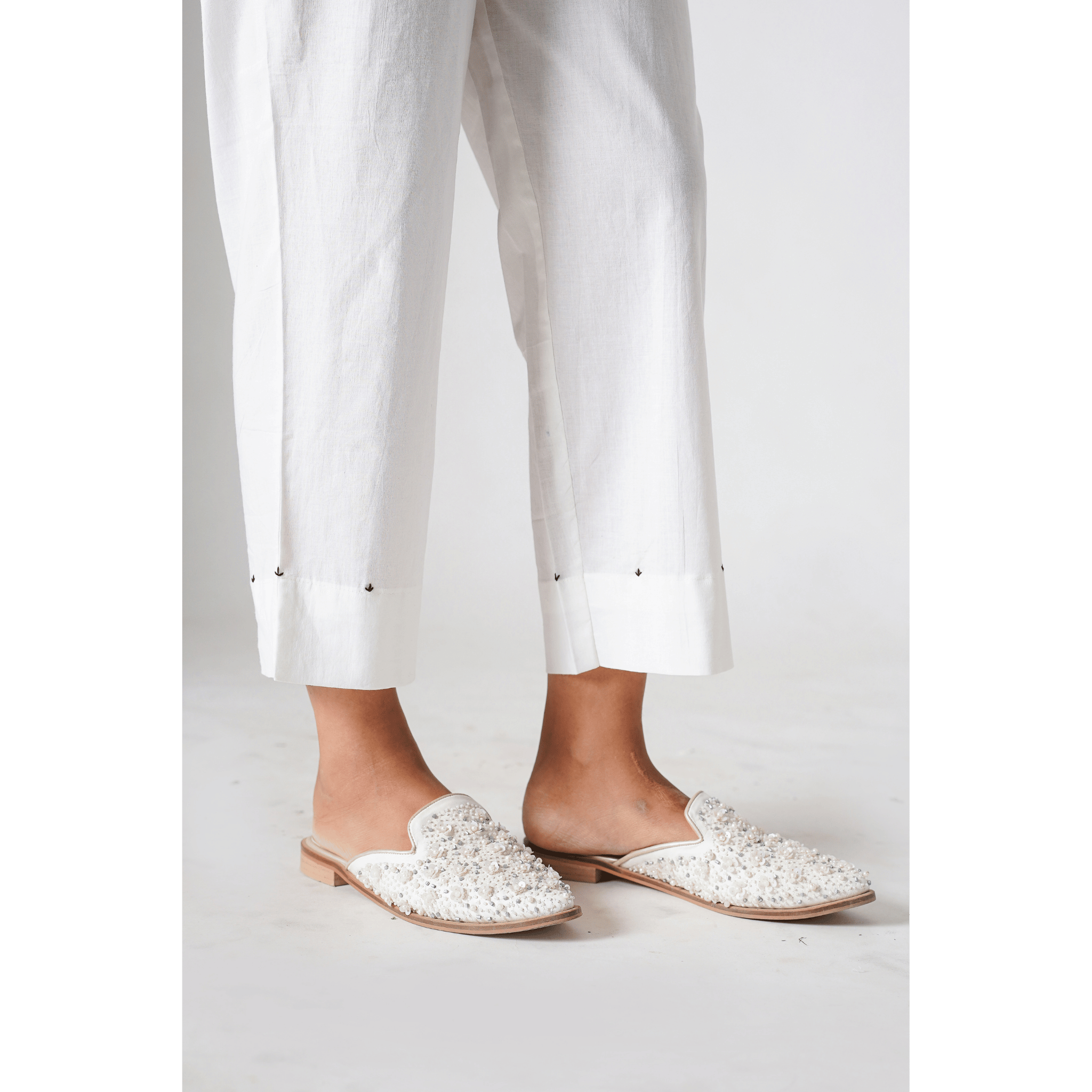
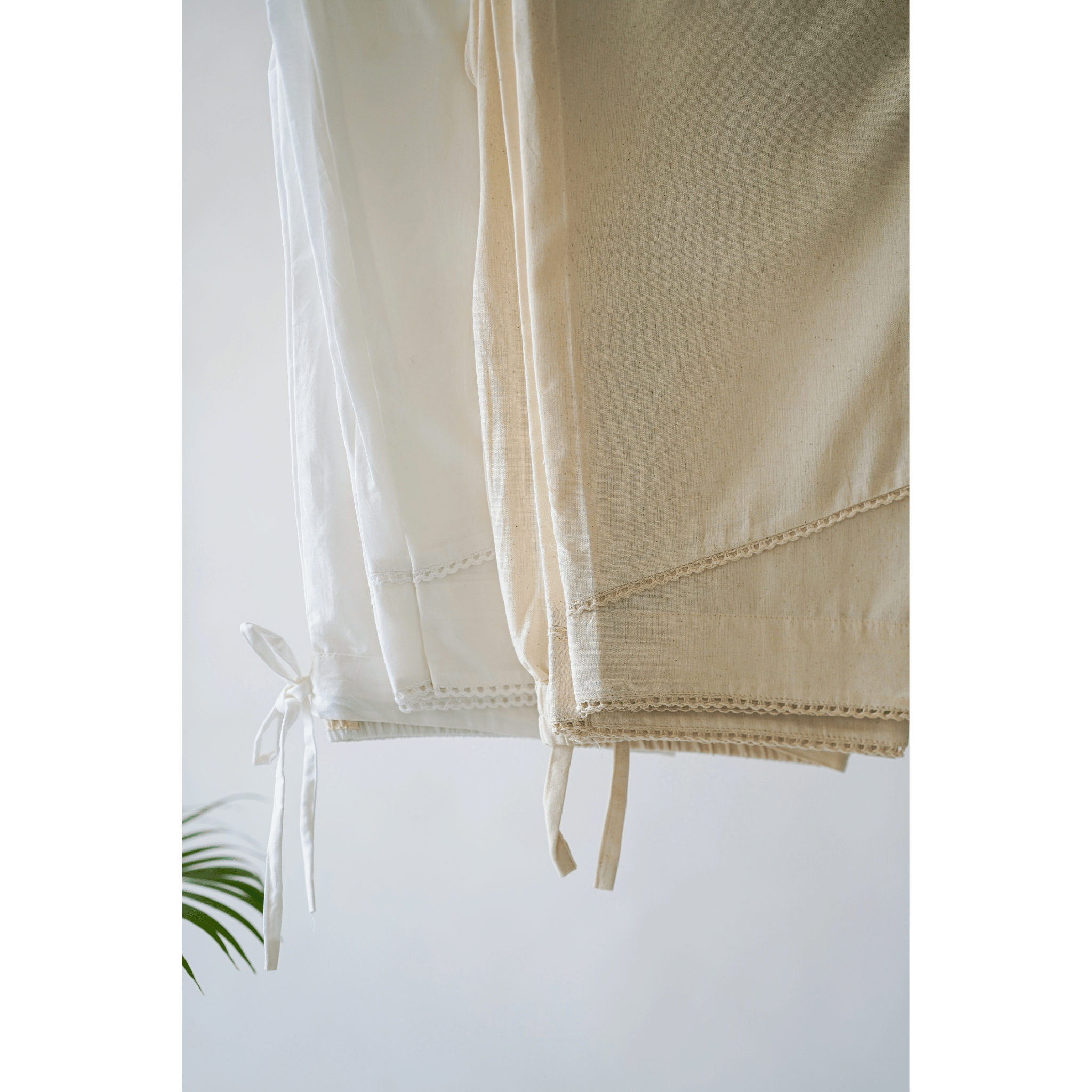
Our Cotton Slips in White and Off-White are not craft pieces in the embroidered or printed sense, but they are made from the same natural cotton that forms the base of every handcrafted piece in our range, and they represent the same commitment to natural fibre, responsible production, and longevity that runs through everything we make.
The craft in our garments is not decorative. It is structural, it is what these pieces are made of, at the level of the material and the making. We are proud to work in Jaipur's craft tradition, and prouder still when the people we work with are recognised and compensated as the skilled practitioners they are.
The Choice That Keeps a Tradition Alive
There is no neutral position in this conversation. Every time a consumer chooses a mass-produced synthetic garment over a handcrafted natural one, they are, without intending it, and without any malice, withdrawing a small unit of support from a living craft tradition. Every time a consumer makes the opposite choice, they are extending a small unit of support. At scale, across millions of purchasing decisions, these units accumulate into the economic conditions that determine whether a craft tradition survives or disappears.
This is not a guilt argument. It is a structural one. The market for handcrafted textiles is not sustained by sentiment or by cultural policy alone. It is sustained by demand, by enough people consistently choosing to pay a fair price for something made well, by hand, from natural materials, by people whose skill deserves recognition and fair compensation. When that demand is consistent and sufficient, craft traditions remain viable, skill is transmitted to the next generation, and the ecological and cultural knowledge embedded in those traditions continues to live in the world.
India's handloom heritage has survived four thousand years of human history, including deliberate attempts to destroy it. It has survived because, at every critical moment, there have been enough people who valued what it offered, who recognised that cloth made by hand, with skill, from natural materials, in the tradition of a specific place and community, was worth seeking out and paying for. Those people kept the tradition alive across the centuries. The question this generation faces is whether we will be among them.
The loom is still running. The block printer's workshop is still open. The gotta patti embroiderer is still stitching. What they need, what has always been the deciding factor, is for enough people to choose what they make.