Cart
0
You may also like
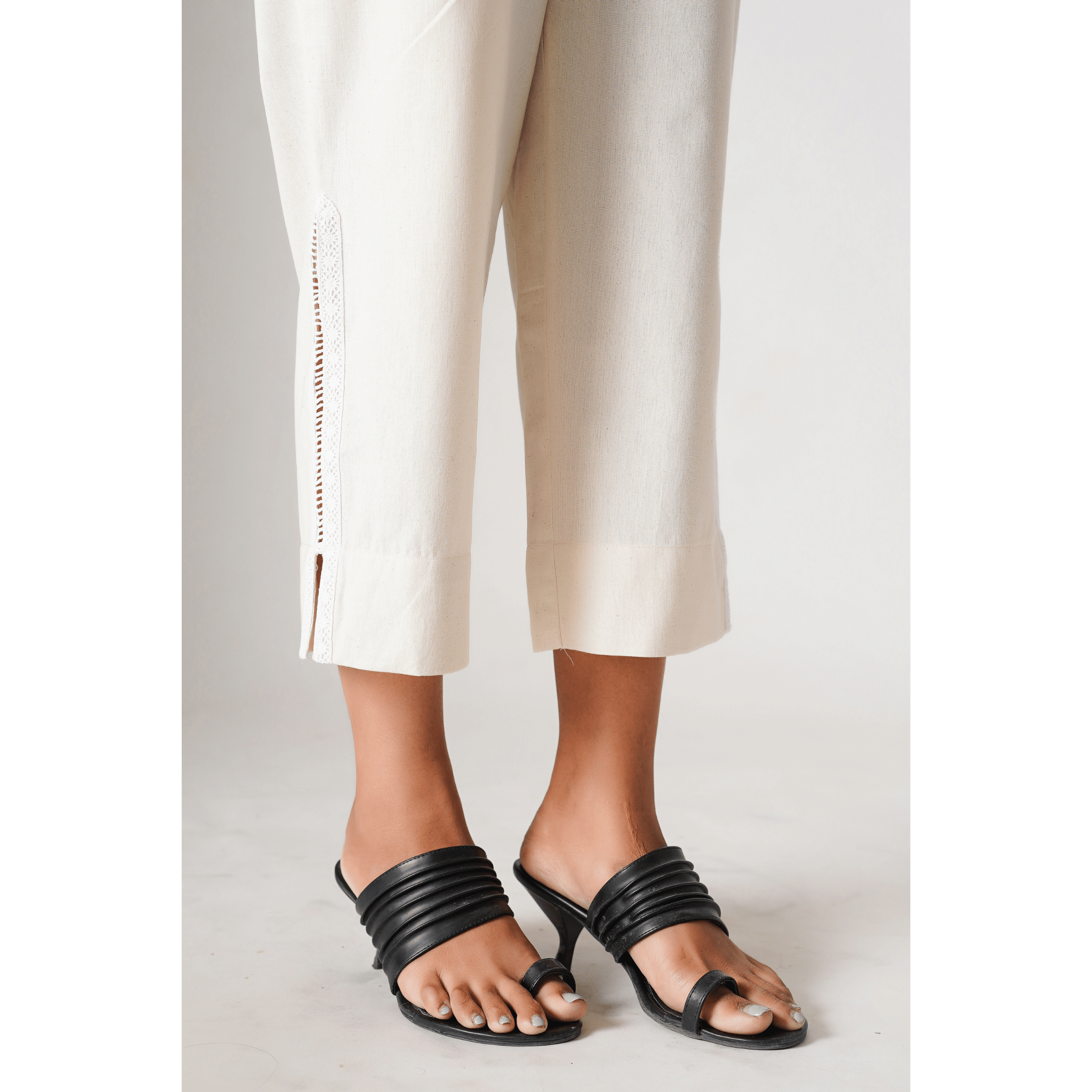

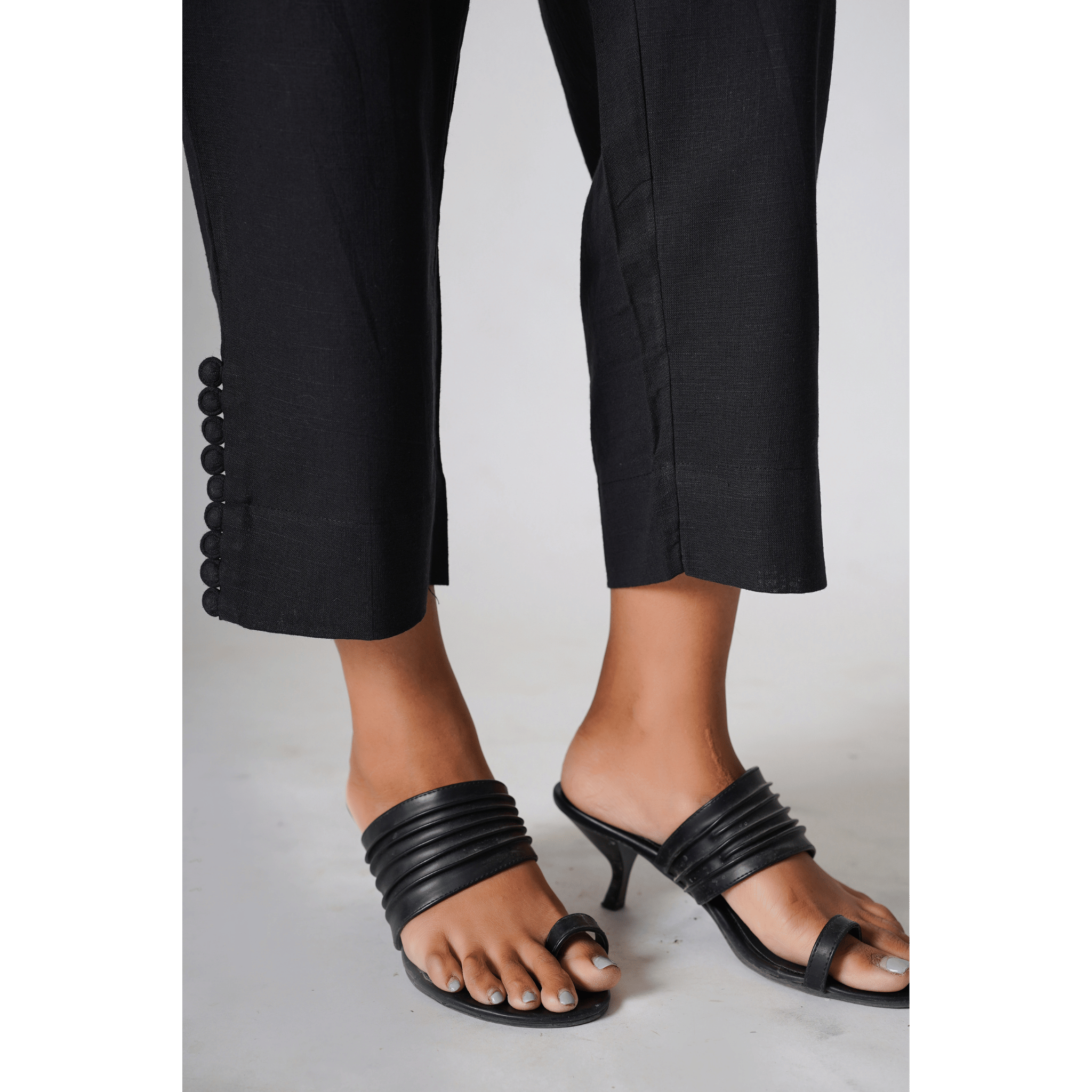
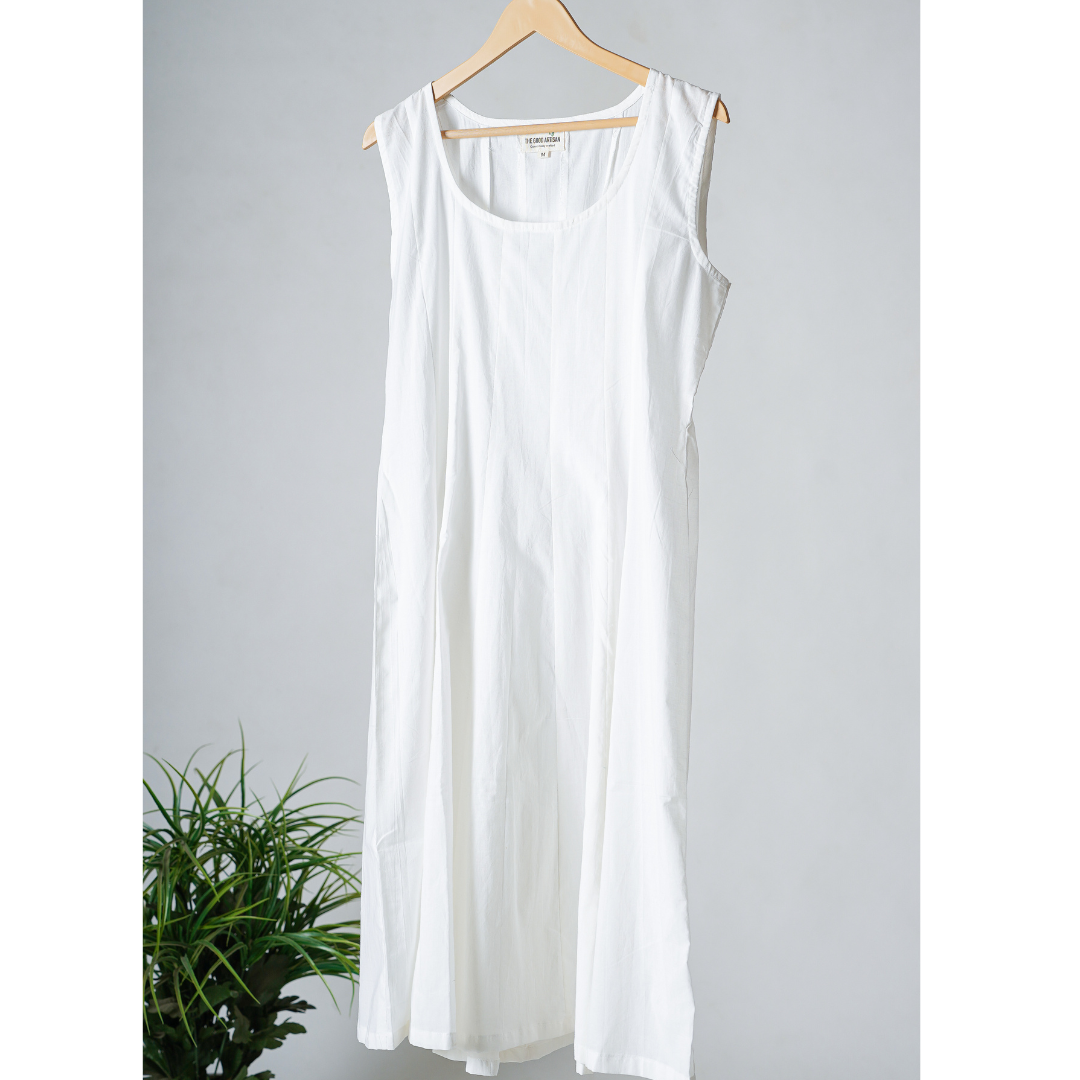
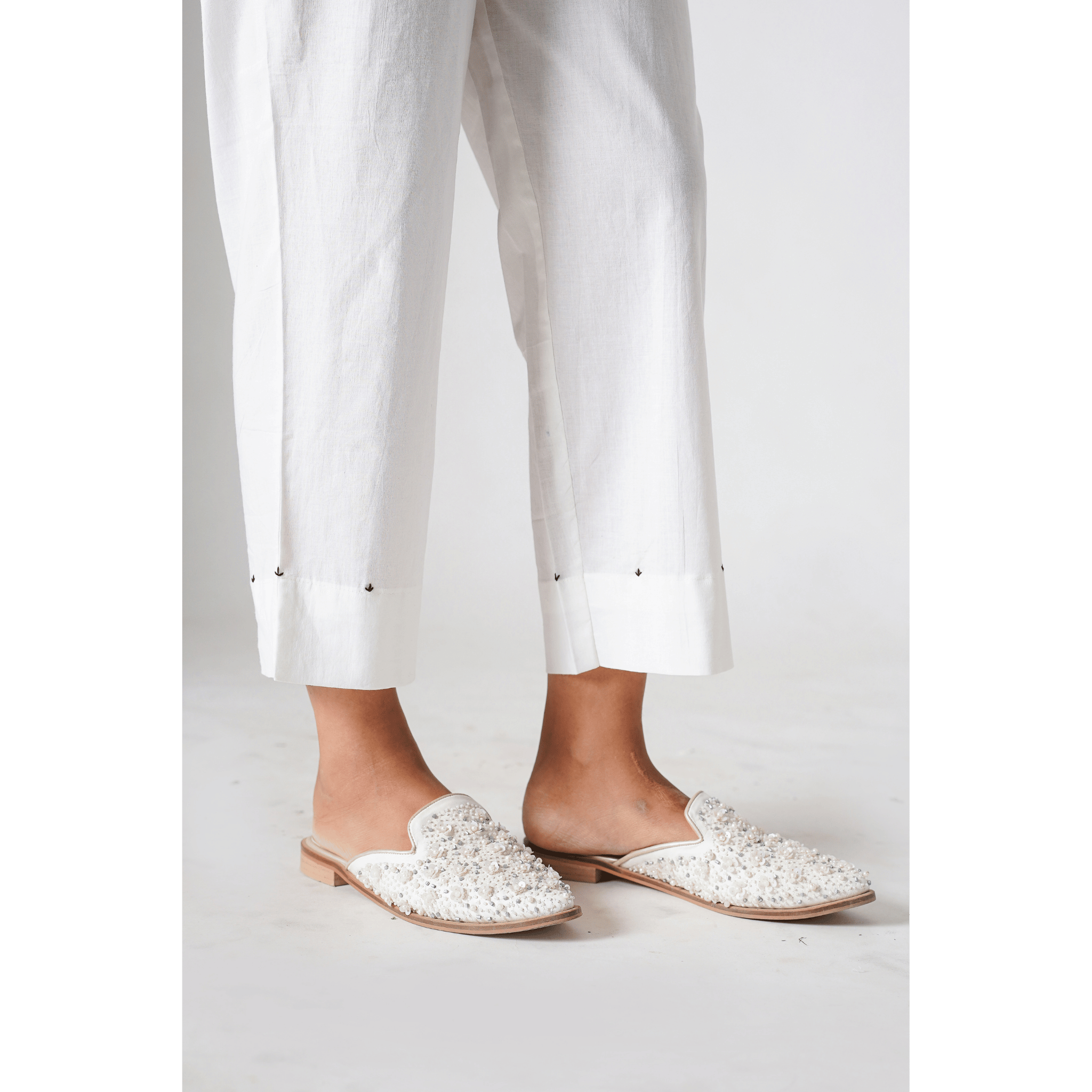
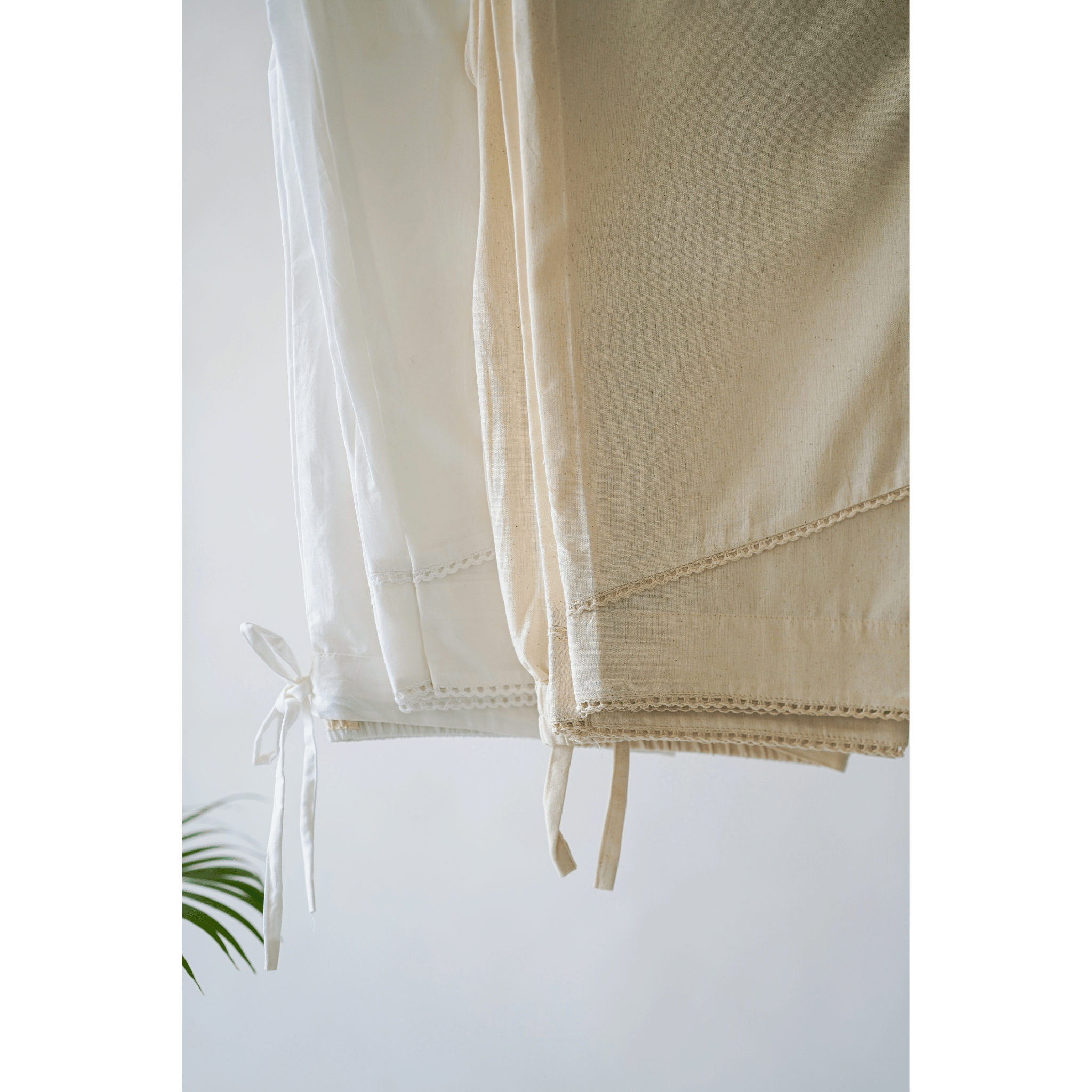
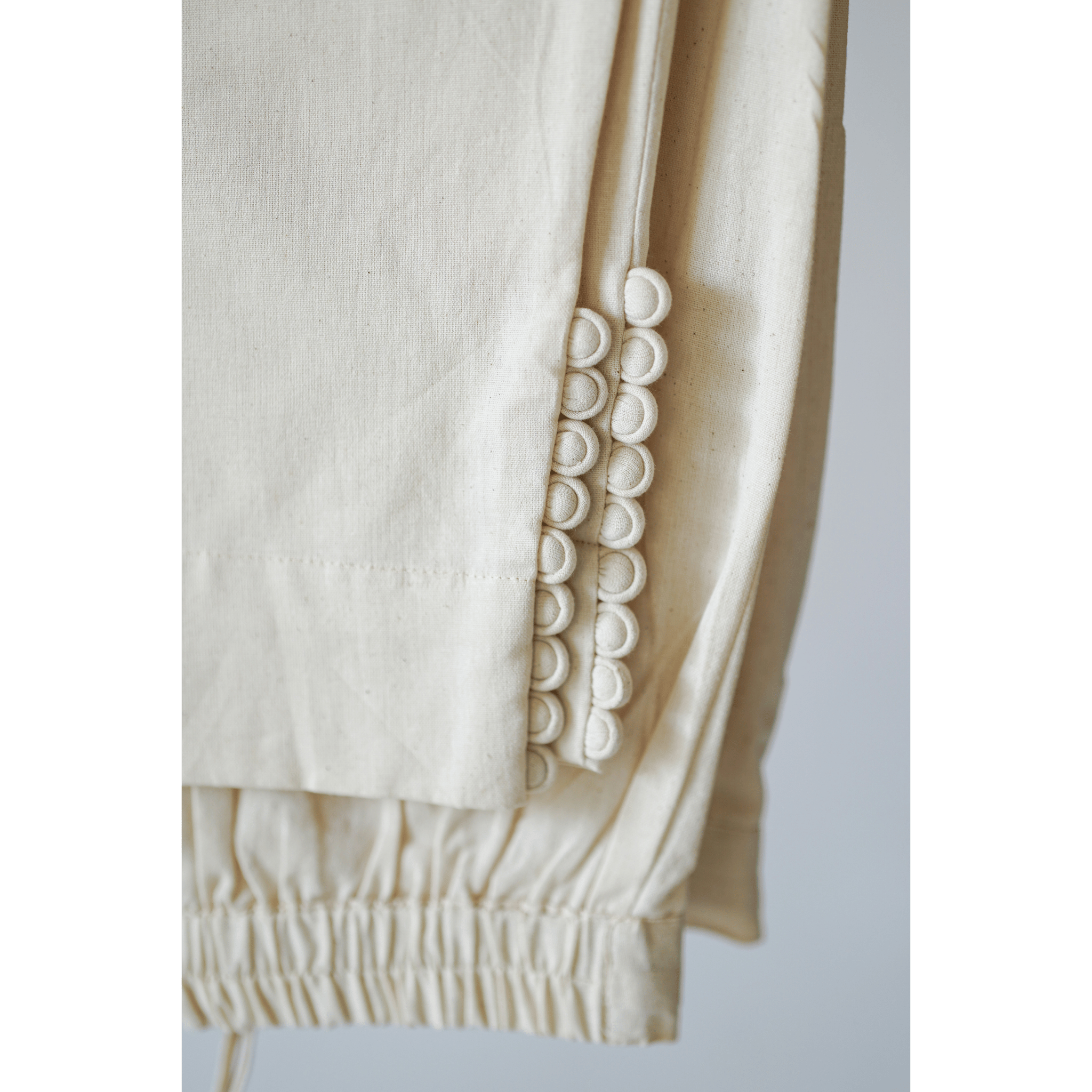

There is a particular kind of quiet confidence that comes from wearing something made by hand, the knowledge that a skilled artisan sat with your garment, thread in hand, and gave it something no machine ever could: intention.
At The Good Artisan, we chose our name deliberately. The word artisan is not decoration; it is a declaration. Every piece in our collection is rooted in the living craft traditions of India, adapted thoughtfully for the woman of today. Nowhere is this more visible than in two of our most beloved techniques: the luminous, ribbon-worked gota-patti of Jaipur, and the delicate hand-detailed scallops of hakoba fabric. This is the story of how those crafts came to live in your wardrobe.
Gota-patti is one of India's oldest and most recognisable embroidery traditions, and it belongs, above all, to Jaipur. The craft traces its origins to the royal courts of Rajasthan, where artisans stitched strips of thinly beaten gold and silver called gota onto the bridal and ceremonial garments of the Rajput aristocracy.
The word gota refers to the metallic ribbon itself; patti simply means strip or piece. Together, they describe a technique of appliqué in which these ribbons are folded, shaped, and sewn onto fabric in intricate geometric and floral patterns.
For centuries, gota-patti remained the exclusive province of weddings and festivals, the shimmer of royalty. The artisans who practised it guarded their techniques closely, passing knowledge from parent to child across generations in the narrow lanes of Jaipur's old city. What has changed in the modern era is not the craft itself, but the conversation around it. Designers and brands with a genuine commitment to Indian heritage, rather than a superficial borrowing of aesthetics, have found ways to bring gota into everyday dressing without diluting its meaning.
"Gota-patti is not an embellishment we add to a garment. It is the reason the garment exists."
At The Good Artisan, our approach to gota-patti begins with sourcing. We work with artisans from Jaipur's established craft clusters, families for whom this is not a seasonal occupation but a generational identity.
The gold and silver gota we use is the traditional zari-based ribbon, not the cheaper acetate substitutes that dominate mass production. Each piece is stitched entirely by hand, which means no two garments are perfectly identical. That imperfection is the point.
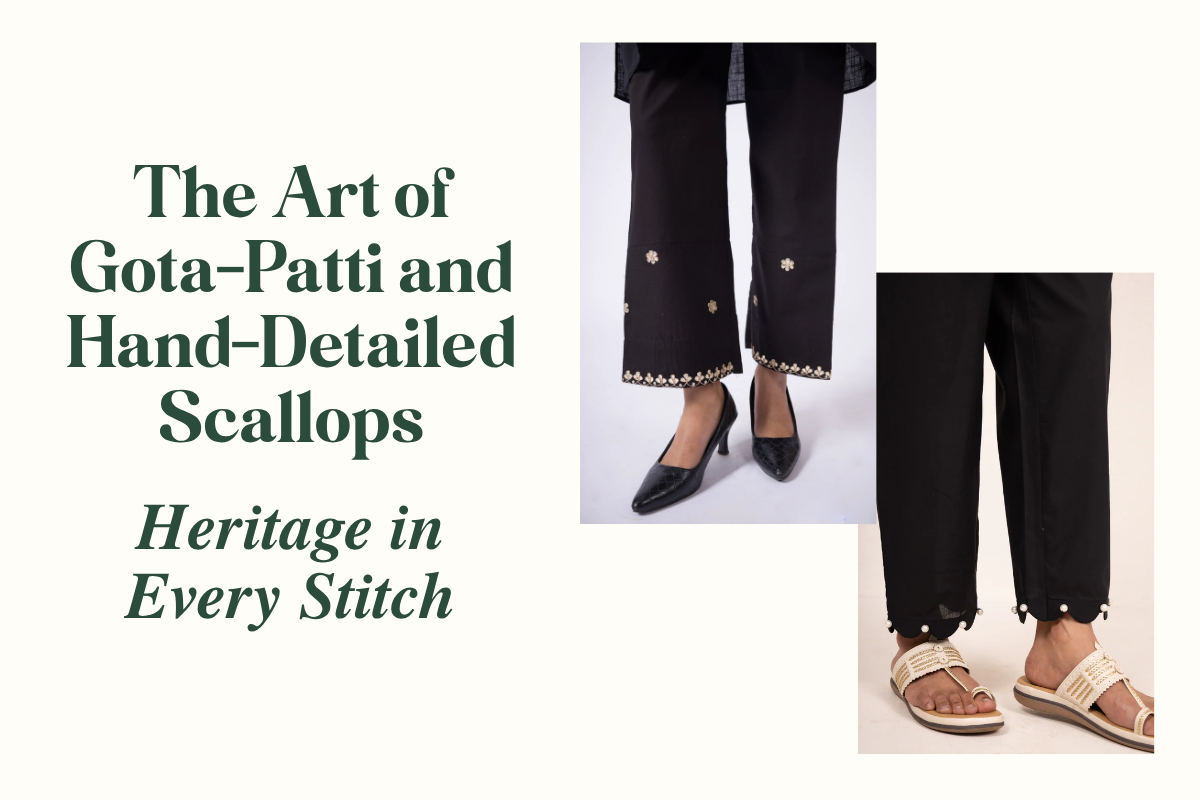
The Jaipur Gota-Patti Pants, our Dholpur, are perhaps the clearest expression of what The Good Artisan means when it speaks of bridging tradition and modernity.
The base fabric is 100% cotton: breathable, seasonally intelligent, and one of the most sustainable natural fibres available. The silhouette is wide-legged and relaxed, designed for the long working days and humid Indian summers that define life in this country for much of the year.
What elevates the Dholpur from a comfortable cotton pant into something that carries genuine cultural weight is what happens at the hem and waistline. Our artisans spend several hours on each pair, applying gota-patti ribbon in patterns inspired by the jali screens and floral motifs of Rajasthani havelis.
The ribbon catches the light as the wearer moves, a flash of gold at the ankle, a shimmer at the wrist, in the same way it would have caught candlelight in a Jaipur palace three centuries ago.
The contemporary adaptation lies in restraint. Traditional bridal gota-patti can cover an entire garment in metallic ribbon. The Dholpur uses it as punctuation, a deliberate border, a considered accent, so that the craft is visible and honoured without making the garment unwearable in a modern professional or casual context.
Pair it with a plain white cotton kurta for a morning meeting, add earrings and a dupatta for the evening: the Dholpur is designed for the full arc of a woman's day.
If gota-patti is the language of Rajasthan, hakoba is the quiet poetry of India's weaving traditions.
Hakoba, also known as huckaback, is an open-weave cotton fabric whose distinctive grid-like texture comes from its loom construction: floated weft threads create a raised pattern across the surface, giving the cloth an almost honeycomb-like appearance when held to the light. It is extraordinarily breathable, which makes it particularly well-suited to the Indian climate.
The scalloped edge that defines many of our hakoba pieces is applied entirely by hand. A scallop, the rounded, wave-like border that follows the hem or neckline of a garment, sounds simple in description but demands considerable skill in execution.
Each curve must be even, each point of the scallop must fall at a precise interval, and the stitching that secures it must be invisible from the right side of the fabric.
Done poorly, scallops look clumsy. Done well, as they are by the artisans we work with, they give a garment a softness and femininity that no machine-applied trim can replicate.
"A scalloped hem is not decoration. It is the signature of a craftsperson who took their time."
Our Amara Hakoba Palazzos are built around exactly this philosophy.
The silhouette is the wide, flowing palazzo, a form that has become a staple of the modern Indian wardrobe for good reason: it is comfortable across body types, culturally versatile, and exceptionally well-suited to heat.
The hakoba fabric ensures airflow even on the most punishing summer days. But it is the scalloped hem that makes the Amara what it is.
Each pair of Amara palazzos is finished with a hand-detailed scalloped border along the hem, executed in a contrasting or tonal thread depending on the colourway.
The scallops are drawn, cut, and stitched by artisans who specialise in this finish, it is not a task that can be delegated to a general tailor.
The result is a garment that reads as effortlessly simple from across a room, but reveals its craft the moment you look closely.
This is the tension at the heart of slow fashion done right: the complexity is hidden in the making, so that the wearing feels uncomplicated.
You put on the Amara and feel the lightness of the hakoba cotton, the ease of the palazzo cut, the small pleasure of a beautifully finished hem. The hours of artisan work that produced those qualities are invisible, which is exactly as it should be.
The craft serves the garment, not the other way around.
| Technique | Origin | Fabric | TGA Product | Season |
|---|---|---|---|---|
| Gota-Patti | Jaipur, Rajasthan | 100% cotton base cloth | Dholpur Gotta Patti Pants | Year-round |
| Hand Scallop | Pan-India weaving tradition | Hakoba open-weave cotton | Amara Hakoba Palazzos | Summer / Monsoon |
| Block Printing | Bagru & Sanganer, Jaipur | Cotton slub and mulmul | Phulera Printed Pants / Aira | All seasons |
| Gotta Patti + Embroidery | Jaipur royal craft clusters | Cotton-linen blend | Jaipur Gotta Patti Kurta | Festive / Evenings |
There is an argument, one we believe in deeply, that supporting traditional craft is one of the most meaningful sustainability choices a fashion brand can make.
Industrial textile production is among the most resource-intensive and polluting industries on the planet. The alternative that slow fashion proposes is not simply to use organic cotton or recyclable packaging: it is to fundamentally rethink how garments are made, by whom, and at what pace.
When you buy a pair of Dholpur pants or Amara palazzos from The Good Artisan, the economics are straightforward: a skilled artisan in Jaipur was fairly compensated for several hours of work.
The fabric used was natural, biodegradable, and sourced from Indian mills. No synthetic dyes were used in the gota-patti application.
The garment was produced in a small batch, not a thousand units, based on trend forecasting, but a careful run based on what we know our customers actually want and will wear for years.
Our founder's background in ecological consultancy means that sustainability at The Good Artisan is not a marketing strategy; it is the operating logic of the business.
We measure success not in units sold but in artisan relationships sustained, craft techniques kept alive, and garments that are still being worn five years after purchase.
Gota-patti and hand-scalloped hakoba are, in this sense, not just beautiful techniques. They are our most direct argument against disposability.
One of the most common questions we receive from customers is a version of:
"I love the craft, but is it too much for everyday wear?"
The answer, without hesitation, is no, and the Dholpur and Amara were designed specifically to prove that point.
The Dholpur in black cotton pairs effortlessly with a plain white kurta or even a simple cotton shirt for a day at the office. The gota-patti at the hem reads as a refined detail, the kind of thing a colleague will notice and ask about, rather than an overtly festive embellishment.
For the evening, the same pants need nothing more than a change of top and the addition of a single piece of silver jewellery.
The craft elevates the outfit; it does not overwhelm it.
The Amara Hakoba Palazzos occupy a similar space. The open weave of the hakoba fabric and the softness of the scalloped hem make them the kind of piece you reach for on a hot day when you want to look considered without trying hard.
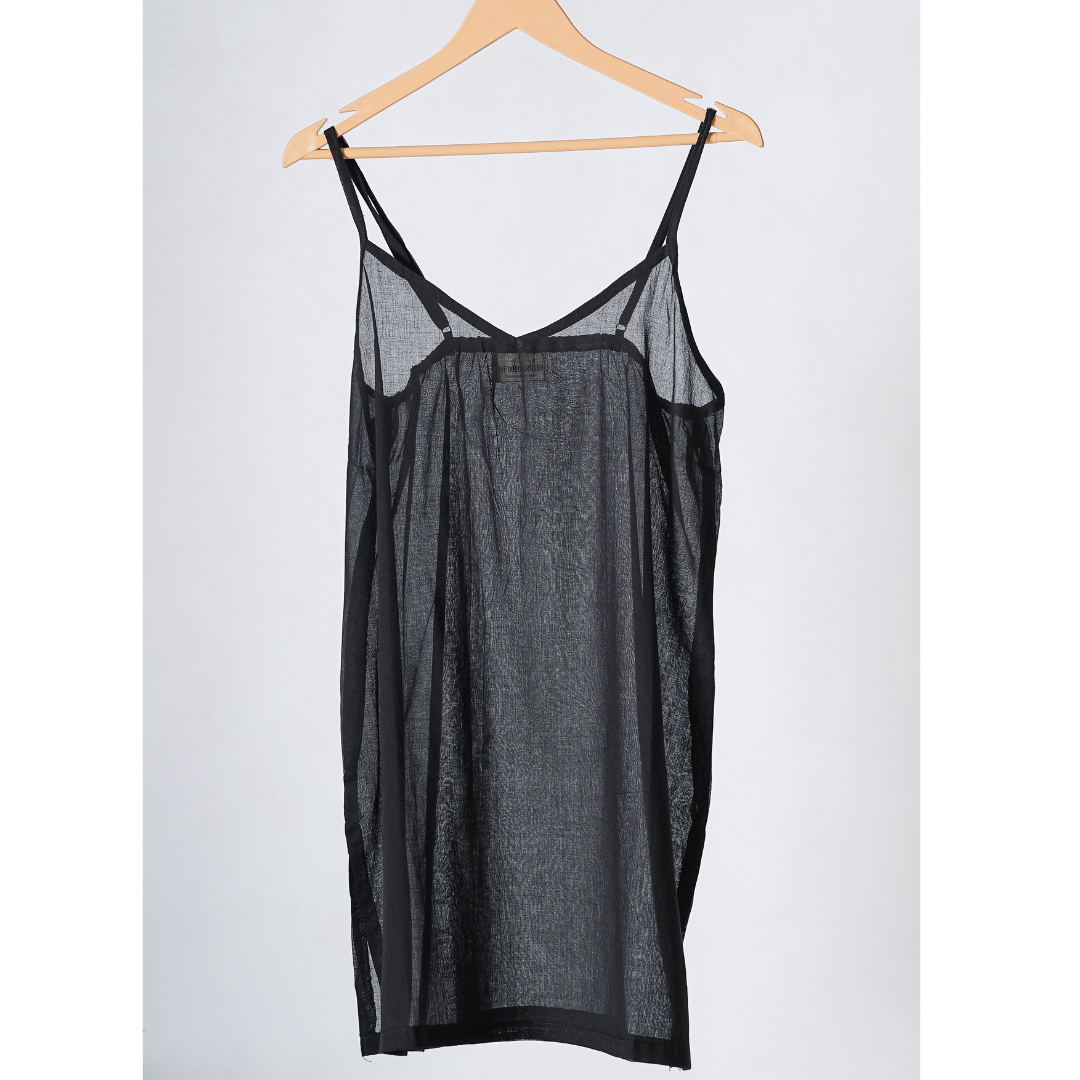
Wear them with a fitted cotton slip or a breezy, cropped top. Let the fabric breathe. Let the scallop do its quiet work.
That is the entire philosophy of The Good Artisan in a single outfit: beauty that does not demand your attention, craft that rewards it when you look closely.
"Every stitch is a conversation between the artisan who made it and the woman who wears it. At The Good Artisan, we are proud to be the bridge between them."