Cart
0
You may also like
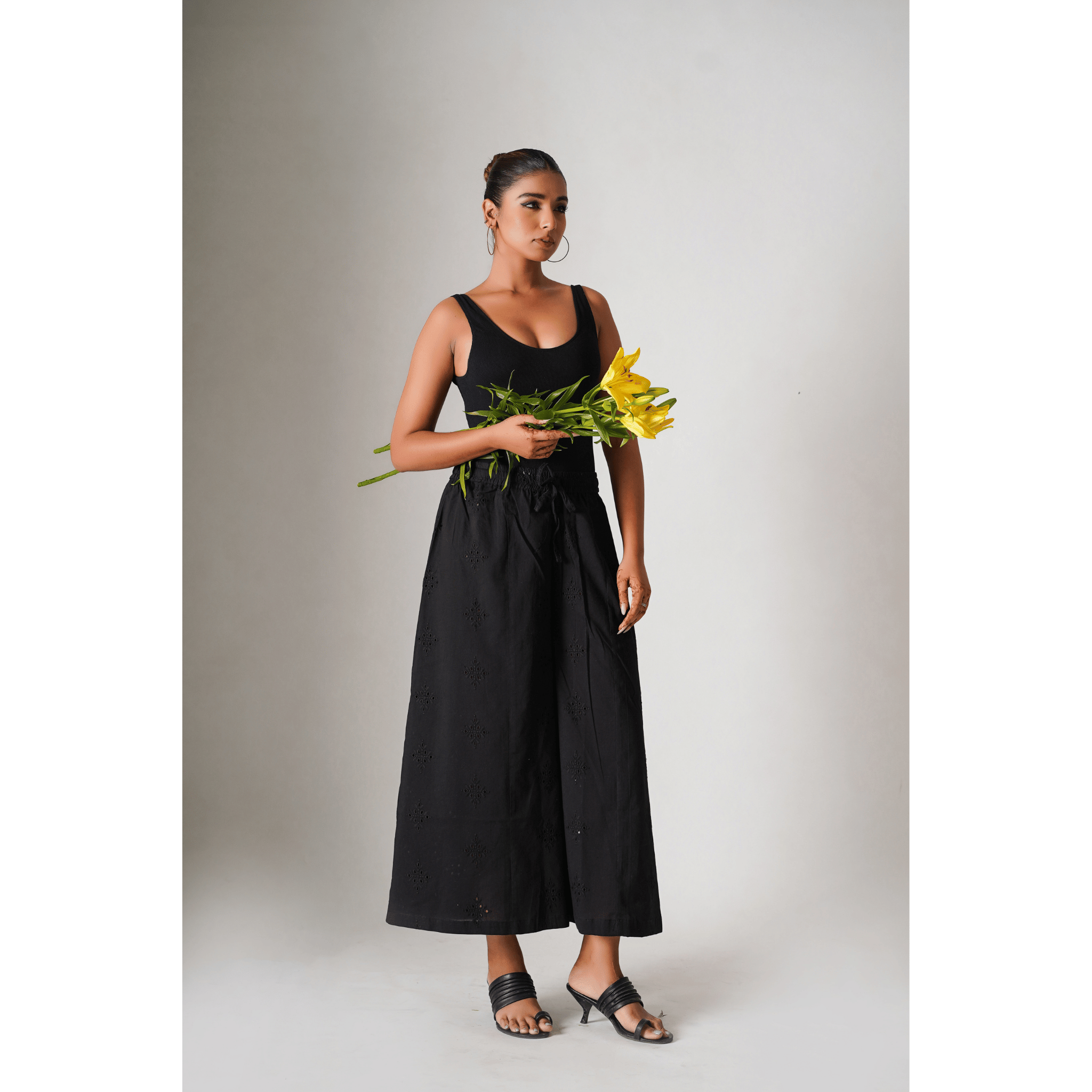
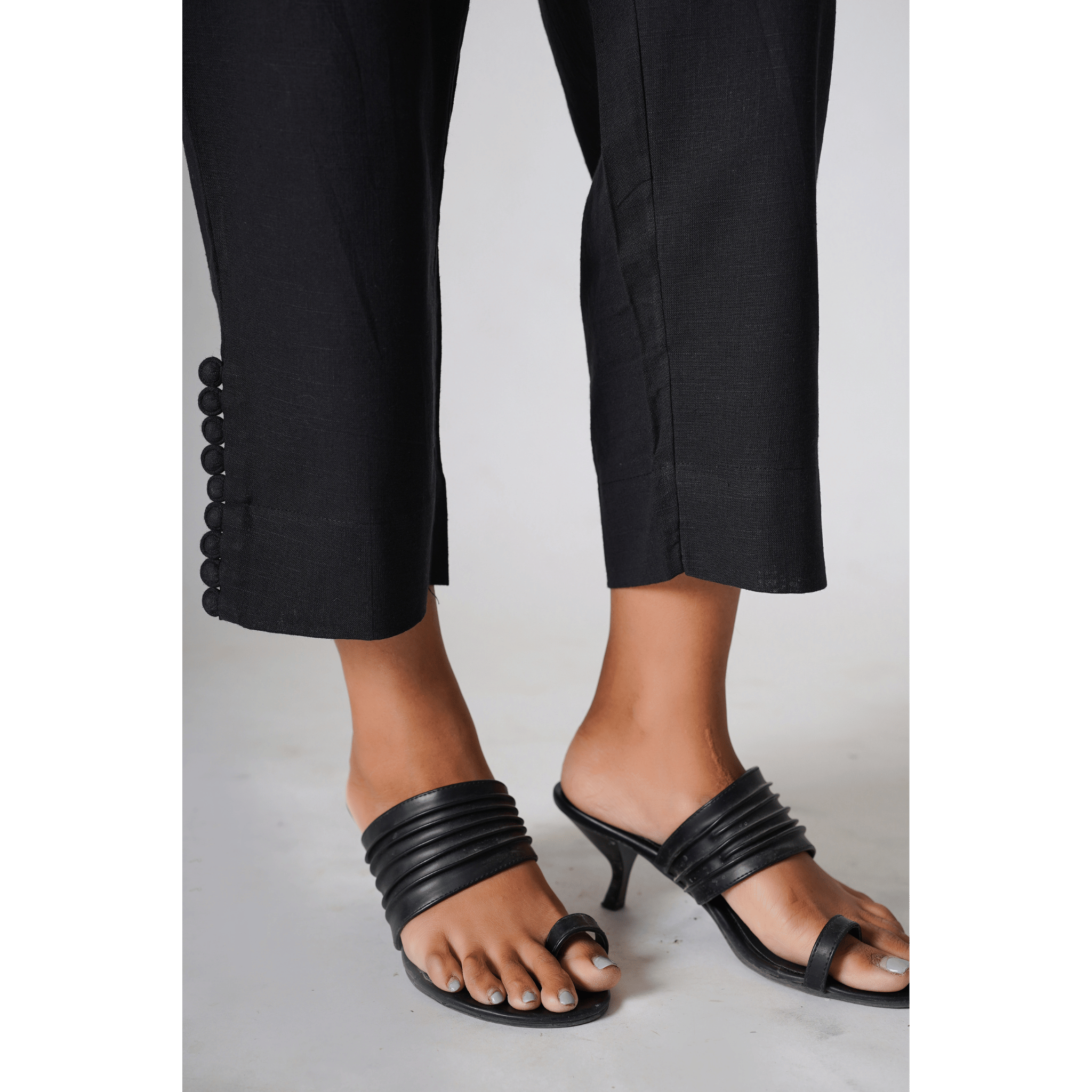
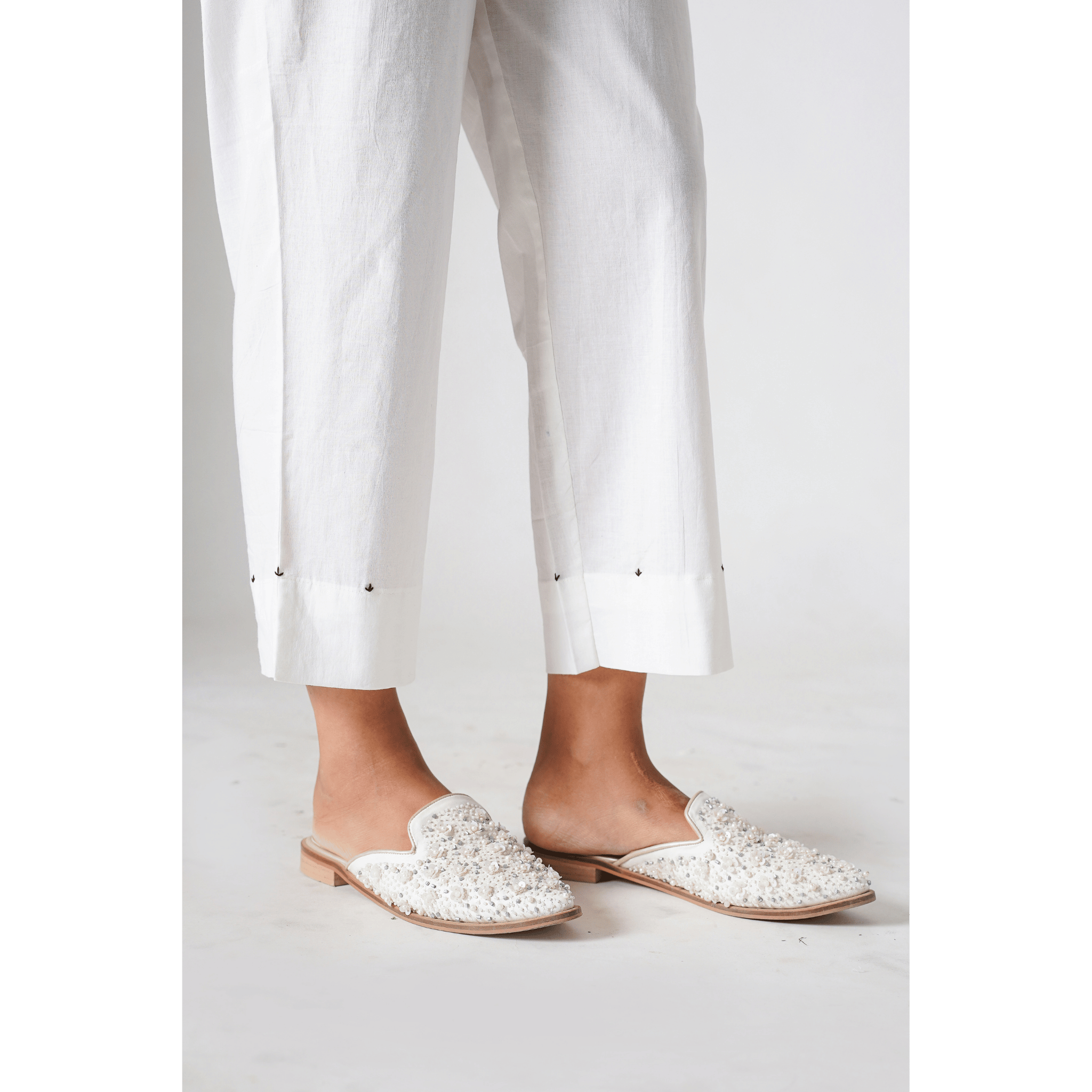

Every Indian woman who has reached for a favourite chikankari kurta on a summer morning knows the moment. You put it on, step toward the window to check the look, and realise that the kurta is significantly more sheer in natural light than it appeared in your bedroom. The intricate embroidery that drew you to the piece in the first place, the delicate shadow work, the pulled thread patterns, the floral motifs worked in white on white is beautiful, but the fabric between those stitches is offering very little coverage. You either change your entire outfit or spend the day mildly self-conscious. Neither is a satisfying outcome.
The same problem appears with sheer cotton kurtas, lightweight mulmul tunics, georgette tops, and any number of other garments that are beloved in the Indian summer wardrobe precisely because they are light and airy, properties that are, unfortunately, directly related to their transparency. The more breathable the fabric, the more likely it is to be sheer. This is not a flaw in the garment. It is physics. And the solution is not to avoid these beautiful, weather-appropriate pieces. The solution is to understand what to wear beneath them.
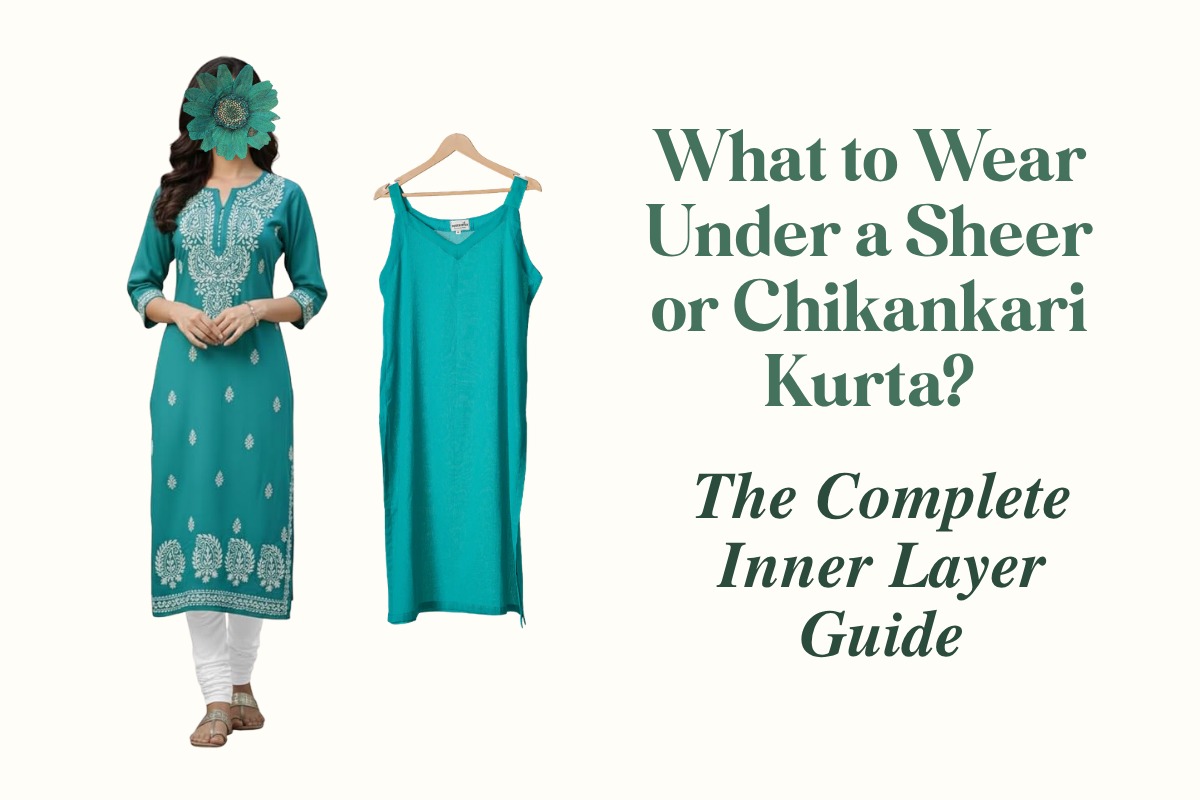
This guide is a complete, practical answer to that question. We will cover the right fabrics for an inner layer, how to match slip length to every kurta style you own, a colour guide that accounts for Indian skin tones and Indian fabric colours, and the specific considerations that apply to chikankari embroidery in particular. Every recommendation in this guide leads back to a simple, sustainable choice: a well-made cotton slip. And at The Good Artisan, that is exactly what we make.
Not all sheer garments are sheer for the same reason, and understanding why a fabric is transparent helps you make better decisions about what to wear beneath it. Sheer kurtas fall broadly into two categories: fabrics that are sheer because of their weave, and fabrics that are sheer because of their weight.
Weave-sheer fabrics include mulmul, cotton voile, georgette, and organza. These are woven with very fine threads at a low thread count, creating gaps between the yarns through which light passes freely. Even when the fabric is technically opaque, not see-through in a dark room, it becomes sheer the moment it is backlit, which happens constantly outdoors, near windows, and under office fluorescent lights. The sheerness is inherent to the construction and cannot be washed, pressed, or starched away.
Weight-sheer fabrics include many lightweight cottons and linens that are not structurally open but are simply too thin to provide full opacity on their own. These fabrics often appear perfectly opaque in the store or in indoor lighting but reveal their transparency in direct sunlight or when the fabric is damp. This is the category that catches most women by surprise.
Chikankari kurtas are a specific case that combines both challenges. Chikankari is one of India's most celebrated hand-embroidery traditions, originating in Lucknow and historically worked on the finest muslin and cotton voile. The reason chikankari has always been worked on these particular fabrics is that the embroidery itself, especially the shadow work and pulled thread techniques, is designed to be seen through the fabric from the front, creating a three-dimensional effect that depends on the translucency of the ground cloth. In other words, the sheerness of a chikankari kurta is not incidental. It is intrinsic to how the embroidery is meant to look. Wearing a slip beneath a chikankari kurta does not diminish the embroidery; it provides the background contrast against which the stitching reads most clearly.
"The slip is not the compromise. It is what makes the chikankari embroidery visible in the way the artisan who stitched it intended."
This is an important reframe. Many women think of wearing a slip under a beautiful kurta as a concession, a practical necessity that slightly diminishes the garment. The opposite is true, particularly for chikankari. A well-chosen slip beneath a chikankari kurta creates the backdrop against which all that intricate hand-stitching can be seen clearly. The embroidery pops. The shadow work reads. The kurta looks exactly as it was designed to look.
Before we discuss length and colour, we need to settle the question of fabric, because the inner layer fabric choice affects everything else: your comfort, the behaviour of your outer kurta, and how long you can wear the outfit before it stops feeling good.
The most common inner layer mistake is reaching for a synthetic slip or camisole. Synthetic fabrics- polyester, nylon, viscose blends, satin-finish acetate- are widely available and inexpensive, which is why they dominate the innerwear market. But they are the wrong choice beneath a sheer or chikankari kurta for several interconnected reasons.
Synthetic fabrics do not breathe, which means they create a sealed layer against your skin that traps heat and moisture. In the Indian summer, this transforms a comfortable cotton kurta into a significantly less comfortable experience. Synthetic fabrics also generate static electricity, which causes the outer kurta to cling, particularly problematic with fine chikankari fabric, where static can cause the delicate embroidery threads to catch and pull. And synthetic fabrics do not absorb sweat the way natural fibres do, which means perspiration sits against your skin rather than being drawn away, with predictable consequences for your comfort and for the freshness of your outer garment.
Cotton is the correct inner layer fabric beneath any sheer or chikankari kurta, without exception. Cotton breathes. It absorbs moisture and releases it, keeping you cooler and drier through the day. It creates no static. It moves naturally against the outer fabric rather than catching on it. And it is a natural, biodegradable fibre that is consistent with the ethos of wearing handcrafted, natural-fibre outer garments in the first place. A chikankari kurta worked by hand on cotton voile deserves a cotton slip beneath it—the pairing is consistent in material, in craft, and in values.
Within cotton, there are two weave choices most relevant to inner layers: mulmul and regular cotton.
Mulmul, the fine, loosely woven muslin that has been made in India for millennia, is the superior choice beneath lightweight sheer fabrics. It is so fine and lightweight that it adds almost no perceptible layer beneath the kurta, which is critical when the outer fabric is already delicate and lightweight. A mulmul slip beneath a mulmul or cotton voile chikankari kurta feels like wearing almost nothing while providing full coverage.
Regular cotton in a standard weave is the right choice for heavier sheer fabrics, lightweight linens, semi-sheer cotton-linen blends, or any outer fabric where a small amount of additional structure from the inner layer is welcome rather than intrusive.
Colour is where most inner layer decisions go wrong, and it is entirely fixable once you understand the underlying principle. The goal of an inner layer beneath a sheer kurta is to be invisible, not invisible in the sense of perfectly matching the outer fabric, but invisible in the sense of not drawing the eye or creating a visible contrast through the sheer fabric above it. The way to achieve this is to match the inner layer to your skin tone, not to the kurta.
This principle runs counter to the instinct most people follow, which is to try to match the inner and outer garment colours. That instinct produces visible results: a white slip under a white chikankari kurta creates a bright, almost glowing layer beneath the translucent fabric that reads very clearly as an undergarment. A black slip under a black kurta creates a dark shadow that can be seen through the outer fabric. The eye notices contrast between layers far more readily than it notices a layer that blends with the wearer's skin.
For fair and very light skin tones, a white or very pale ivory slip comes closest to the skin colour and will be least visible under sheer fabrics of any colour. The white slip works well under white chikankari not because the colours match- they do- but because the combined effect of white slip against light skin under white fabric is a single, consistent, light impression rather than a visible layered look.
For wheatish and medium skin tones, the most common range across North and Central India, a warm beige or nude slip is the best choice. This tone sits close enough to the skin that it does not create visible contrast beneath sheer fabric. It works under white and off-white chikankari, under pale pastels, and under any light or medium-value outer fabric. A warm beige slip in a good mulmul or regular cotton is the single most versatile inner layer piece most Indian women can own.
For dusky, brown, and deep brown skin tones, which span a wide and beautiful range of South Asian complexions a caramel, tan, or deeper nude slip will be most effective. The precise shade varies by individual, but the principle is consistent: the closer the slip colour is to your actual skin tone, the more effectively it disappears beneath the sheer fabric above it. Many women with deeper skin tones make the mistake of wearing a beige slip that is too light for their complexion, which creates a visible pale layer under the kurta. A deeper nude is a much better result.
"The right slip colour does not match your kurta. It matches you. When the slip disappears into your skin tone, the embroidery above it is all anyone sees."
A specific note on coloured chikankari: the traditional chikankari is white embroidery on white fabric, but contemporary makers have expanded the palette considerably—you will now find chikankari on pale pink, mint, lavender, powder blue, and even medium-value colours. For these, the skin-tone matching principle still applies. Do not try to match the slip to the fabric colour. Match the slip to your skin, and the coloured chikankari will sit above it as intended.
The one exception to the skin-tone rule is dark and deep-coloured outer fabrics. If you own a chikankari kurta in a deep navy, forest green, or deep burgundy, increasingly common as the craft moves into contemporary fashion, a slip in a colour close to the outer fabric will be less visible than a nude slip, because the outer fabric is dark enough to absorb the colour difference between skin and slip. For these garments, a dark slip in a complementary deep tone is preferable to a nude one.
Length is the practical detail that makes or breaks an inner layer choice, and it is worth thinking about carefully for each kurta style you own rather than assuming one slip length will cover all your bases. The governing rule is simple: the inner layer should be two to three centimetres shorter than the outer kurta at its longest point. Any shorter and you lose coverage at the hem. Any longer and the slip shows below the kurta, which is visually untidy and defeats the purpose of wearing it.
Short and hip-length sheer kurtas, increasingly popular as contemporary Indian fashion moves toward tunics worn over palazzo pants or wide-leg trousers, require a half-slip or a short inner layer that covers from the waist to just below the kurta hem. The most practical solution here is often a slip in a knee or mid-thigh length, worn slightly low on the waist so that it sits within the silhouette of the pants beneath without adding visible bulk at the waistline. Alternatively, a fitted cotton camisole or tank beneath the kurta handles the sheerness of the upper body without requiring a full slip at all.
Knee-length chikankari kurtas, the classic, most versatile length, work best with a calf-length inner layer, typically between 90 and 100 centimetres from waist to hem depending on your height. This length provides full coverage through the body of the kurta while sitting comfortably above the hem. Because chikankari kurtas are often worn with slim pants or churidars, where the legs are not separately covered by the inner layer, the slip needs only to handle the kurta itself rather than the full lower body.
Calf-length and midi chikankari kurtas, a style that has become increasingly popular for both everyday and occasion dressing, are the ones most frequently worn with an under-length slip, because women assume a standard knee-length inner is sufficient. It is not. A calf-length or midi kurta needs a full-length inner layer that reaches to within two or three centimetres of the outer hem, which often means a slip of 105 to 115 centimetres or more. This length is harder to find in the mass market, which is why it represents one of the most common inner layer failures.
Ankle-length and floor-length chikankari kurtas, the anarkali, the long maxi-style dress kurta, the floor-sweeping festive piece, require a full-length slip that reaches to within a few centimetres of the ankle. These are the pieces most often worn to weddings, family occasions, and festive events, which are also the occasions when appropriate coverage matters most. A full-length cotton slip in a skin-matching tone beneath a floor-length chikankari anarkali transforms the garment: the embroidery reads clearly, the fabric drapes correctly because the slip provides a smooth base for the outer fabric to fall against, and the wearer is completely comfortable and covered.
One note on layered and flared silhouettes: anarkali and umbrella-cut chikankari kurtas are cut with significant flare through the skirt. A slip for these styles should ideally be cut with some flare as well, a straight-cut inner layer beneath a heavily flared outer kurta can restrict movement and cause the outer fabric to pull across the hips and thighs. A gently flared or A-line slip allows the outer fabric to move freely and drape as it was designed to.
Chikankari is not a single embroidery technique, but a family of stitches, and different chikankari techniques interact differently with the inner layer beneath them. Understanding this helps you make the most of your pieces and avoid common mistakes.
Shadow work chikankari, in which the embroidery is worked on the wrong side of the fabric so that the stitching shows through as a shadow from the front, is the technique that depends most directly on the inner layer for its visual effect. The shadow work is designed to be seen against a contrasting background. On a white chikankari kurta, a white or ivory inner layer provides a clean, bright background against which the subtle shadow stitching becomes visible. A nude or beige inner layer provides a warmer background that reads differently, slightly more muted, slightly more vintage in tone. Both are beautiful; the choice is a matter of how you want the embroidery to read.
Pulled thread and cutwork chikankari, in which threads are drawn out of the base fabric to create open, lace-like patterns, create areas of true transparency in the kurta. These are the sections where coverage from the inner layer is most essential and where the inner layer colour will be most visible. For these techniques, a slip in a tone that is very close to your skin will make the cutwork appear as delicate openwork against your skin tone, which is the correct and beautiful effect. A slip in a contrasting colour will make the cutwork read as windows into a different-coloured garment beneath, which is jarring and visually incorrect.
Raised-stitch chikankari, including murri, phanda, and bakhiya, creates texture and dimension on the surface of the fabric without significant transparency. For these pieces, the inner layer choice is primarily about comfort and drape rather than about the visual effect of the embroidery. A mulmul slip beneath a raised-stitch chikankari kurta provides coverage without adding bulk, and allows the outer fabric to move and drape as intended.
"Chikankari was designed by artisans who knew exactly what it would look like against a backdrop. The inner layer is not an afterthought to the craft, it is part of the complete picture."
A practical note on caring for chikankari when worn over a slip: the slip acts as a protective layer for the delicate embroidered fabric, reducing the direct contact between the chikankari and your skin. This means less exposure to body oils and perspiration for the embroidered fabric, which directly extends the life of the garment. Fine chikankari pieces, particularly those with drawn-thread or cutwork techniques, are fragile and benefit from every reduction in abrasion and chemical exposure you can provide.
A complete answer to the inner layer question should address the alternatives to a slip that women commonly reach for, and explain why some work and others do not.
Cotton camisoles and tank tops are a reasonable inner layer option for short and hip-length sheer kurtas, where the coverage needed is primarily in the upper body. A well-fitted cotton camisole in a skin-tone matching colour beneath a short sheer or chikankari tunic provides coverage without a visible waistband line. The limitation of a camisole is coverage: it does not cover the lower body, which means it only works when the kurta hem is high enough that there is no sheer fabric below the camisole hem. For knee-length and longer kurtas, a camisole alone is not sufficient.
Bicycle shorts and leggings are sometimes worn beneath sheer kurtas as a coverage solution for the lower body. They provide coverage, but they have significant drawbacks in the Indian summer. Any fitted synthetic legging beneath a kurta on a hot day traps heat against the legs and thighs in a way that quickly becomes uncomfortable. Cotton bicycle shorts are a reasonable option for petite or short kurtas where the hem falls at or above the knee, but for longer styles they create visible lines through the sheer outer fabric and restrict the drape of the kurta.
Dupattas as coverage tools are a time-honoured strategy in Indian dressing, and a well-draped dupatta can cover a great deal. But relying on a dupatta for coverage has an obvious limitation: you have to keep it in place all day, across all your movements, in summer heat. A dupatta that slips or needs constant readjustment is not a coverage solution; it is a distraction. The slip solves the coverage problem once, at the beginning of the day, and does not require any attention after that.
The conclusion from this comparison is consistent: for full-body coverage beneath a sheer or chikankari kurta of any significant length, a well-chosen cotton slip is the most practical, most comfortable, and most aesthetically correct solution. Everything else is a partial answer to a complete problem.
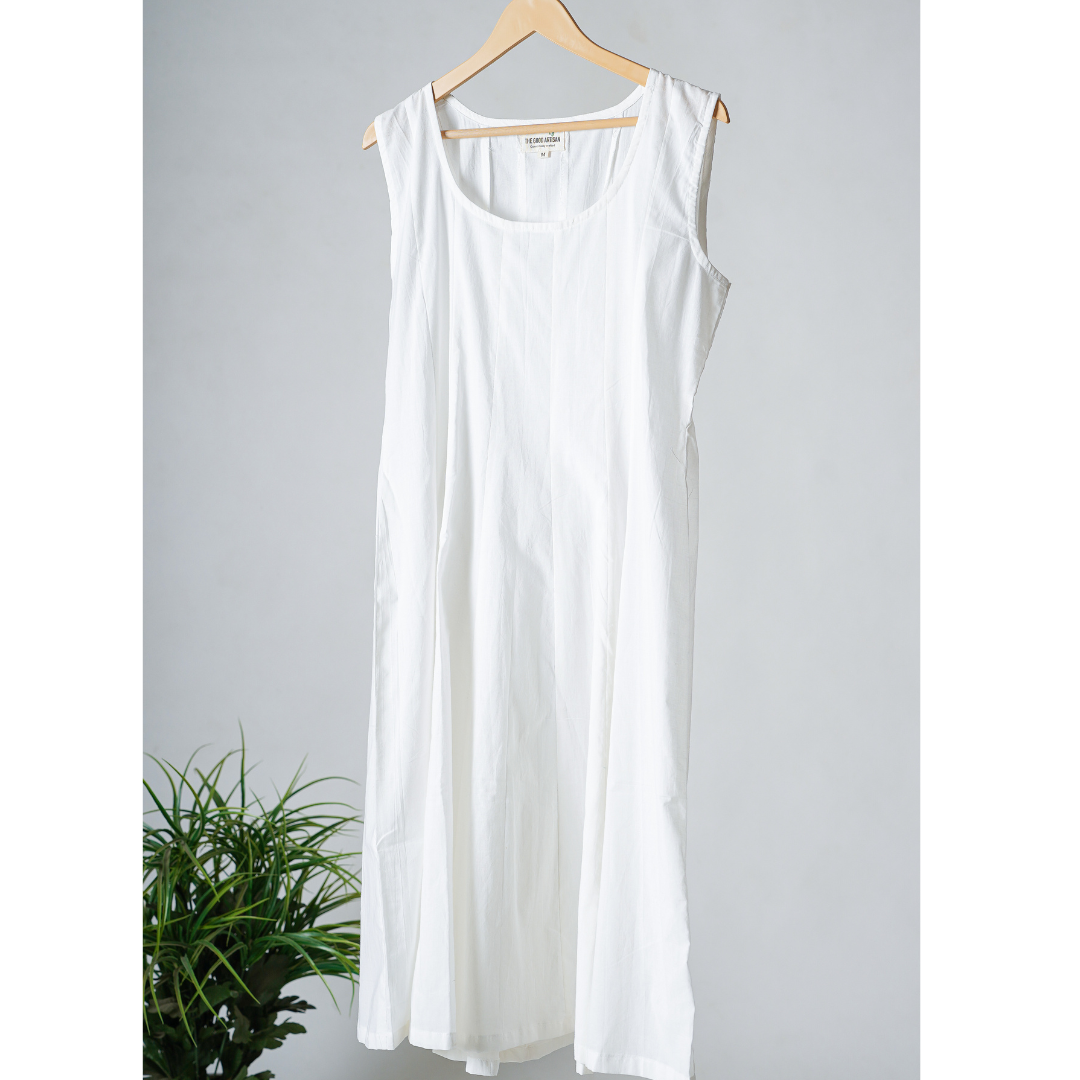
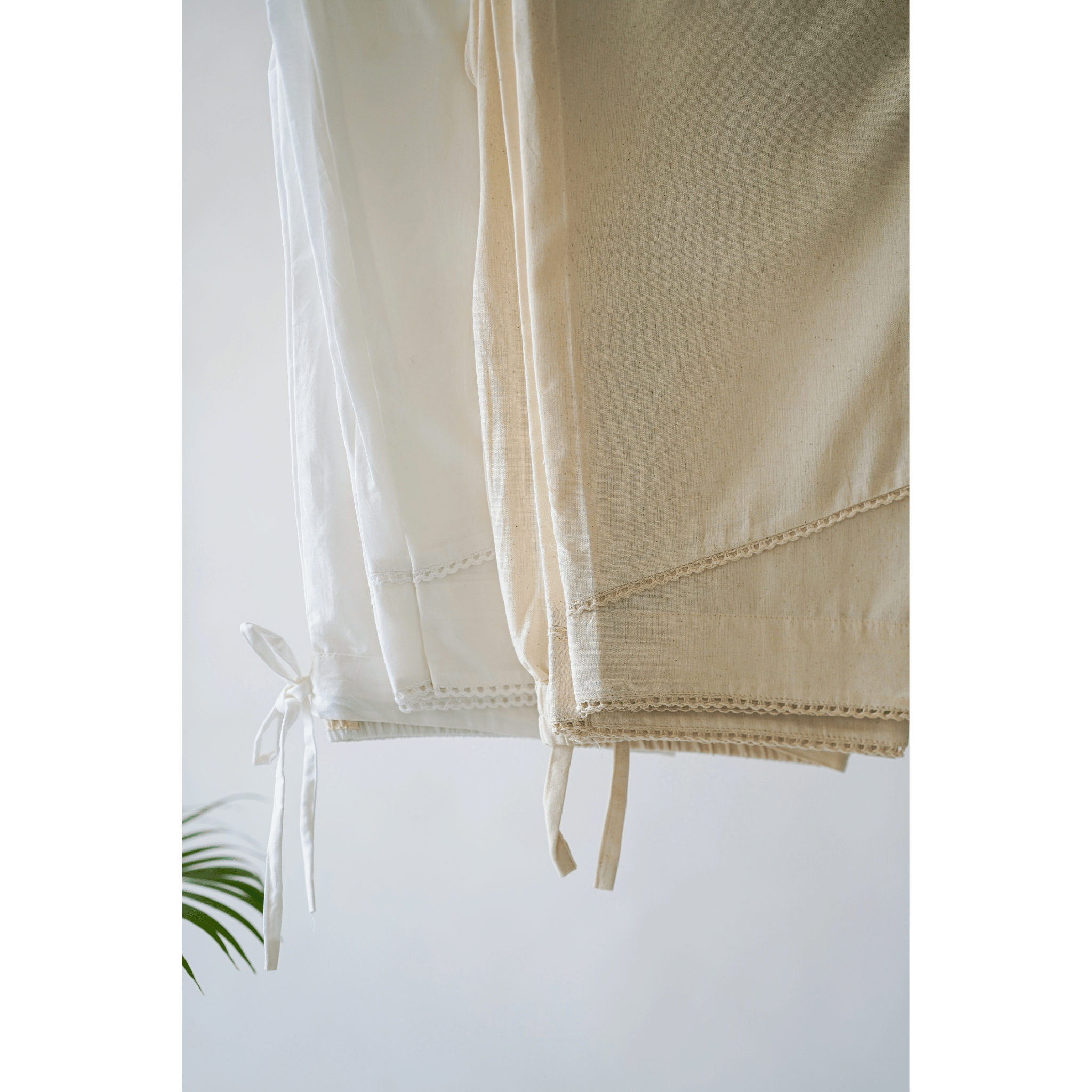
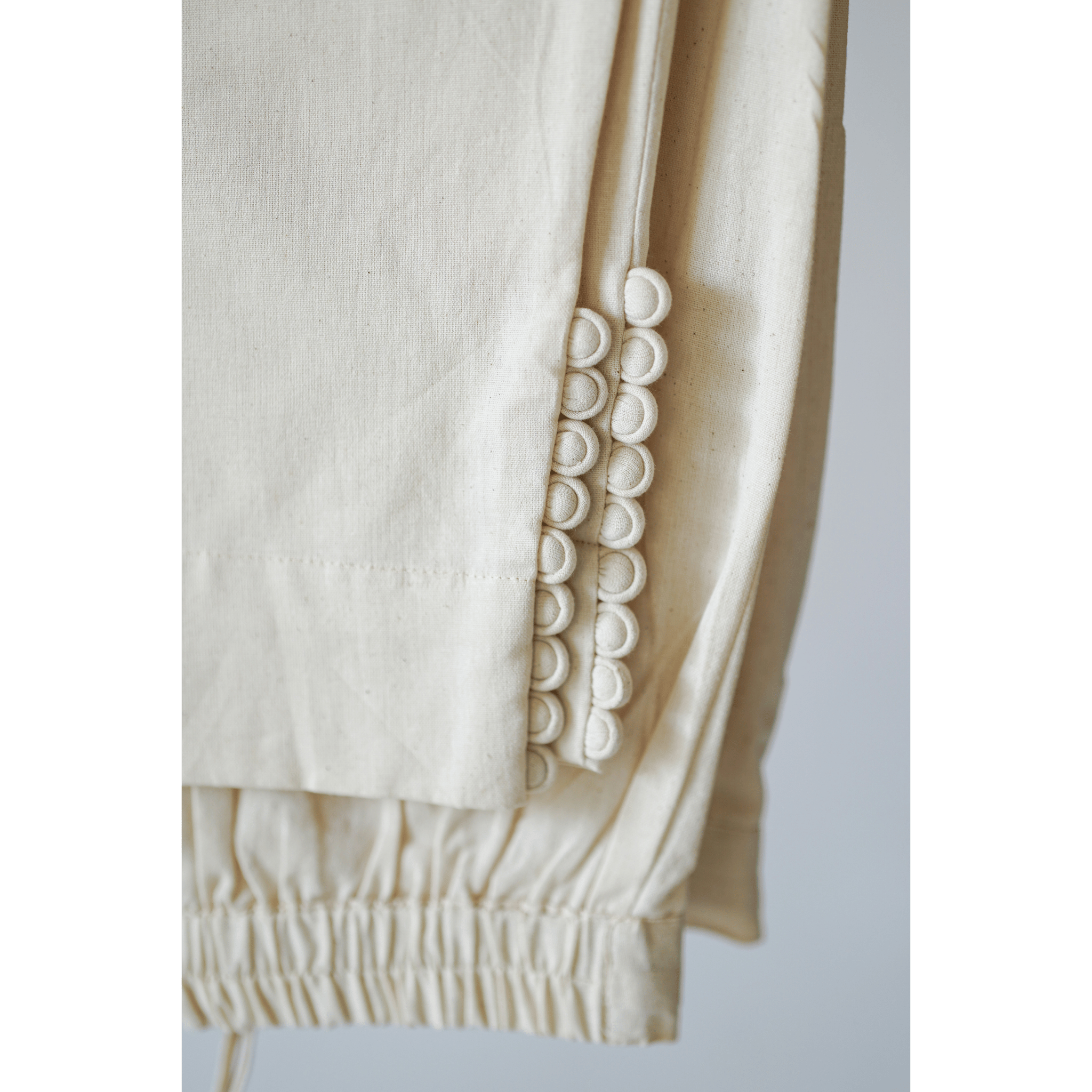
At The Good Artisan, our slips are not a secondary product or an add-on to the main collection. They are a considered response to a real problem that our customers brought to us: they loved their kurtas, they were choosing beautiful handcrafted and natural-fibre pieces, and they could not find inner layers that worked with them. Everything available in the market was either synthetic, too heavy, the wrong length, or an impossible colour to match.
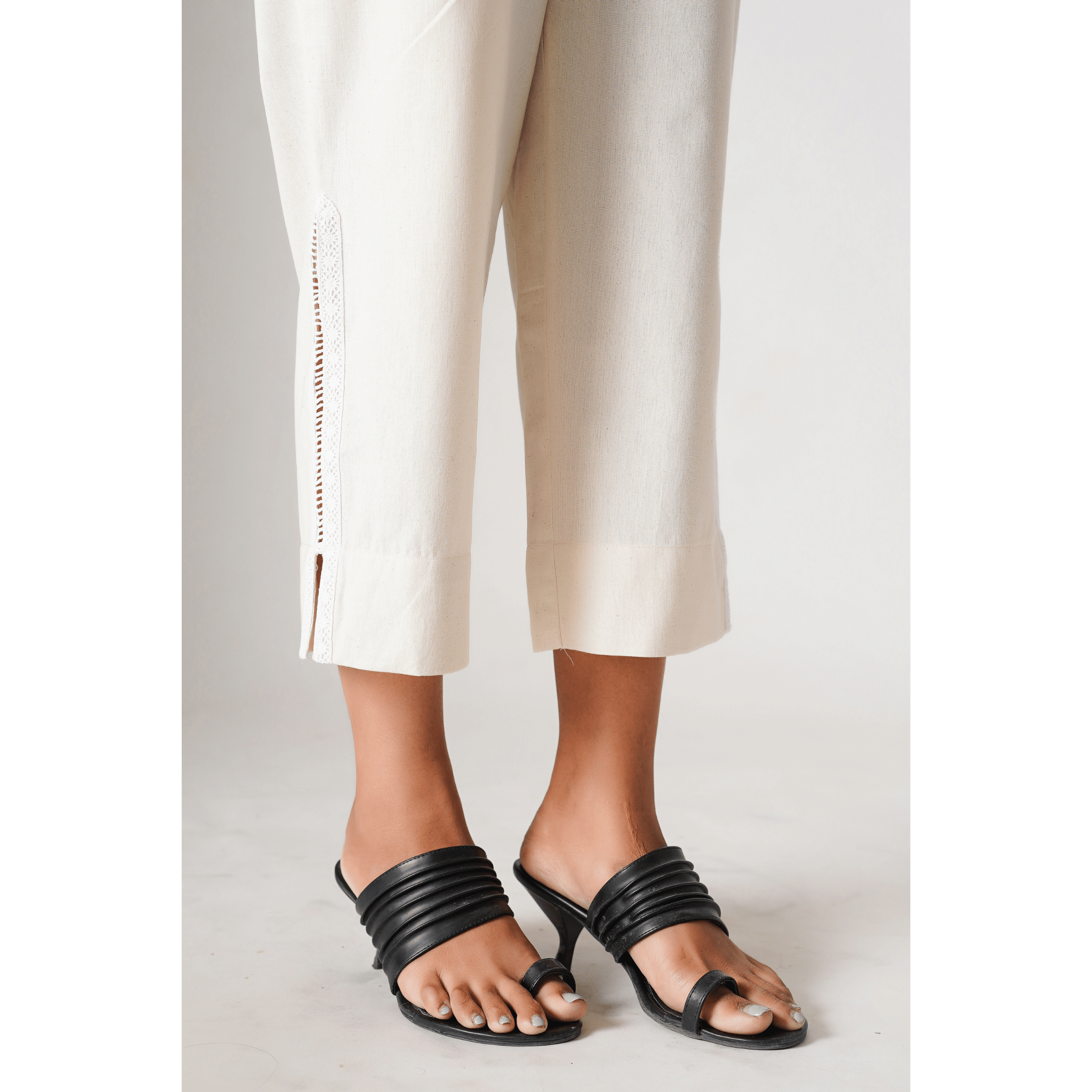
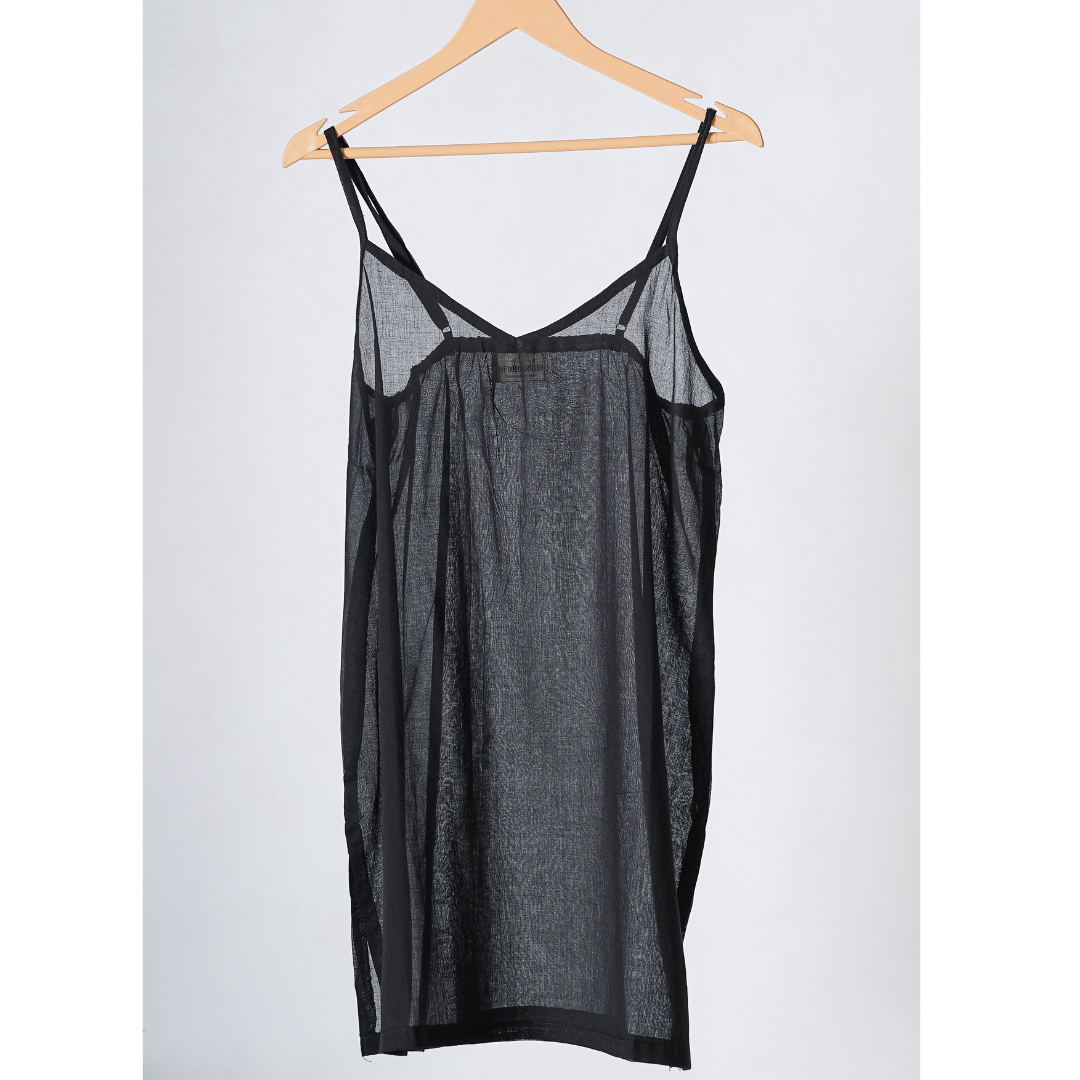
Our cotton slips are made in 100% cotton, both mulmul for lightweight summer use and regular cotton for year-round wear. They are produced in white and off-white colourways: clean, neutral tones that work as inner layers for the full range of our collection and for any cotton, linen, or handcrafted kurta in your wardrobe, regardless of where it came from. The construction is clean and simple: a waistband that sits without digging, a cut that allows the outer fabric to move without restriction, and a hem that sits quietly within the silhouette of whatever you wear it beneath.
They are made in India, sourced from Indian mills, and produced without synthetic dyes or finishes. They are sized across a range of lengths designed to work with the kurta and dress lengths that Indian women actually wear. And they are, like everything we make, built to be worn for years rather than seasons, because a cotton slip that is washed correctly and cared for simply becomes softer and better with every use.
Care is straightforward: cold water wash, air-dried in shade, no synthetic fabric softeners, which reduce the natural breathability and absorbency of cotton. If you are washing a mulmul slip, reshape it gently while damp and dry it flat or on a hanger; mulmul's fine weave can distort under its own weight when wet if it is not supported. A well-cared-for cotton slip from The Good Artisan will outlast many of the outer garments it is paired with and improve throughout its life.
By this point, you have the principles. Here is how to turn them into a fast, low-effort decision every morning when you reach for a sheer or chikankari kurta.
First, assess the sheerness. Hold the kurta up to natural light or a bright lamp. Can you see your hand clearly through the fabric? If yes, you need a full inner layer. If the fabric is only slightly translucent, a lighter-weight mulmul slip will be sufficient. If the fabric is opaque in all lighting conditions, you may not need an inner layer at all, though the comfort and garment-protection benefits of a slip apply regardless of sheerness.
Second, choose your colour. Match the slip to your skin tone, not to the kurta. For most women reading this, a warm beige or nude mulmul slip is the right choice for white and pale-coloured chikankari. For deep-coloured outer garments, choose a slip in a complementary deep tone.
Third, check your length. The kurta hem is the reference point. Your slip should sit two to three centimetres above that hem. If you cannot guarantee that without constantly pulling the slip down, the slip is too short for that particular kurta and you need a longer one.
Fourth, for chikankari specifically, check the embroidery technique. Shadow work and cutwork pieces will look best with a slip colour that complements the effect the embroidery is designed to create. Raised stitch pieces are more forgiving of inner layer choices.
That is the entire decision process. Once you have a small selection of well-chosen cotton slips in the right lengths and colours for your wardrobe, it becomes automatic, you reach for the slip the same way you reach for the kurta, without thought, because the right choice is already there.
"A beautiful chikankari kurta deserves to be worn the way it was designed to be worn with confidence, with full coverage, and with an inner layer that lets the embroidery speak for itself. At The Good Artisan, that inner layer is always cotton. Always."