Cart
0
You may also like

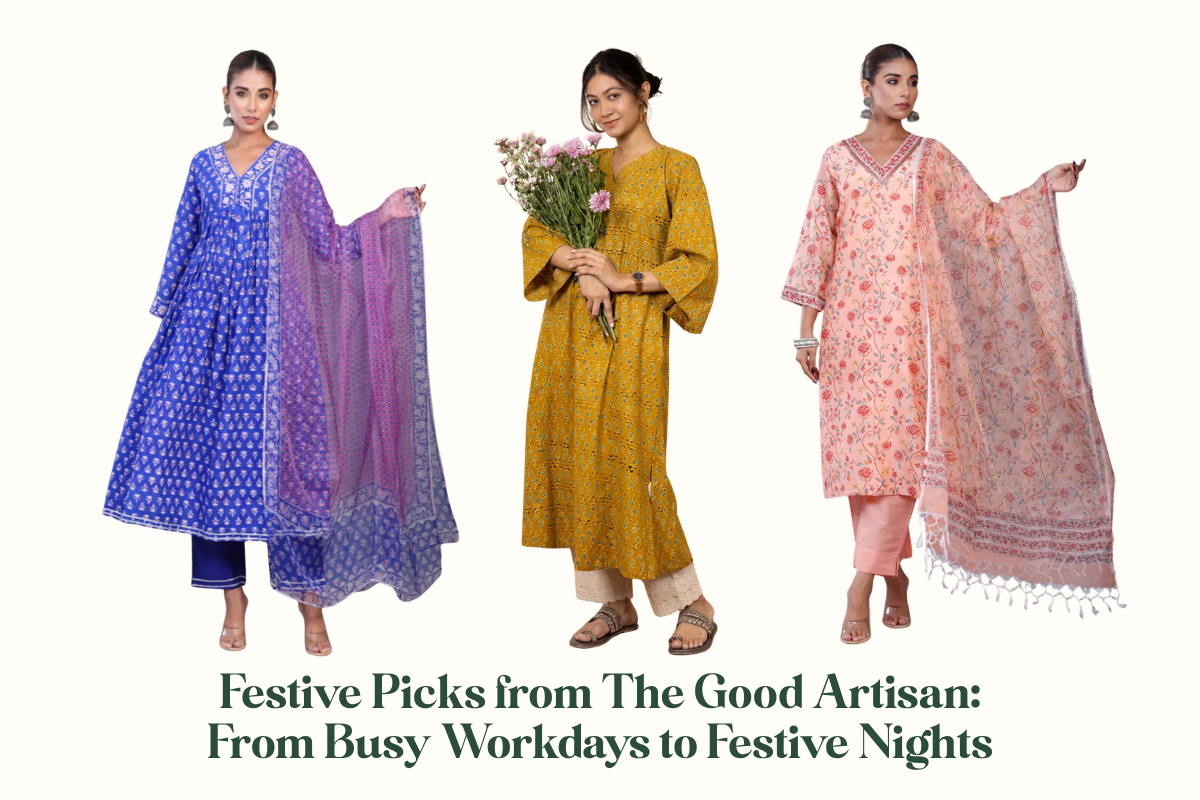
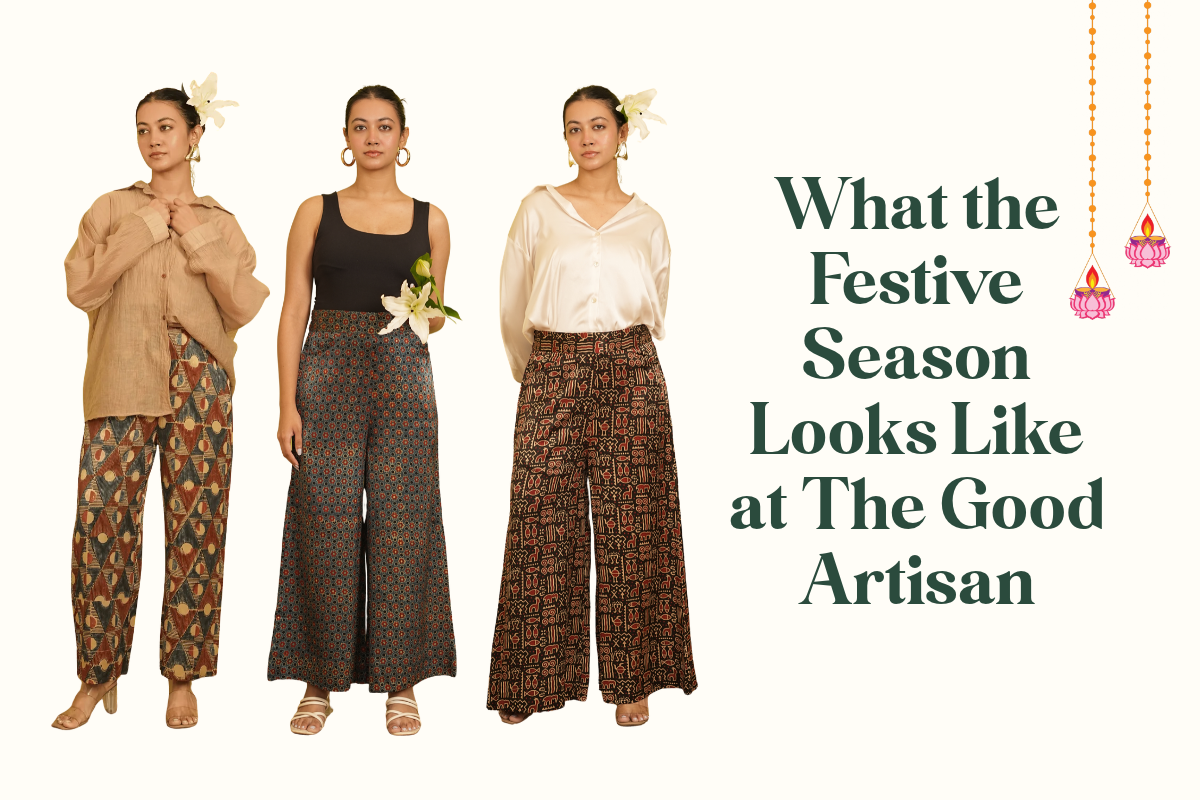
India's festive calendar is genuinely relentless, and the wardrobe pressure it creates is unlike anything the rest of the year demands. From Navratri through Diwali, through the wedding season that trails into winter and the regional festivals that dot the months between, the Indian festive season does not offer a quiet moment to plan. It simply arrives, repeatedly, with expectations.
The woman navigating this season is rarely just navigating festivals. She is navigating them alongside everything else, the work meeting that runs until six, the commute across a city lit with diyas, the chai at a relative's house before the actual party begins, the long drive home afterwards. The outfit she wears cannot be only one thing. It must be comfortable enough to spend a full working day in, polished enough to carry itself through an office, and beautiful enough to feel genuinely festive by the time the evening begins.
Most wardrobes are not built for this. They contain formal festive pieces that are spectacular but unwearable for fourteen hours, and they contain work clothes that are competent but feel entirely out of place at a Diwali gathering. The gap between these two categories is where most Indian women spend their festive season either overdressed or underdressed, never quite right for the moment they are in.
At The Good Artisan, this gap is what we design for. Every piece in our festive range is built from the conviction that a beautiful garment should also be a practical one — that cotton and craft and considered design can produce something that works from the first hour of the morning to the last hour of the evening without asking you to compromise at either end.
Before we get to the specific pieces, there is a fabric argument worth making, because it underpins everything in this guide.
The default festive fabric in Indian fashion, synthetic georgette, nylon-based net, polyester satin, acetate silk substitutes, is chosen for one quality: it looks impressive in photographs. In photographs, synthetic festive fabrics catch light beautifully, photograph richly, and suggest a kind of opulence that their price point reinforces. What they do not do, and what photographs cannot reveal, is breathe. They trap heat against the body, generate static, and make the six hours between the morning puja and the evening dinner feel considerably longer than they are.
Cotton, by contrast, breathes. It absorbs moisture and releases it. It becomes more comfortable as the day warms up rather than less. It does not generate static. It does not cling. And when it is combined with the embellishments that make festive dressing meaningful, hand-applied gotta patti ribbon, hand block prints in festival-ready colours, scalloped hems finished by hand, dupatta sets in complementary natural fabrics, it produces pieces that are as beautiful as any synthetic alternative and significantly more comfortable for the person wearing them.
This is the principle behind every piece in our festive range. Natural fibre, artisan craft, practical design. Not a compromise between beauty and comfort, but a demonstration that the two are not in conflict when the garment is made well.
The most practical challenge of the Indian festive season is the transition. You are at your desk at two in the afternoon and at your aunt's Diwali party at seven. There is no time to go home and change. Whatever you are wearing at two must carry you to seven, and ideally from seven to eleven, without looking like a daytime garment at an evening gathering.
The pieces that handle this transition best share a specific quality: they read as elevated daywear in the morning and as festive dressing in the evening, depending only on how they are accessorised. They are not obviously work clothes or obviously party clothes. They exist in a register that is appropriate for both without being perfect for either, which is, practically speaking, exactly what is needed.
Our Jaipur Gotta Patti Black Cotton Kurta is the clearest expression of this quality in our range. It is a black cotton kurta, a silhouette that is intrinsically workday-appropriate, professional in the way that black and a simple cut always are. But it carries gotta patti embellishment along its neckline, border, and hem, and the gotta patti does something that no printed pattern or plain embroidery can do: it catches the light. At two in the afternoon under office fluorescent lighting, the gotta patti is subtle, a detail that elevates without announcing. At seven in the evening under the warm light of diyas and string lights, the same embellishment becomes genuinely spectacular. You did not change your outfit. The light changed, and the outfit responded.
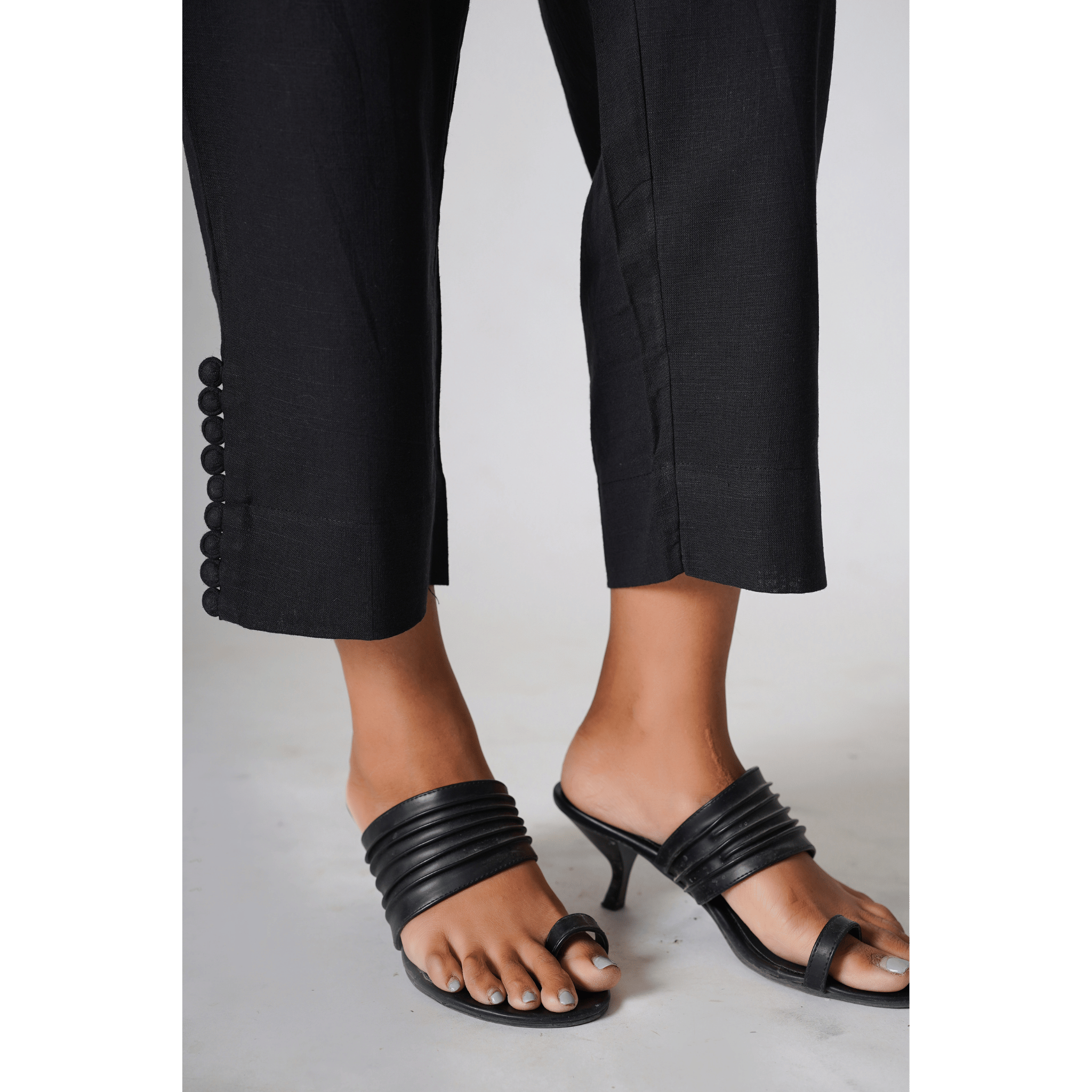
Pair this kurta with our Victoria Black Cotton-Linen Pants for the workday — the clean lines and structured drape of the cotton-linen blend give the combination a polished professional quality. Add earrings and a bindi in the evening and the outfit is complete. No bag change, no heel swap required, no trip home. The outfit carried itself across the transition entirely.
Not every festive moment is a subtle one, and not every outfit should be. Navratri, with its colour-coded dressing across nine nights, is explicitly a celebration of colour. Weddings call for more visual noise than a quiet dinner. Festival gatherings where everyone around you is dressed brilliantly create a social context in which playing it safe feels like an absence rather than a choice.
For these moments, our Sunflower Hand Block Printed Kurta Set is the piece we return to most consistently. It is a complete set, hand block printed kurta with dupatta, in the warm yellows and botanical motifs that Jaipur's block printing tradition has produced for centuries. The print is joyful without being garish, warm without being overwhelming. The cotton fabric in which it is printed is breathable enough for a full day and structured enough to hold the print cleanly through hours of wearing. The dupatta gives the set a festive completeness that a kurta alone cannot achieve, while remaining light enough to wear comfortably without adding weight or heat to the overall silhouette.
Block printing and festive occasions are a more natural pairing than is sometimes recognised. The tradition of printing fabric for celebration is as old as the craft itself, Rajasthani block-printed textiles were made specifically for festivals and weddings long before the contemporary fashion market rediscovered them. Wearing a hand block-printed piece to a festive occasion is not a casual choice made to look festive. It is the historically correct choice, the one that the craft tradition was built around, and the one that connects the garment you are wearing to a centuries-long story of celebration.
There are festive occasions where the effort should show, where the choice of garment is a communicative act, a way of saying to the people in the room that you are fully present for this occasion and that it matters to you. Weddings. Important family gatherings. The Diwali dinner where you are meeting people for the first time. The occasion where the outfit is part of the offering.
For these moments, the Nargis Royal Blue Hand Block Kurta-Dupatta Set is the piece from our range that makes the strongest statement. The royal blue cotton-silk combination carries a depth of colour that pure cotton cannot quite achieve, the silk component gives the fabric a subtle lustre that reads as festive without crossing into the territory of synthetic shine. The hand block print layered over this base adds visual complexity and the unmistakable quality of something made by hand. The dupatta completes the set as a statement piece in its own right.
This is not a quiet outfit. It is meant to be noticed, and it will be. But it is noticed for the right reasons, for the quality of the fabric, the beauty of the print, the evidence of craft in every detail, rather than for the borrowed brightness of synthetic embellishment. The Nargis set is the answer to the question of how to dress with genuine presence at a significant occasion without reaching for the brocade lehenga that weighs four kilograms and takes forty-five minutes to put on.
Not every festive occasion calls for maximum visual effect. There is a category of gathering, the family dinner that is warm but not formal, the puja that is devotional rather than celebratory, the office festive lunch where you want to look seasonally appropriate without standing out, where the right choice is something beautiful but not loud.
The Adah Beige Embroidered Kurta occupies this register with particular grace. It is a kaftan-style kurta in a cotton-linen blend, relaxed in silhouette, warm in tone, embroidered in a way that is clearly festive without being insistent about it. Beige is a colour that reads differently in festive context than it does in everyday dressing: where everyday beige is neutral, festive beige, in a well-cut kaftan with embroidery and good fabric, reads as considered, intentional, and quietly elegant.
The kaftan silhouette is worth discussing specifically, because it is one of the most practically successful festive silhouettes for the full-day occasion. A kaftan does not require a specific bottom, it can be worn over our wide-leg cotton pants, over palazzos, over slim churidars. It does not have a waistband that becomes uncomfortable after a long sitting. It moves freely and does not restrict the kind of movement that long festive days require. The Adah is the piece you wear when you want to look effortlessly festive and feel genuinely comfortable at the same time.
The Delphinium Hand Block Printed Blue Kurta makes its case for festive dressing through colour alone. The white and blue combination, a kurta crafted in cotton with a blue block print, is not the first colour story most people reach for when they think of festive dressing in India, where the festive palette tends toward warm tones: ochre, vermilion, emerald, gold.
But the Delphinium is proof that festive dressing in cool tones can be as effective as warm ones. The depth of the blue in a well-done block print, particularly the indigo-influenced blues of Jaipur's printing tradition, carries its own richness, one that does not need gold to feel precious. Worn with silver jewellery, with white cotton pants or with our wide-leg palazzo cuts, the Delphinium reads as a deliberate and sophisticated festive choice rather than a default one.
It is also, practically, a more unusual festive choice than the warm-toned alternatives, which means that in a room full of ochres and oranges and magentas, you will be the person wearing something quietly striking rather than something that blends into the warmth of the crowd.
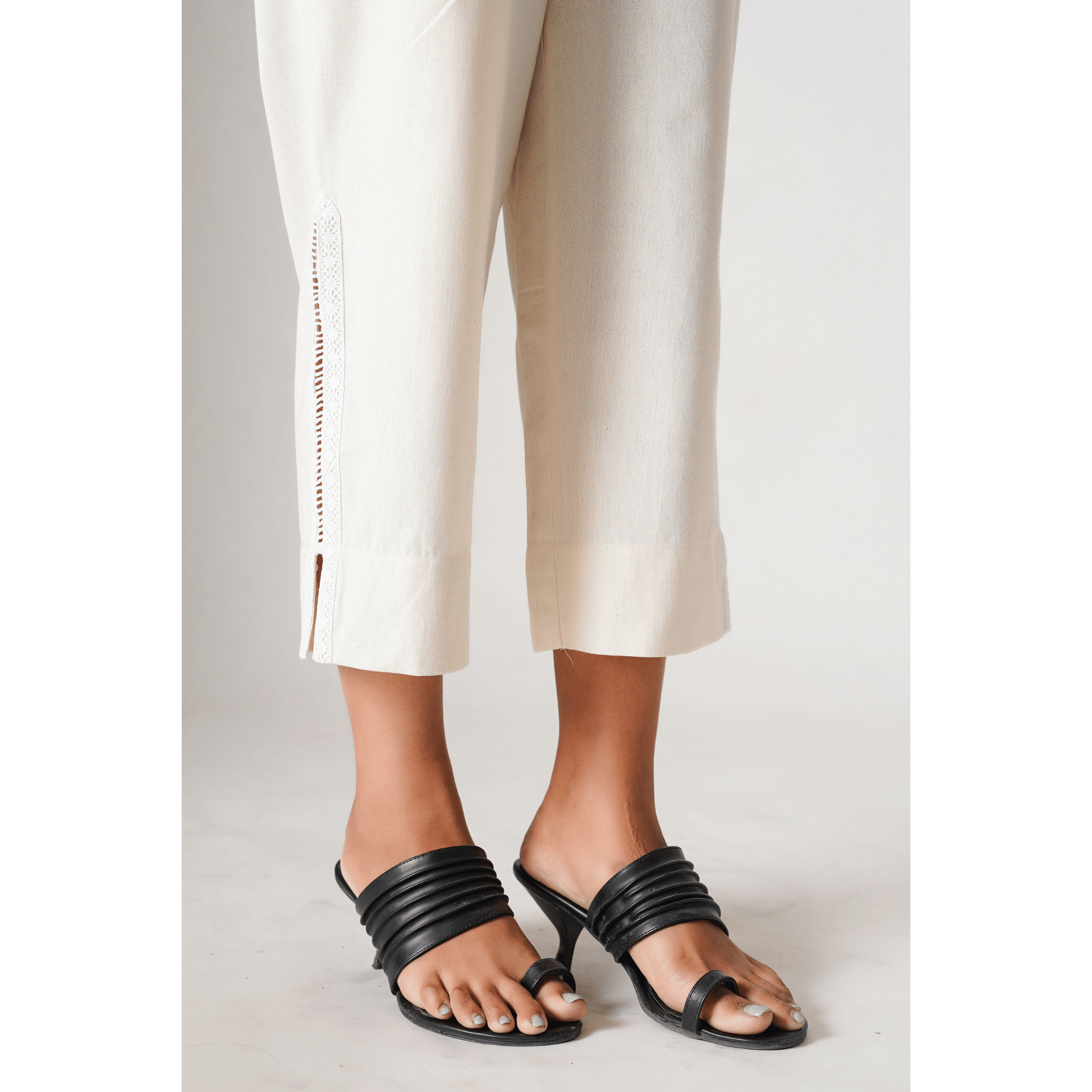
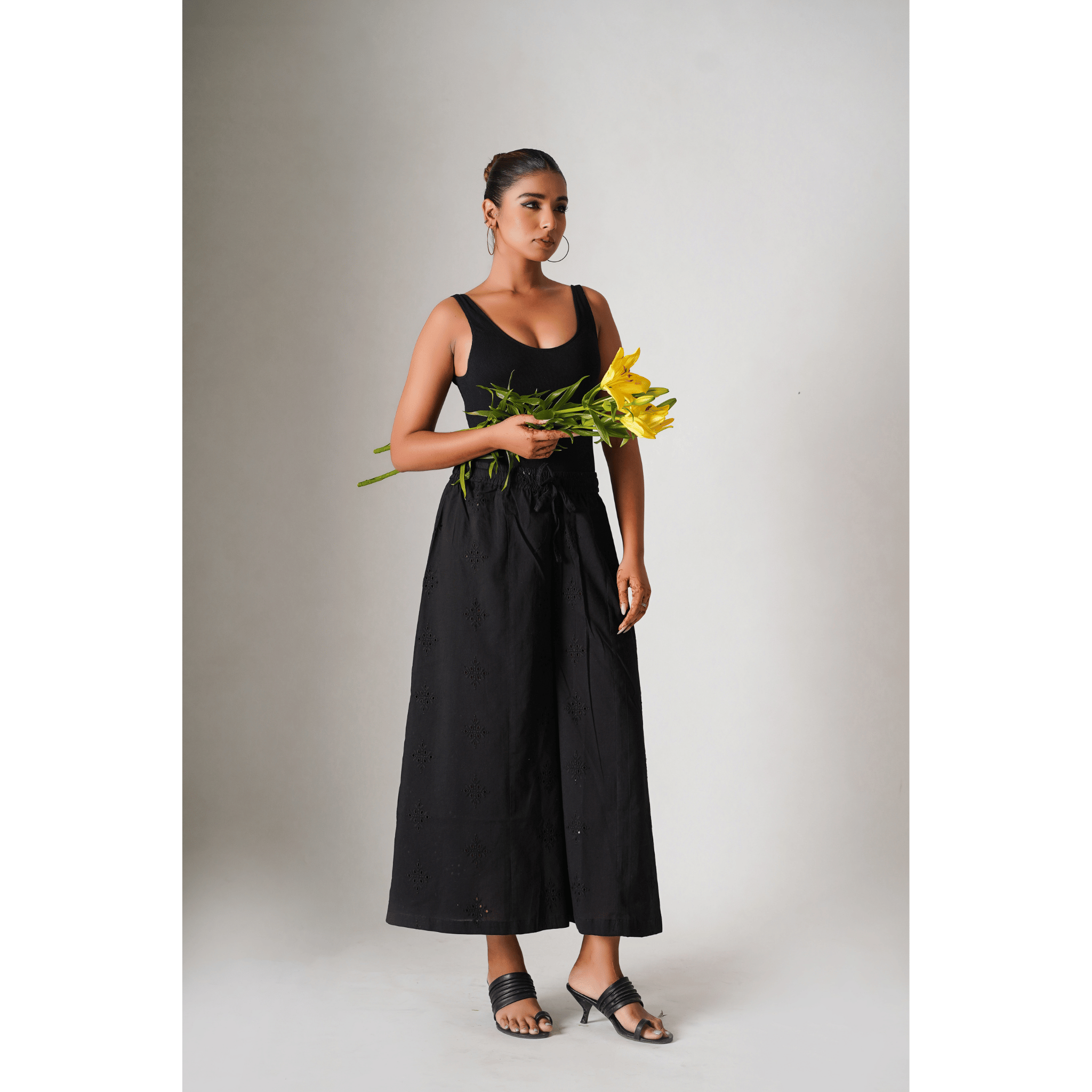
No festive wardrobe is complete without a bottom that works with everything. The Siyah Black Cotton Scalloped Pants are ours.
They are black, which is the first thing that makes them universally useful. Black reads as sophisticated in almost any festive context and pairs with every colour in our kurta range, the warm yellow of the Sunflower, the royal blue of the Nargis, the beige of the Adah, the white-and-blue of the Delphinium. Black is not a neutral in the way that beige is a neutral. It is an active choice that elevates everything worn with it.
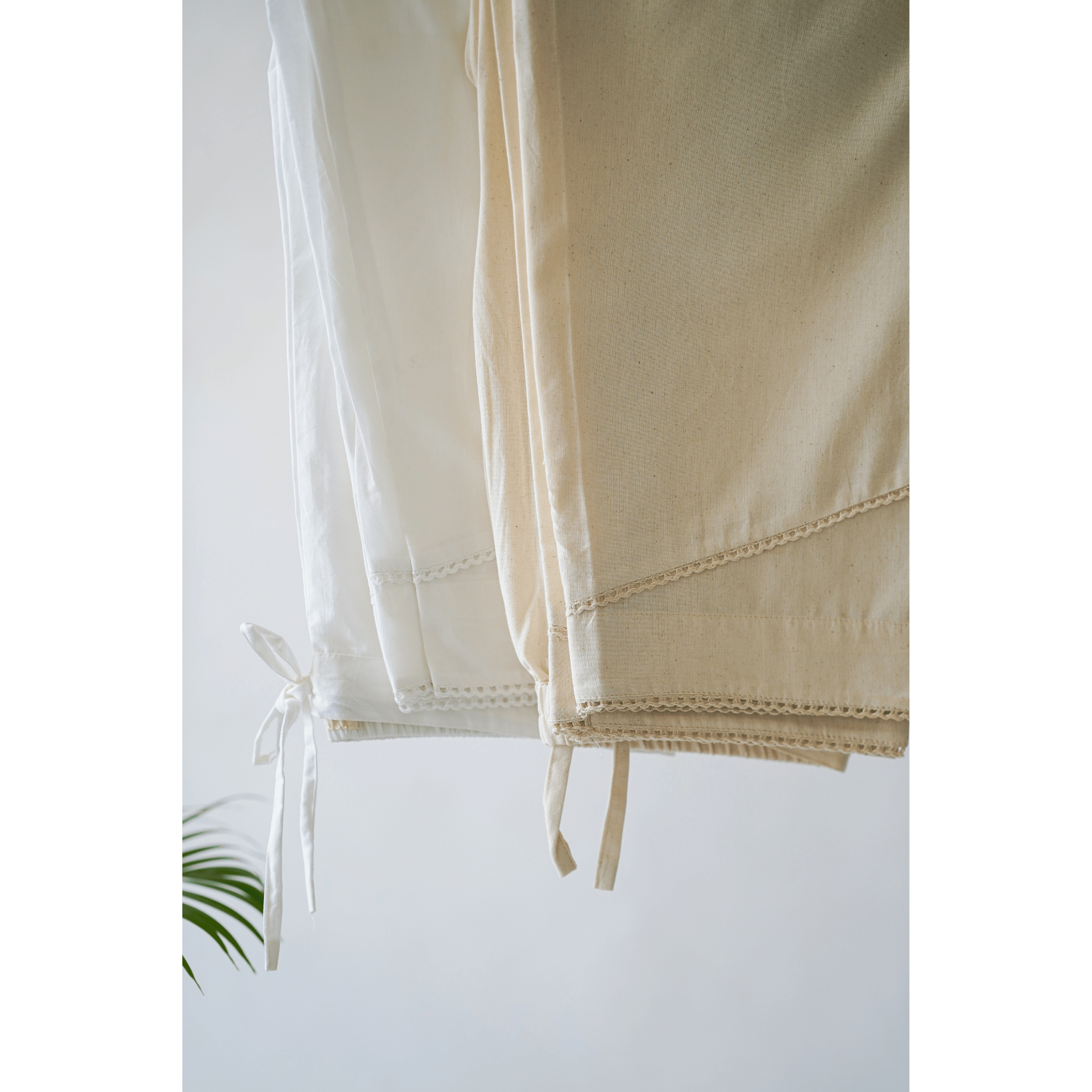
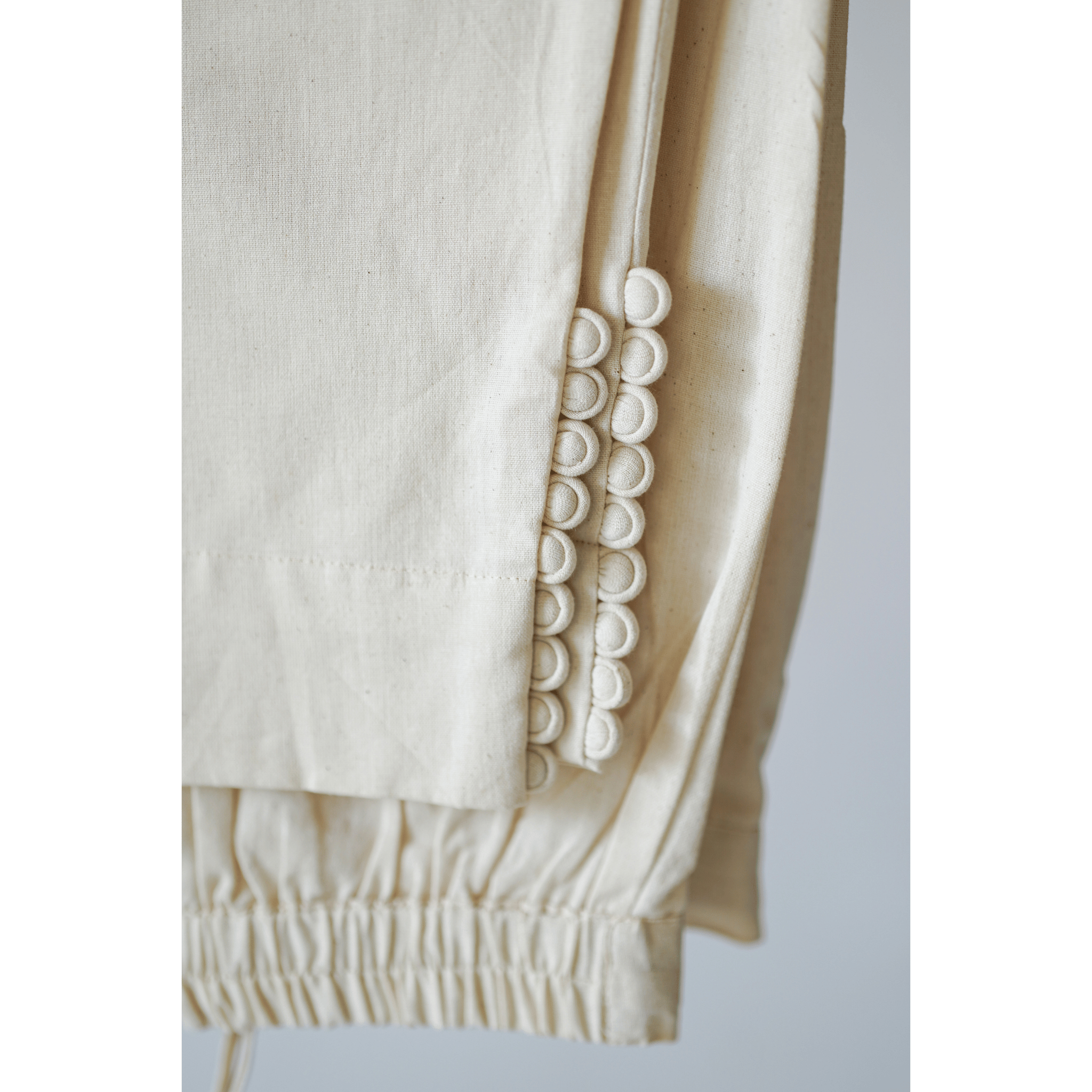
What makes the Siyah more than just a useful black pant is the scalloped edge. The scallop, a hand-finished, rounded hem detail highlighted with small white pearl embellishments, gives the pant a distinctly festive character that plain trousers cannot match. It is the detail you notice when you look closely, the thing that makes a simple pairing of black pant and printed kurta look considered and complete. The scallop does not shout. It whispers, in the way that the best craft details always do.
The pant has an elasticated waist with an additional drawstring, practical information that matters when you are wearing the same garment from morning to evening across a long festive day. Comfort at the waistline is not a small consideration over twelve hours.
There is a specific kind of festive occasion where the most important quality of an outfit is its ability to allow you to move freely. Garba nights. Weddings where the dance floor is the point. Gatherings in gardens or outdoor spaces where you will be on your feet for hours and need to be able to sit, stand, walk, and move without the garment working against you.
For these occasions, the Amara Hakoba Black Cotton Palazzo is the piece we recommend without hesitation. The hakoba fabric, an open-weave cotton with a honeycomb texture, is among the most breathable cotton constructions available, which means the Amara is the right choice for warm indoor festive gatherings as well as outdoor ones. The palazzo silhouette is wide and flowing, moving with the body rather than constraining it, and the combination of black fabric with the natural texture of the hakoba weave gives it a visual interest that plain black would not achieve.
The Amara pairs beautifully with both our kurta range and with simpler cotton tops or slips as the top. It is the bottom that does the work so that the top does not have to, a versatile foundation piece that works across the full range of festive occasions without ever feeling out of place.
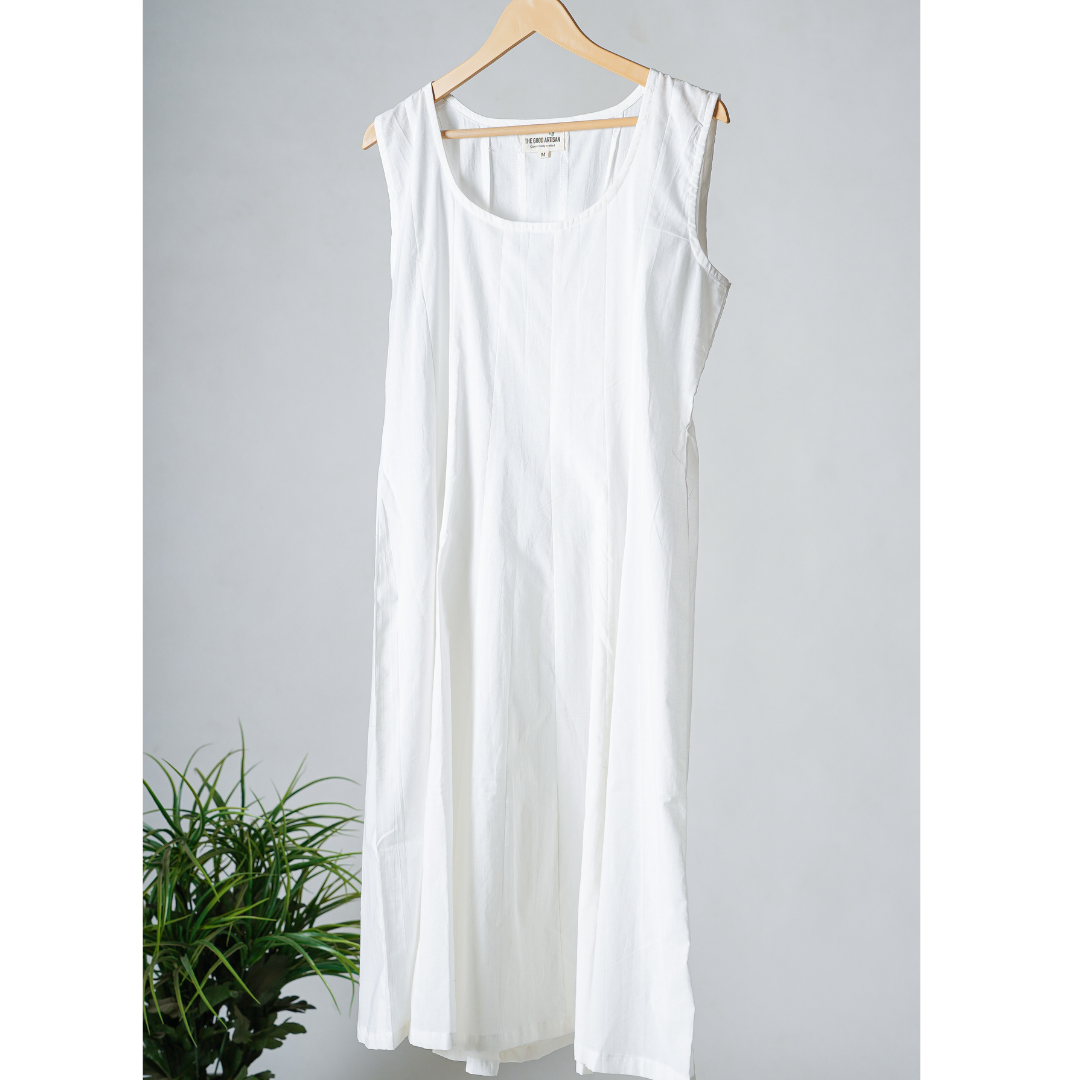
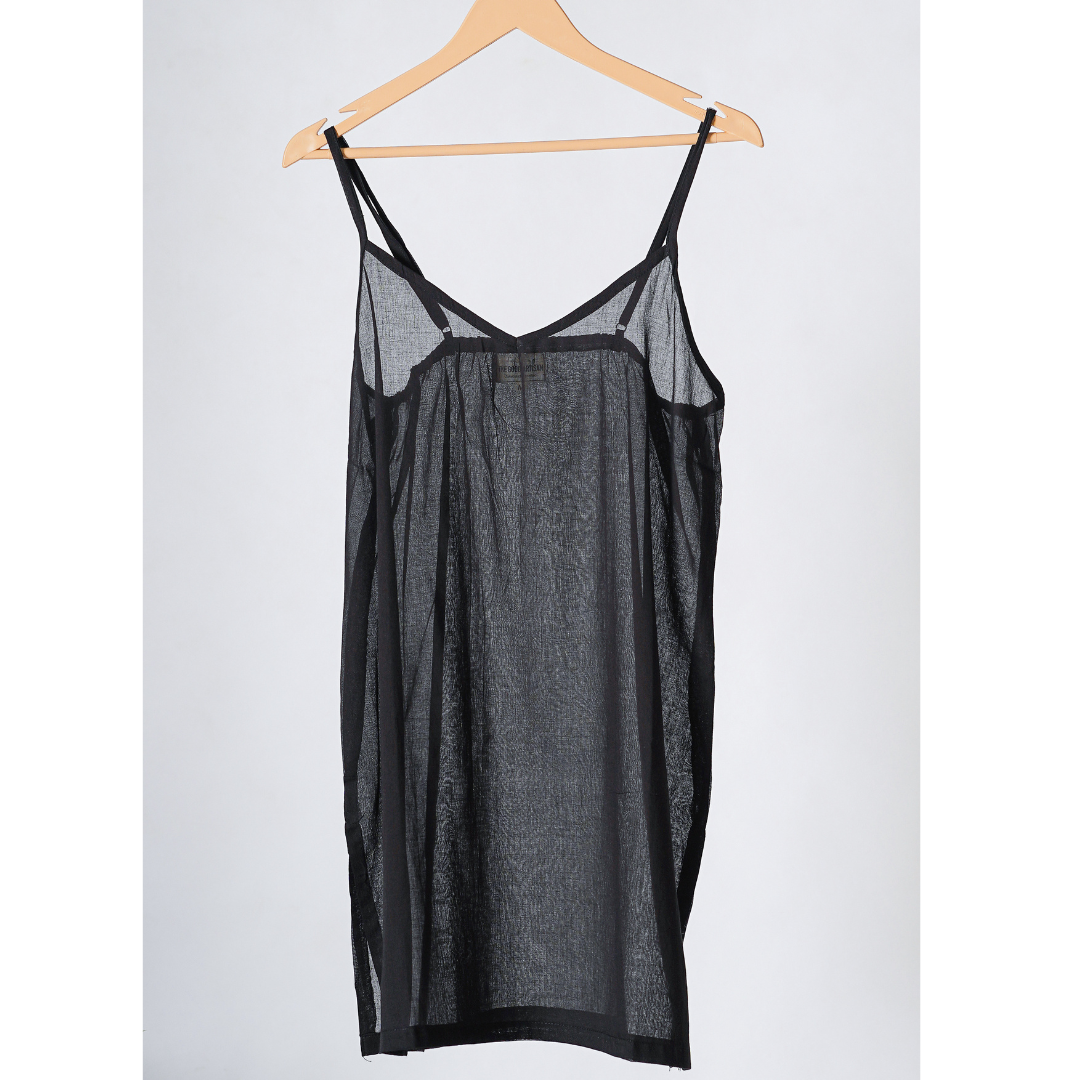
Every festive outfit we have described above works better with the right inner layer, and the right inner layer is always a cotton slip.
A cotton slip beneath a sheer or lightweight festive kurta prevents transparency under bright festive lighting, a problem that indoor party lighting creates with particular cruelty for garments that appeared perfectly opaque in natural light. A cotton slip absorbs the first layer of perspiration, keeping the outer festive garment fresh through long hours of wearing. And a cotton slip in a skin-tone matching colour, warm beige or off-white, creates the right backdrop for embellishments and prints to read correctly, preventing the colour of a contrasting synthetic inner from muddying the visual effect of the outer garment.
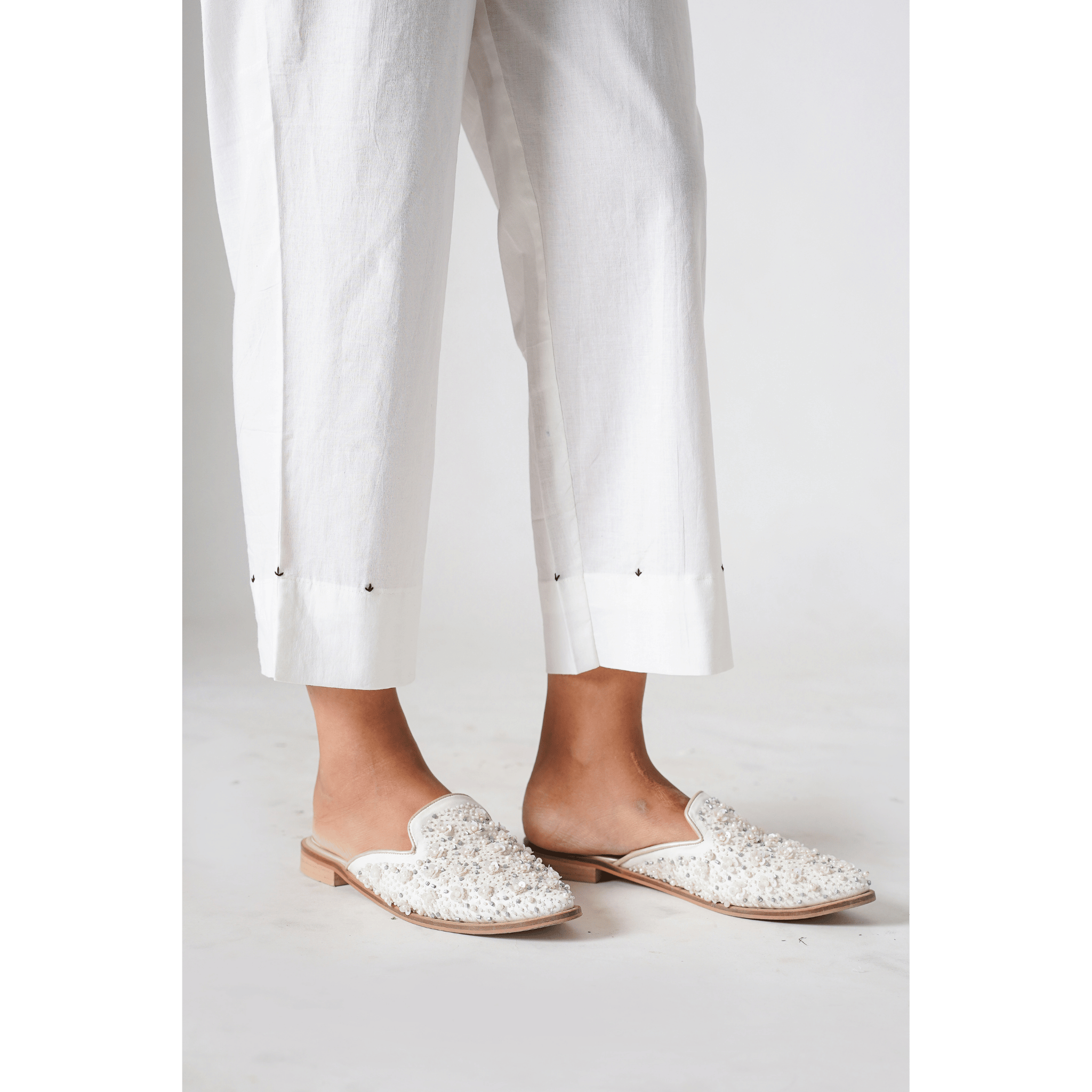
Our Cotton Slips in White and Off-White, available in both mulmul and regular cotton, are the inner layer we recommend beneath every piece in this guide. The mulmul slip for lighter and more breathable kurtas in warm weather. The regular cotton slip for heavier pieces and cooler festive evenings. They add nothing visible to the outfit and everything to its wearability.
The pieces described in this guide are not a capsule wardrobe in the conventional sense, a coordinated set of identical neutrals built for interchangeability. They are a range of distinct characters that share a common origin: Jaipur, natural fibre, artisan craft, and the conviction that a festive garment should be beautiful to wear, not just to look at in photographs.
The Jaipur Gotta Patti Black Cotton Kurta for the transition occasion, the workday that becomes an evening. The Sunflower Hand Block Printed Kurta Set for the colour moment. The Nargis Royal Blue Set for the occasion where presence is required. The Adah Beige Kurta for the understated gathering. The Delphinium for the person who wants to stand apart from the warm-toned crowd. The Siyah Scalloped Pants as the universal festive foundation. The Amara Hakoba Palazzo for the evening that requires freedom of movement. The Cotton Slip beneath all of it, invisible and essential.
This is a festive wardrobe with enough range to cover the full season without repetition, and with enough practical intelligence to carry you through the full day rather than just the highlight reel. It is made in Jaipur, by hand, from natural cotton, by artisans whose craft is the oldest and best argument for why this kind of dressing still matters.
There is a quality to a handcrafted festive garment that a mass-produced one does not have, and it is not only a quality of appearance. It is a quality of meaning.
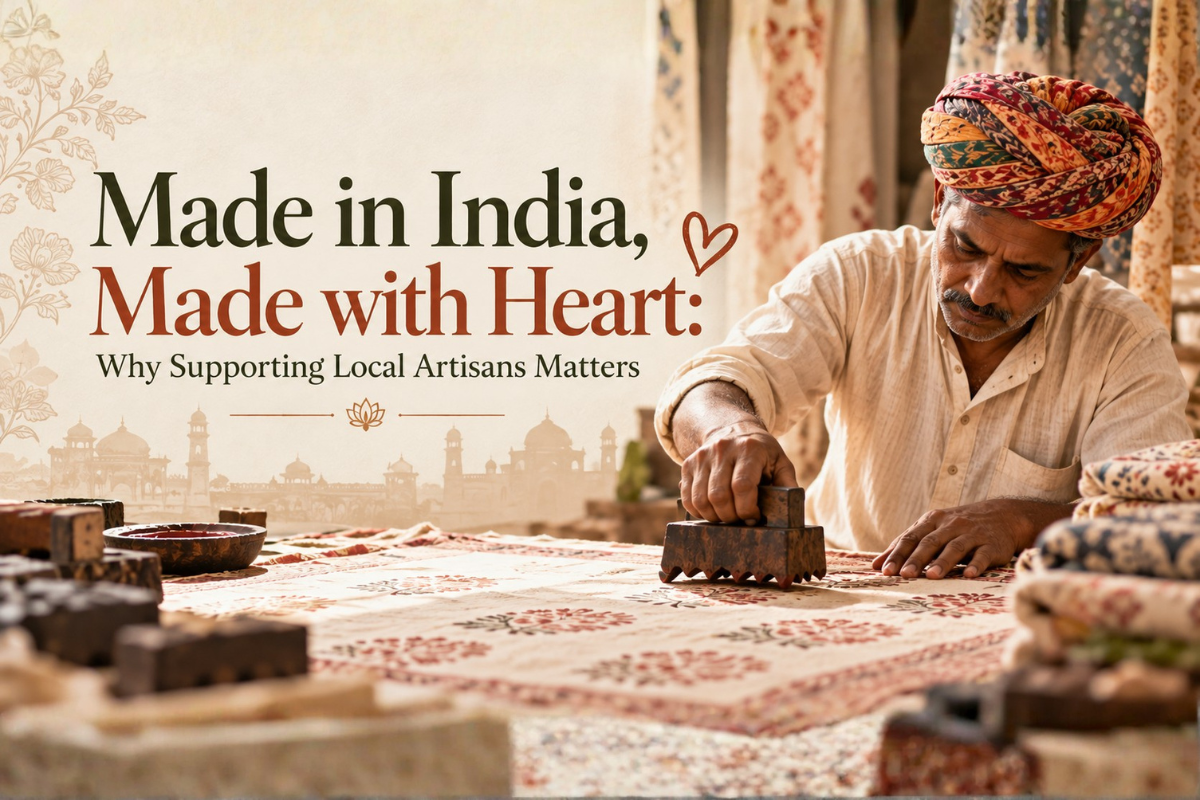
When you wear a Jaipur gotta patti kurta to a Diwali gathering, you are wearing something that carries the knowledge of an artisan who spent years learning how to fold and stitch metallic ribbon into precise, beautiful patterns. When you wear a hand block-printed kurta set to a family wedding, you are wearing something that carries the visual language of a printing tradition that is centuries old and specific to this city, this community, this landscape. The garment is not a representation of a craft tradition. It is an instance of it.
That connection, between the person wearing the garment and the person who made it, mediated through the object, is what festive dressing at its best has always been about. In every culture, in every century, the clothes worn for celebration have been the clothes made with the most skill, the most care, and the most intention. In India, that tradition runs deeper and wider than almost anywhere else in the world. At The Good Artisan, every festive piece we make is our attempt to be worthy of it.