Cart
0
You may also like

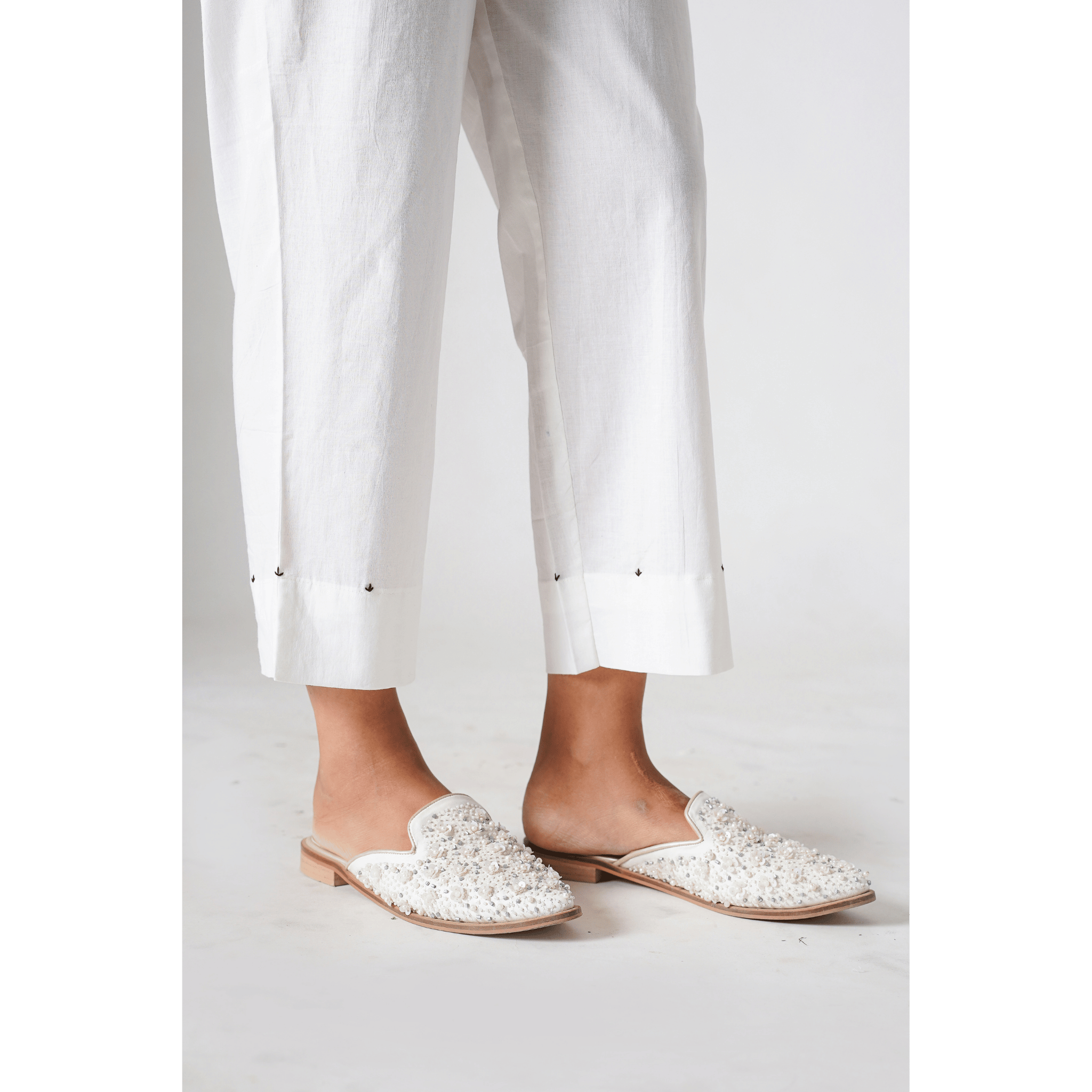

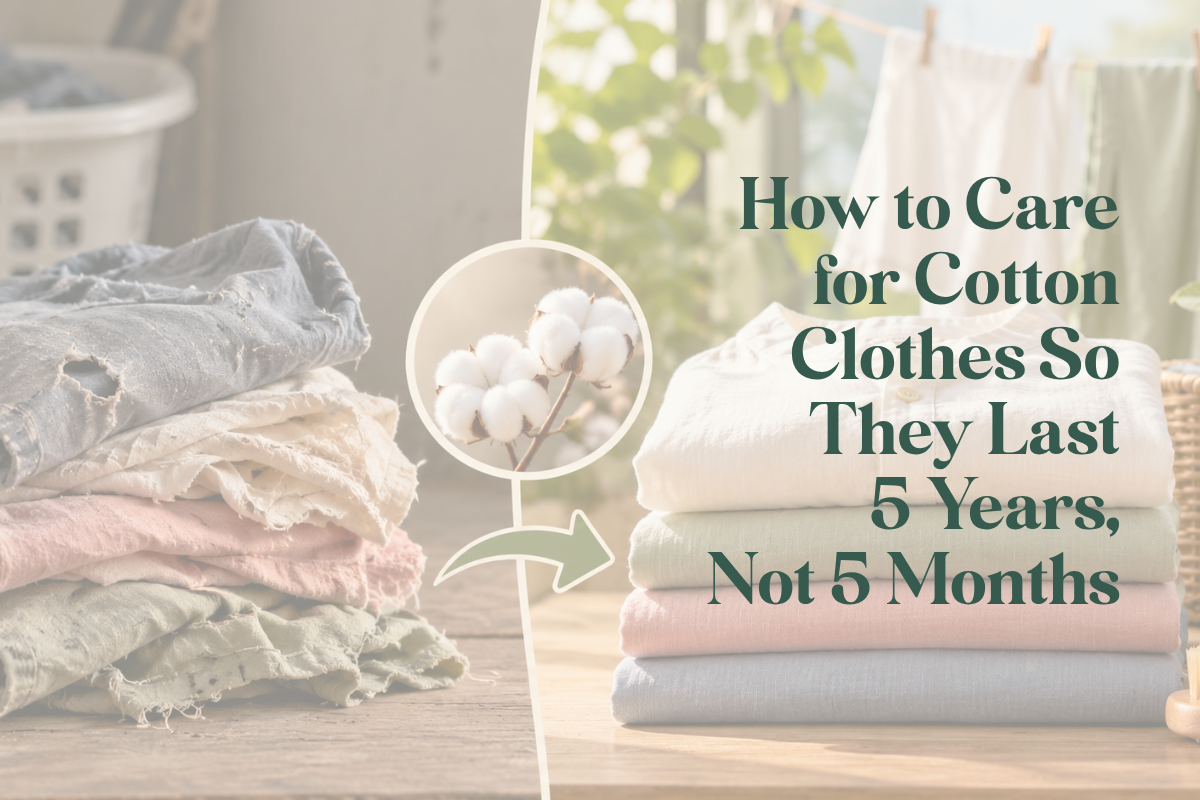
You remember buying it. A beautiful cotton pant, or a well-made kurta, in exactly the right colour. It fit perfectly. It felt wonderful for the first few wears. And then, somewhere between the sixth and the tenth wash, something changed. The colour went from deep and clean to slightly washed-out. The fabric started to feel rougher than you remembered. A small amount of shrinkage here, a faint pilling there, and before a full year had passed, it was a garment you wore only at home, or stopped wearing altogether.
This is one of the most common and quietly frustrating experiences in getting dressed. And in most cases, it is not the garment's fault. Good quality cotton, cared for correctly, does not do these things. It deepens and softens with age. It becomes more itself, not less. The difference between a cotton pant that lasts five months and one that lasts five years is almost never the cotton. It is what happens to that cotton after it leaves the shop.
This blog is about that gap, about the specific, practical, Indian-context things that shorten a cotton garment's life unnecessarily, and exactly what to do instead.
Most cotton care advice you find online was written for a temperate Western context: mild water, moderate humidity, cool-to-warm summers. Indian conditions are a different proposition entirely, and the generic advice does not account for them.
Hard water is the first and most significant factor. A large proportion of Indian cities -Delhi, Jaipur, Mumbai's outer suburbs, Bengaluru, Hyderabad, Chennai, have water with high mineral content, particularly calcium and magnesium. When hard water dries on cotton fibres, those minerals are left behind. Over successive washes, this mineral buildup makes cotton feel stiff and scratchy rather than soft. It also dulls colour, particularly in whites and light pastels, which develop a yellowish or greyish cast over time that has nothing to do with staining and everything to do with mineral deposit.
Humidity is the second factor. Indian summers, and Indian monsoons, create conditions where clothes stored in wardrobes without adequate airflow can develop a musty smell and, in severe cases, mild mildew. Cotton, because it is a natural, breathable fibre, absorbs ambient moisture readily. This is part of what makes it wonderful to wear and part of what requires thoughtful storage.
The third factor is sun intensity. Indian sunlight is strong, and direct sunlight will fade cotton, particularly dark colours like black, indigo, and deep navy — far faster than the gentler sunlight in the latitudes most care instructions are written for.
Understanding these three factors is the foundation of everything that follows. Each care tip below is written with them specifically in mind.
The washing machine is where most cotton garments lose years of their life in a matter of months. This is not because washing machines are inherently harmful; it is because the settings and practices most of us default to are not right for natural fabrics in Indian water.
The single most damaging thing you can do to a cotton garment is wash it in hot water. Heat causes cotton fibres to contract, which is where shrinkage comes from. Once cotton has shrunk, it does not go back. Always wash cotton in cold or lukewarm water, not because of any elaborate sustainable fashion principle, but simply because cold water does not shrink cotton and hot water does. This is true for machine washing and hand washing both.
The second most damaging thing is using too much detergent. More detergent does not mean cleaner clothes; it means more detergent residue left in the fabric after rinsing, which over time makes cotton feel stiff and attracts more dirt between washes. Use less than you think you need, and if you are washing by hand, dissolve the detergent in water before adding the garment so it never sits in concentrated form against the fabric.
For hard water specifically, add a small amount of white vinegar, roughly two to three tablespoons, to your rinse water when hand washing, or to the fabric softener compartment of your washing machine. White vinegar is mildly acidic and neutralises the alkaline mineral deposits that hard water leaves behind. It is not a miracle solution, but used consistently, it makes a measurable difference to how soft cotton remains over time and to how well whites hold their brightness. Your clothes will not smell of vinegar after drying; the smell dissipates completely as the fabric dries.
If you are in a city with particularly hard water and you have white or light-coloured cotton garments, a water softener tablet in your wash cycle once a month will also help. These are inexpensive, available in most supermarkets, and significantly extend the life of both the garment and your washing machine.
On the question of machine washing versus hand washing: hand washing is gentler, full stop. The agitation of a washing machine, particularly older top-loading machines, is harder on fabric than gentle hand washing. For everyday cotton basics that are not embellished, the washing machine on a gentle or delicate cycle is fine. For anything with lace detailing, gotta-patti trim, potli buttons, pintuck stitching, scalloped edges, or any kind of embellishment, hand wash only. No exceptions, and more on this below.
Black deserves its own section because it is the colour most commonly ruined by incorrect washing, and because once black fades, there is no undoing it.
Wash blacks separately from everything else, always. This is not just about colour bleed; it is about the kind of detergent you use. Standard laundry detergents are formulated to brighten and whiten fabrics. They contain optical brighteners, chemical agents that reflect UV light and make whites look whiter. When these agents are used on black fabric, they work against it, gradually stripping the depth of colour. Use a detergent specifically formulated for darks and blacks, or use a very small amount of a mild, neutral detergent without brighteners.
Turn black garments inside out before washing and keep them inside out during the entire wash cycle. The outside of the fabric, the face, is what you see when you wear it, and it is where fading is most visible. Washing inside out means the agitation of washing acts on the inside of the fabric rather than the face.
Never dry black cotton in direct sunlight. This is the fastest way to fade a black garment, a single season of line-drying blacks in strong afternoon sun will do more damage than a year of careful indoor drying. Dry blacks in shade, ideally with good airflow but out of direct light. If you are drying indoors, near a window with indirect light is ideal.
This is the care question The Good Artisan gets most often, and for good reason. A beautifully embellished pant or kurta is a more significant purchase than a plain basic, and the embellishment is almost always the most vulnerable part.
Gotta-patti: the metallic ribbon trim used extensively in Rajasthani and North Indian ethnic wear, is made of a thin metallic material that does not respond well to the sustained water pressure of a washing machine cycle. Repeated machine washing will fray the edges of the gotta, cause it to separate from the fabric, and dull its metallic sheen. Gotta-patti garments should always be hand washed, gently, in cold water. Do not scrub the trim directly. Let the garment soak briefly, then squeeze water through the fabric gently without twisting or wringing. Rinse thoroughly and press the water out by rolling the garment in a clean dry towel.
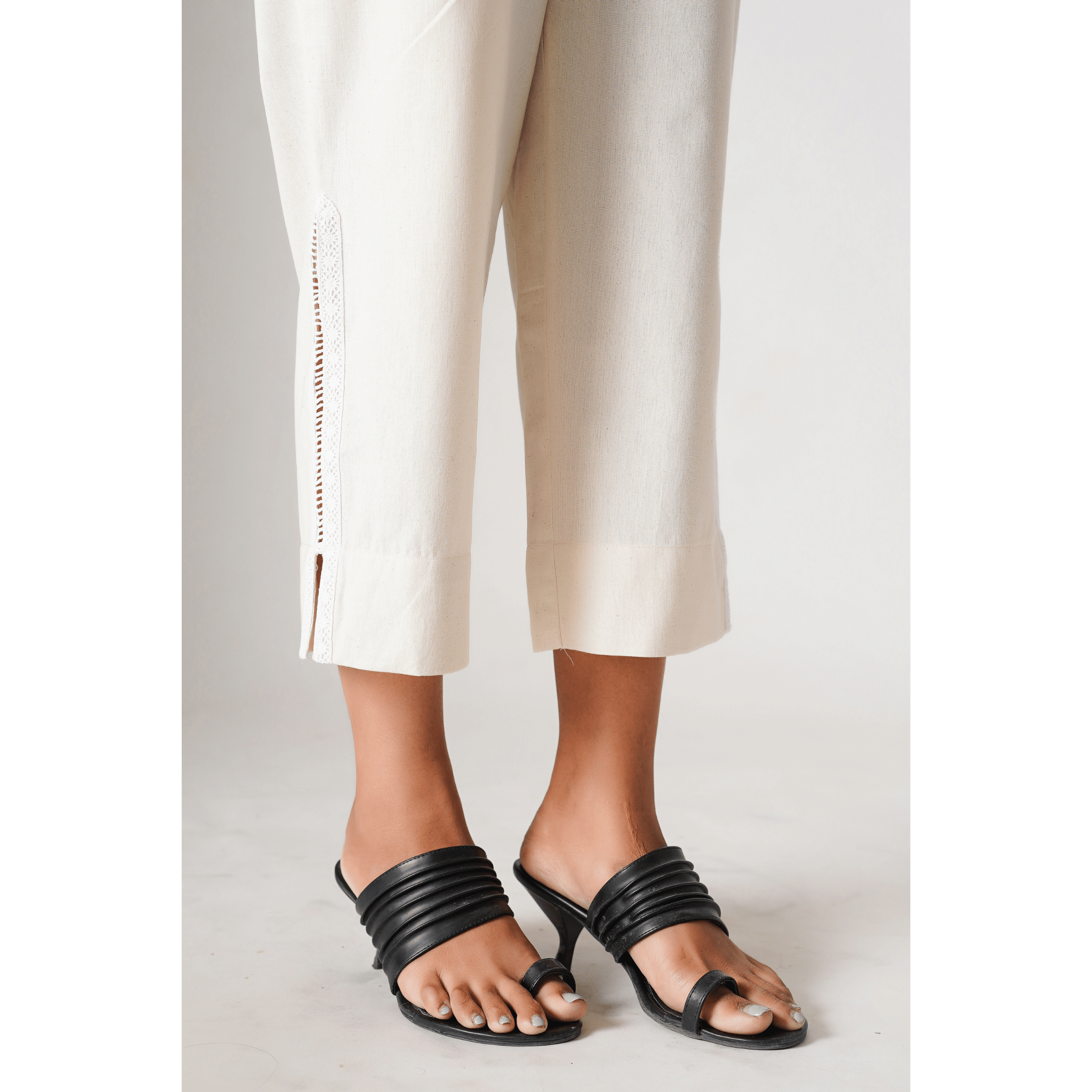
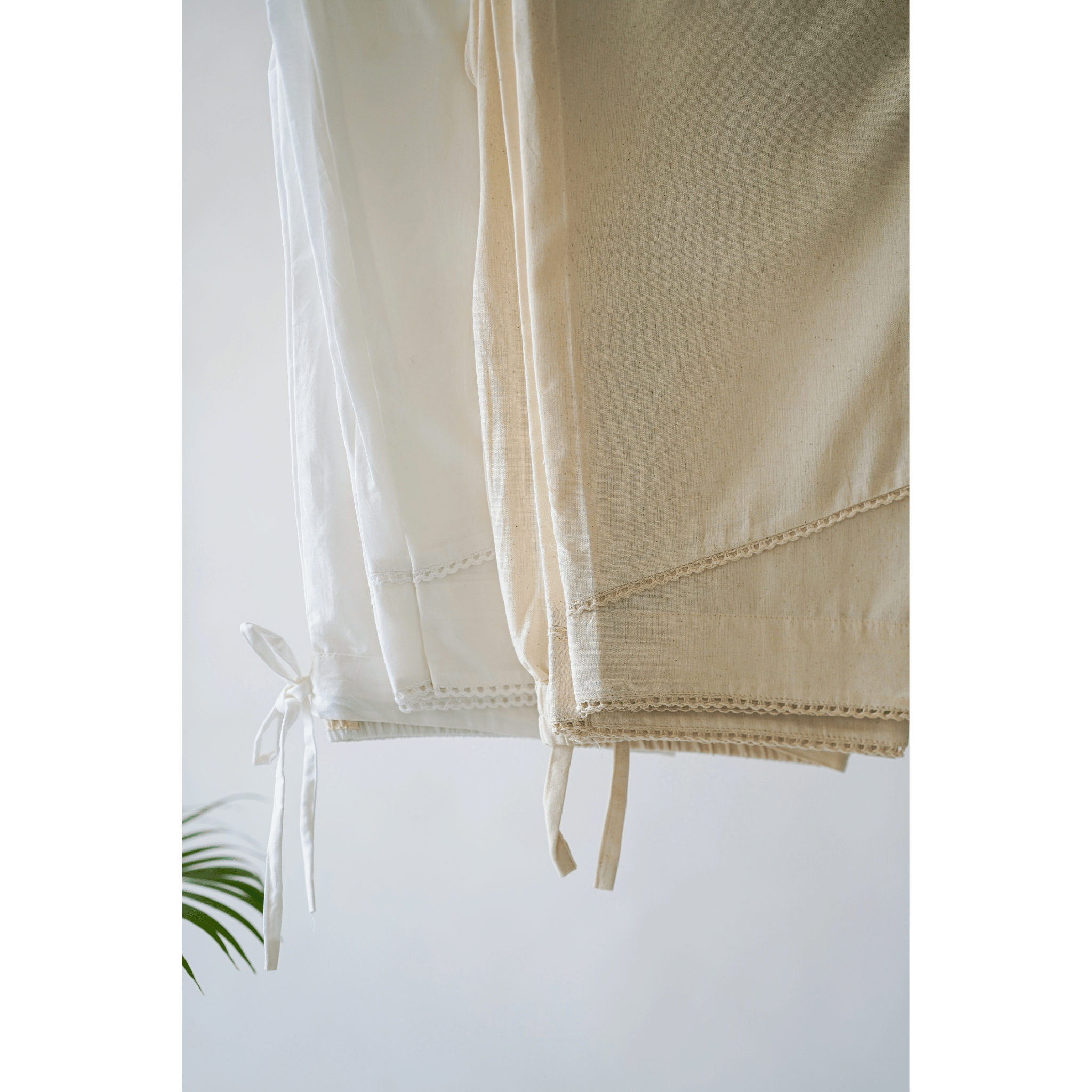
Lace trim, such as the kind found along the hems of the Ajmer Cotton Linen Pants or the Snowdrop and Magnolia white cotton pants, is similarly delicate. Lace is worked from thin thread and its structure is entirely in its weave. Rubbing or wringing lace distorts that structure permanently. When washing a garment with lace detailing, support the lace rather than working against it, hold the body of the garment and let the lace float in water rather than gripping it directly.
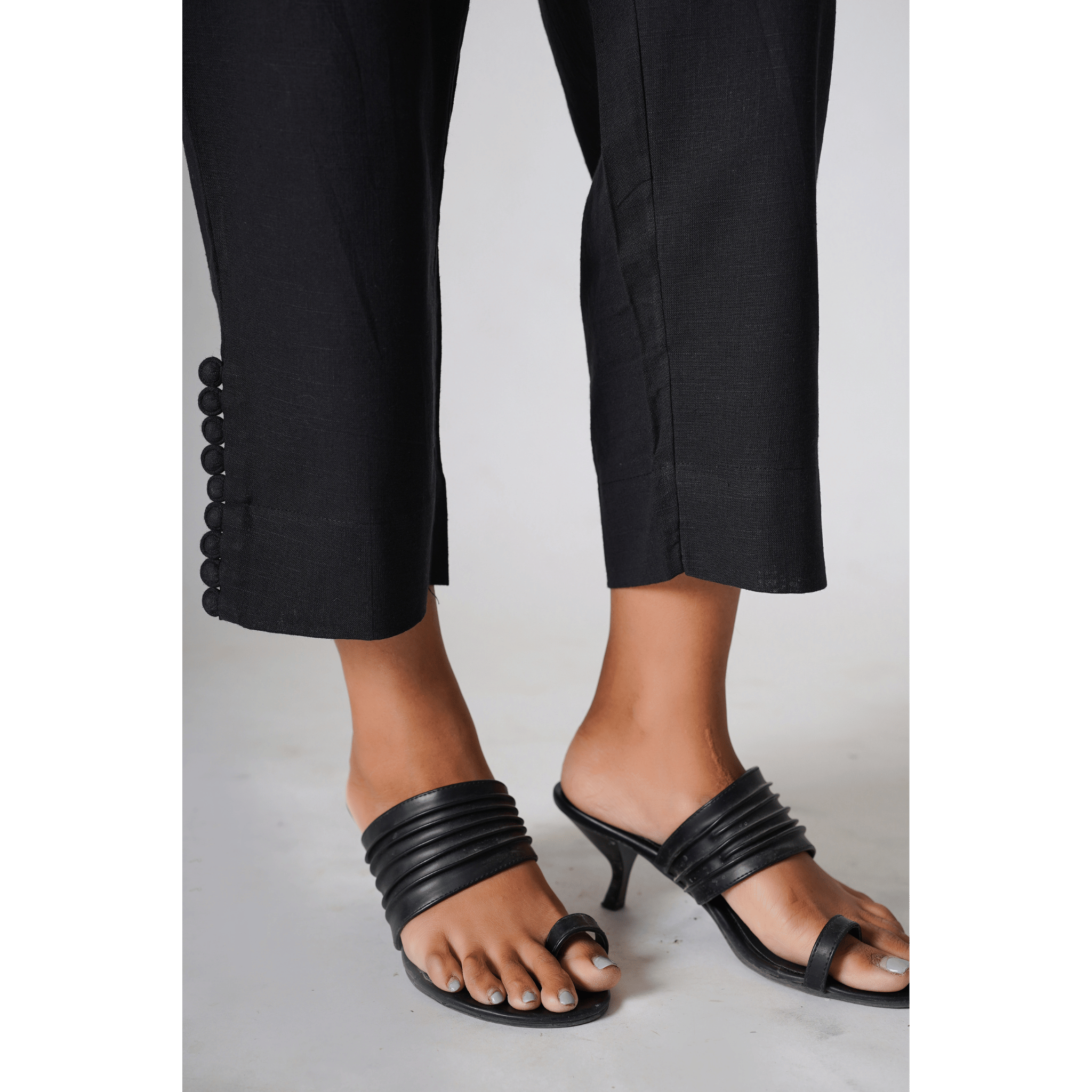
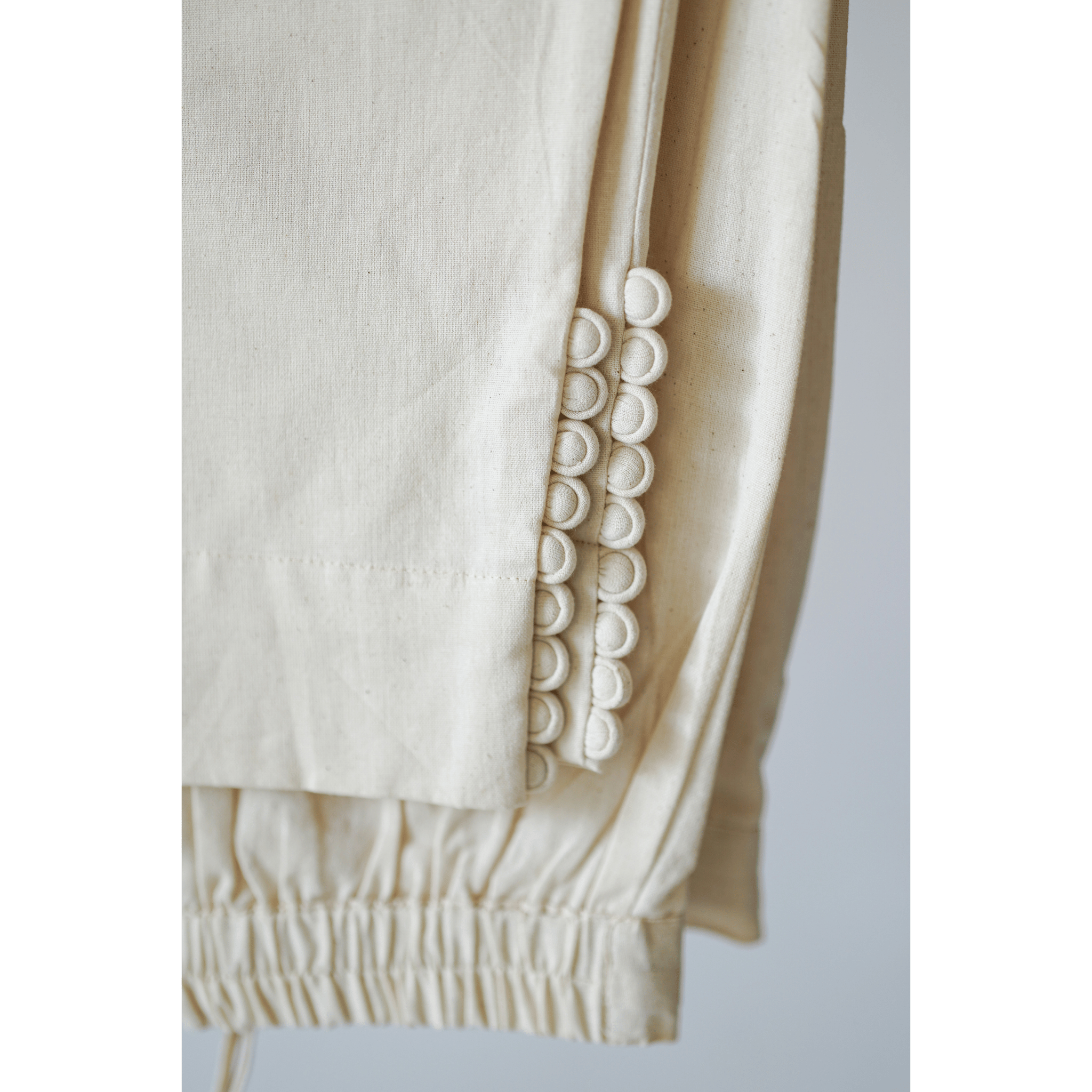
Potli buttons and fabric-covered buttons should be kept out of the machine drum entirely when possible. The tumbling action of a machine cycle can crack the button forms or cause the fabric covering to fray. If you are machine washing a garment with potli buttons, place it inside a mesh laundry bag first. This limits direct contact between the buttons and the drum.
Scalloped hems like those on the Siyah Black Scalloped Pants are usually embroidered or cut rather than separately applied, which makes them more durable than attached trim. Still, hand washing keeps the edges cleanest and sharpest over time. The pearl details on scalloped styles should be checked periodically to ensure the thread holding them has not loosened, especially after the first few washes.
The drying stage causes more irreversible damage to cotton than washing, mostly because it is the step people pay the least attention to.
Never wring cotton. Wringing, twisting the fabric to force water out, distorts the fibres and stretches the garment unevenly. Once a cotton pant has been wrung repeatedly, it will develop areas of uneven texture and its shape will gradually change in ways that are not reversible. Instead, press water out by laying the garment flat and pressing firmly, or roll it in a clean, dry towel and press. Neither method distorts the fibre structure.
Dry cotton in shade where possible. As noted in the section on black, direct sunlight fades colour, and this is true for all colours, not just dark ones. Whites yellow, pastels wash out, and blacks grey. Shade drying takes slightly longer but preserves colour significantly better over the life of a garment. If you must dry in sun for practical reasons, turn the garment inside out to limit the sun's impact on the face of the fabric.
Hang garments properly while drying. A cotton pant hung from the waistband on a single peg will dry with a stretched waistband. Hang pants from the hem using two pegs, one at each leg, so the waistband is free and the garment hangs in the shape it is meant to be worn. Alternatively, dry pants flat on a rack, which is the gentlest option and particularly good for linen blends that can stretch when wet.
Cotton-linen blend garments: the Ajmer, Ayanna, and Bikaner pants among them. are particularly prone to drying out of shape because linen fibres absorb a great deal of water and become heavy when wet. Always dry cotton-linen pieces flat or supported on a wide hanger so the weight of the wet fabric does not pull the garment out of form.
Cotton is one of the few fabrics that genuinely benefits from ironing, it responds to heat and pressure beautifully, becoming smoother and crisper in a way that synthetic fabrics cannot. But ironing at the wrong temperature or on the wrong kind of fabric can cause permanent damage.
Iron cotton while it is still slightly damp for the best results. Completely dry cotton is harder to press smooth and requires more passes of the iron. Slightly damp cotton responds to even moderate heat and presses flat in a single stroke, with far less risk of scorching. If your garment has dried completely, use the steam function on your iron or hold the iron an inch above the fabric and allow steam to dampen it slightly before pressing.
For embellished garments, always iron on the reverse side, the inside of the fabric, to avoid direct heat contact with trim, thread work, or embellishments. For lace or gotta-patti trim specifically, place a thin cotton cloth between the iron and the embellishment as a buffer. Never iron directly over metallic trim, which can melt or lose its sheen under direct heat.
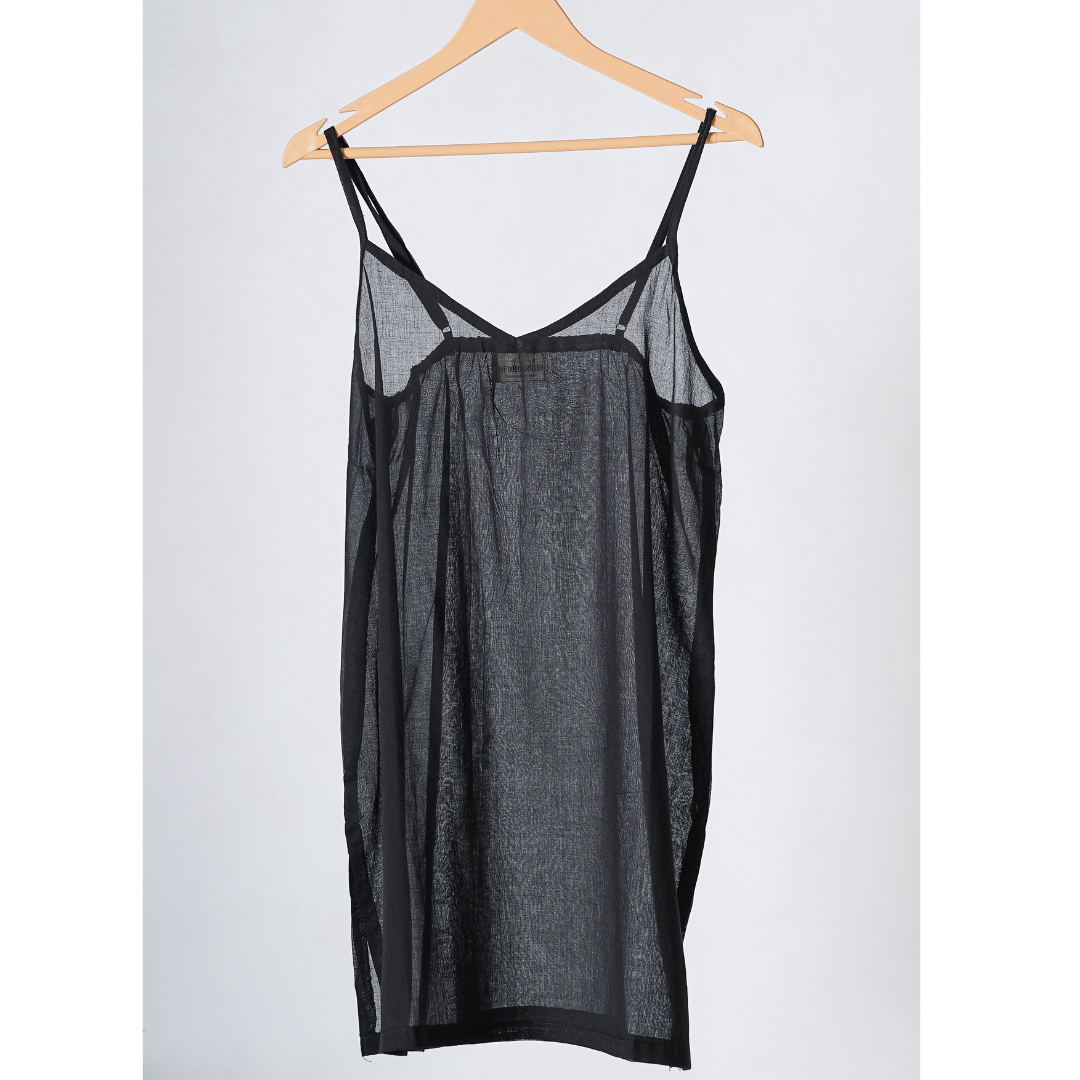
Mulmul, which is very loosely woven, requires a lower iron temperature and a very light hand, it presses easily and can scorch or over-thin at high heat. Cotton slips in mulmul, including the Black Mulmul Slip and the Indigo Mulmul Slip from The Good Artisan, should be steamed rather than pressed with a hot iron, or ironed on the lowest cotton setting with the garment still damp.
How you store cotton is as important as how you wash it, particularly through the long humid stretch of the Indian monsoon and the heat of May and June.
Cotton needs to breathe. Storing cotton in plastic bags or sealed plastic boxes traps moisture, which creates exactly the environment mildew needs to develop. Use cotton storage bags, cloth covers, or open shelving where air can circulate. If you are putting seasonal clothes away for a longer period, fold them in clean muslin or cotton cloth rather than plastic.
For humid climates specifically - coastal cities, or anywhere during monsoon, consider placing silica gel packets in your wardrobe. These absorb ambient moisture and keep the internal humidity of your storage space low enough to prevent the musty smell that cotton absorbs readily. Replace them every few months or when they indicate saturation.
Keep dark clothes away from sustained light exposure, even inside a wardrobe. If your wardrobe has glass doors or gets light through gaps, position dark garments at the back or in drawers. Light-coloured garments stored near direct light can develop an uneven yellowing pattern that is difficult to reverse.
Do not store cotton unwashed after wearing. Cotton retains body oils, perspiration, and environmental particles from the day, and these will oxidise and set into the fabric over time if the garment is put away unwashed. Wearing-to-storage without washing is one of the less obvious ways that whites develop yellowish underarm marks and collars turn grey at the fold lines. Wash before storing, every time.
Cotton will shrink in heat. This is not a manufacturing defect; it is a property of natural fibre. Cotton fibres are held in a stretched state during the weaving and finishing process, and heat, from hot water or from a tumble dryer, causes those fibres to relax back toward their natural state. The result is a garment that is slightly smaller than it was when you bought it.
There are two ways to manage this. The first is prevention: wash in cold water, never use a tumble dryer, and dry flat or on a wide hanger. Following these three practices will dramatically reduce shrinkage across the life of the garment. The second is to buy knowing that some cotton garments, particularly those that have not been pre-shrunk in their finishing, may lose a small amount of size after the first wash or two. Pre-washing a new cotton pant before its first wear sets the fibres and means any minimal shrinkage happens before you have calibrated the fit to your body.
Cotton-linen blends shrink less than pure cotton, because linen fibres are stiffer and resist the relaxation that causes pure cotton to contract. This is one of several reasons the cotton-linen range is particularly practical as a long-term wardrobe investment.
Everything above applies to any good quality natural cotton garment. But it applies especially to the pieces from The Good Artisan, because our garments are made with the assumption that you will keep them. Every piece in our collection, from the simple Classic Black Cotton Pants to the embellished Jaipur Gotta-Patti Pants, is crafted in 100% natural fibre and made by skilled artisans in Jaipur. They are not designed for three wears and a charity pile. They are designed to be worn again and again, to soften with washing, and to become more familiar and comfortable over time.
Our care instructions for each category: for black cotton pieces including the Classic Black Cotton Pants, the Amina Black Cotton Pants, and the Siyah Black Scalloped Pants, wash blacks separately with mild detergent, do not soak, dry in shade, and steam iron at moderate heat. For white cotton pieces including the Arabis White Cotton Pants, the Oyster White Summer Pants, and the Dahlia Wide-Legged White Pants, wash separately from colours, cold water only, dry in shade, iron while slightly damp. For cotton-linen beige pieces including the Ajmer, Ayanna, and Bikaner Pants, cold machine or gentle hand wash, dry flat to prevent stretch, iron on medium heat. For embellished pieces including the Jaipur Gotta-Patti Pants, the Siyah Scalloped Pants, and any lace-hem styles, hand wash only, cold water, support trim during washing, iron reverse-side only.
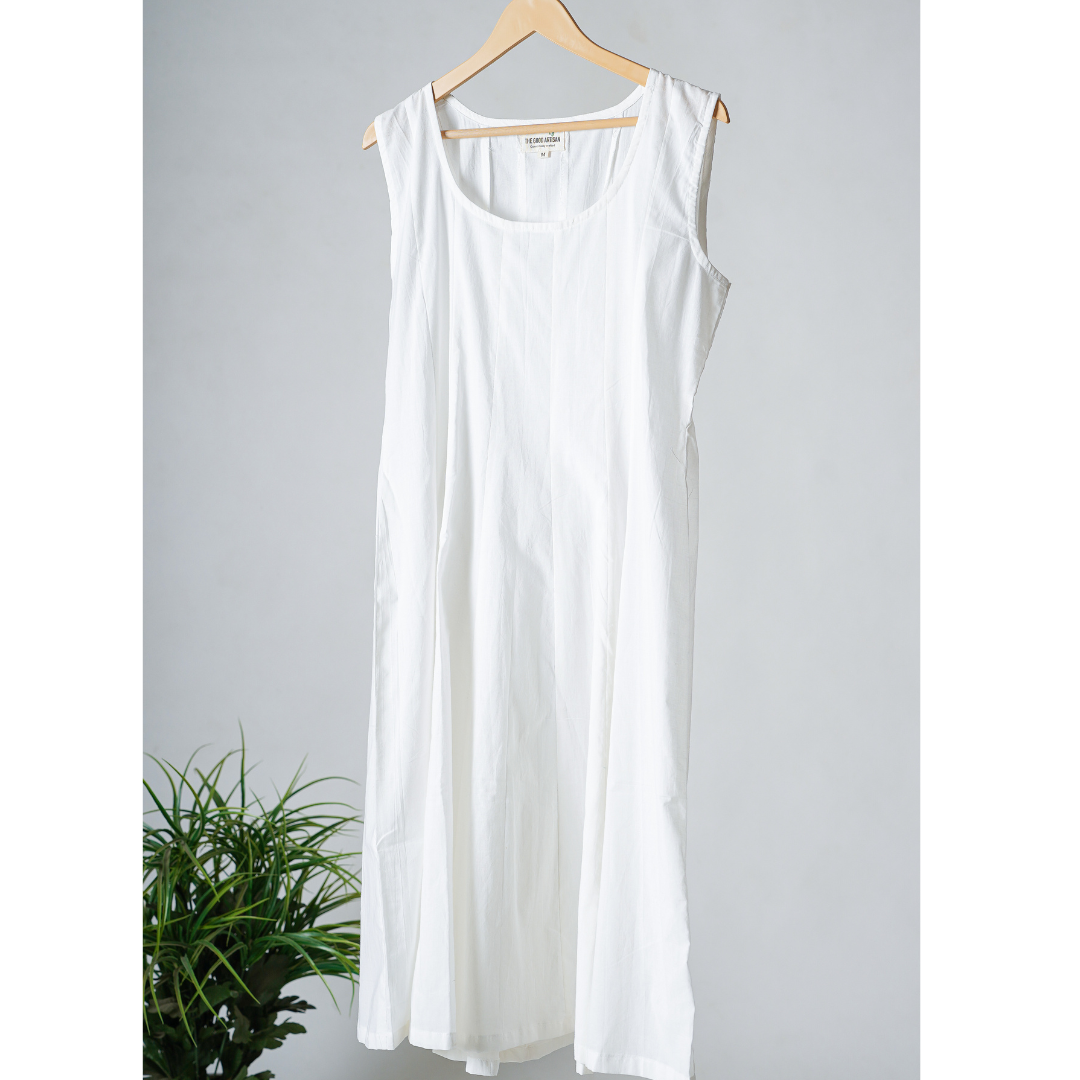
For our cotton slips, the White Cotton Slips, the Black Mulmul Slip, the Anarkali Slip, and the coloured mulmul range, gentle hand wash in cold water; do not wring; steam or low-heat iron. Dry flat whenever possible.
All of these instructions are included with your order. But the more you understand why each step matters, the more naturally they become part of how you treat every cotton garment you own, not just ours.
A cotton pant that costs Rs. 1,200 and lasts five years costs you Rs. 240 a year to wear. A cotton pant that costs Rs. 399 and lasts five months costs you nearly a thousand rupees a year, and contributes to the textile waste stream in the process. This is the arithmetic of quality, and it is why choosing well-made natural fibre basics and caring for them correctly is one of the most financially and environmentally sensible decisions you can make as a consumer.
The clothes that last are rarely the ones that demanded the most care. They are the ones made from honest materials by people who knew what they were doing, and washed in cold water, dried in the shade, and put away clean.
That is it. That is the whole secret.
Explore The Good Artisan's full collection of 100% natural-fibre pants, slips, and kurtas at www.thegoodartisanstore.com
Made in India · Mindfully Crafted · Natural Fabrics · Artisan Wear · Jaipur