Cart
0
You may also like
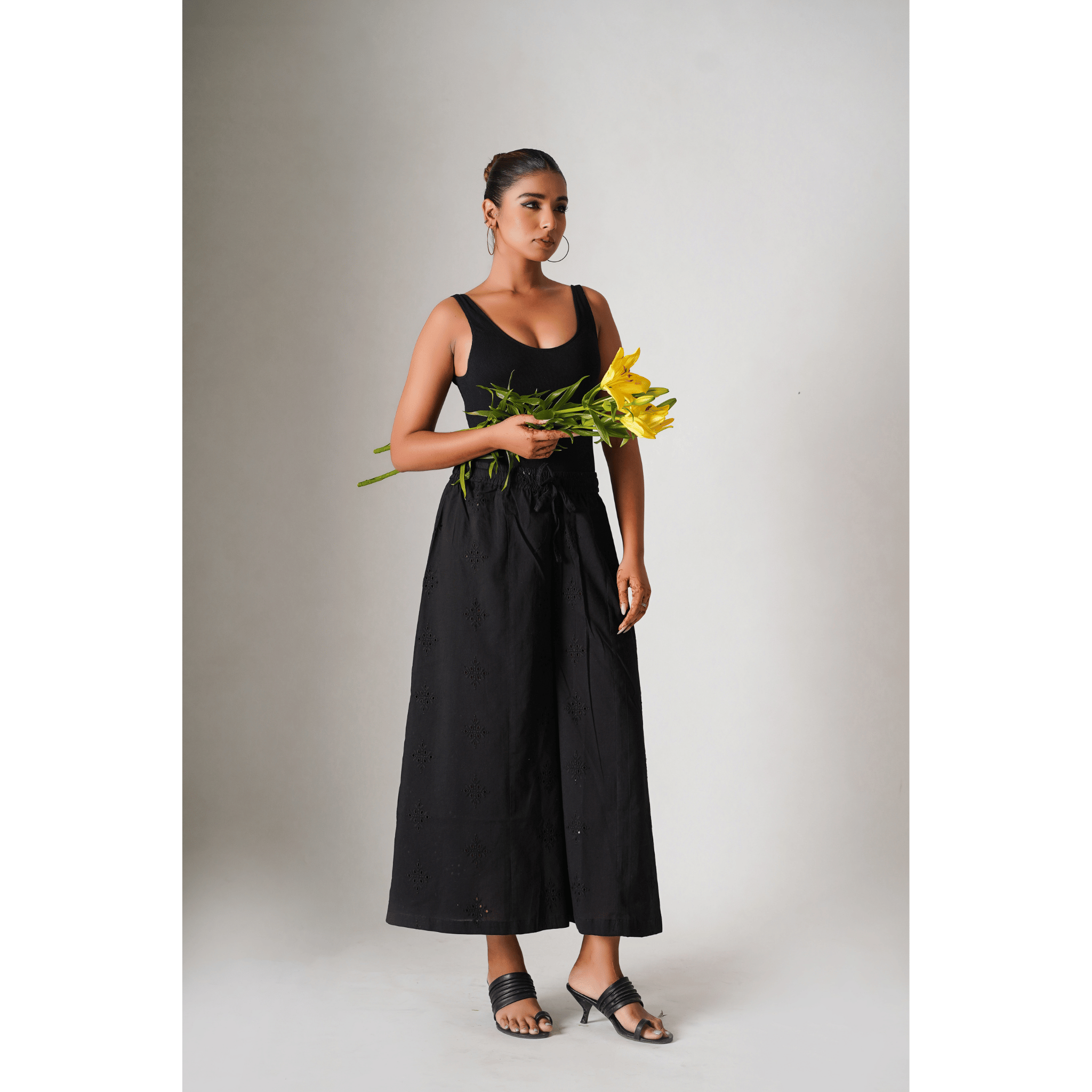

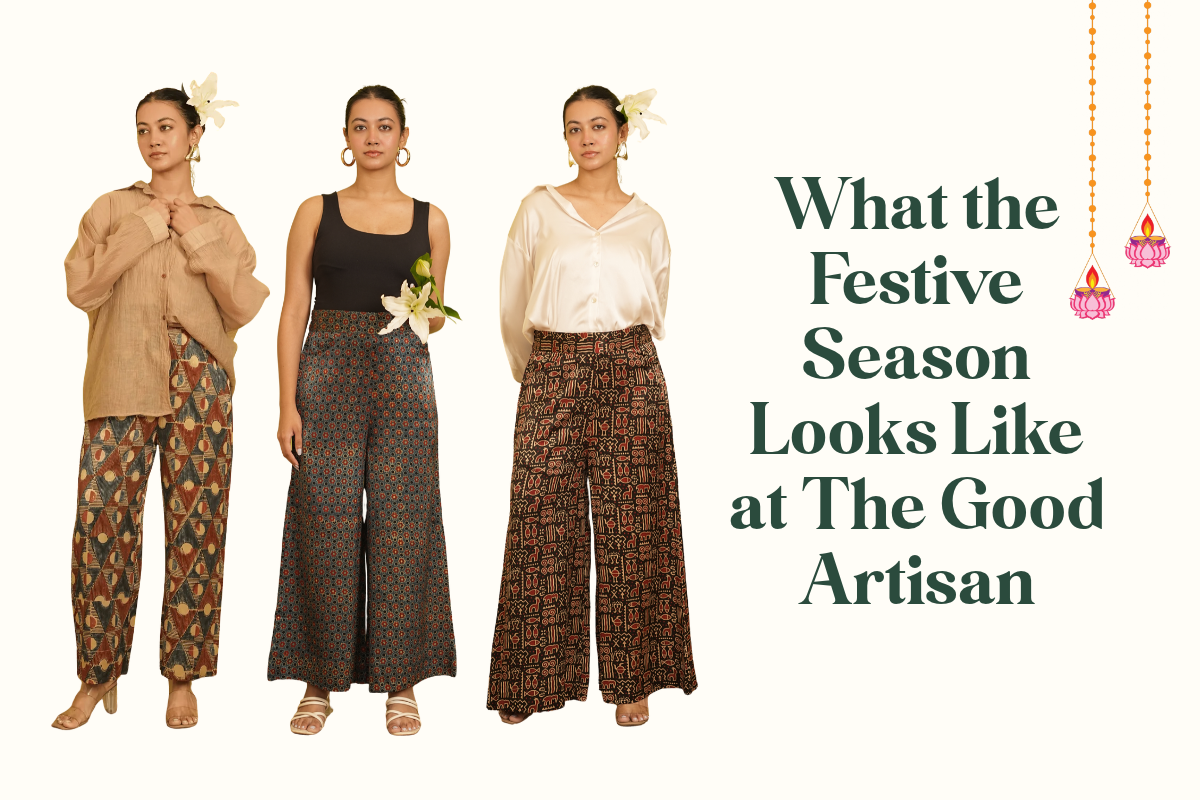
There is something particular about the way Jaipur prepares for the festive season. The city does not ease into it. One evening the streets are ordinary, and the next they are strung with lights, the air carries the smell of marigolds and incense, and every woman you pass seems to have made an effort that goes beyond the usual. The Pink City has always known how to dress for a celebration — it is in the bones of the place, in the centuries of textile craft and ornamental tradition that gave it its character.
At The Good Artisan, we have built our brand from this city and this spirit. Festive dressing, for us, is not a separate category that arrives once a year and then disappears. It is an extension of the same philosophy that shapes everything we make: that clothes should be crafted with care, made in natural materials, designed to be worn and worn again, and finished with the kind of detail that makes a woman feel genuinely good when she puts them on. The festive season simply asks for a little more of all of that — a little more shimmer, a little more occasion, a little more intention. And we are very happy to oblige.
The festive wardrobe in India carries a particular kind of pressure. There is the expectation of newness — of wearing something that signals effort, marks the occasion, and photographs well at the family function. There is the expectation of tradition — of honoring the occasion with clothes that feel appropriate to it, that carry some sense of cultural belonging. And there is, increasingly, the recognition that an outfit worn once and put away forever is not really a good investment of money, time, or the resources that went into making it.
At The Good Artisan, we have always believed that these three expectations can coexist, and that the way to make them coexist is through pieces that are beautiful enough for a celebration but grounded enough in quality and versatility to earn more than one outing. A well-made festive pant in 100% cotton with gotta-patti trim should not feel like something you are preserving behind glass. It should feel like something you want to wear — to Diwali, yes, but also to Navratri, to a friend's mehendi, to a Sunday puja, to any occasion that calls for something a little more considered than an everyday outfit.
This is the distinction we think about when we design for the festive season. Not louder, but more. More care in the detail. More attention to the finish. More craft in the embellishment. The same natural fabric, the same breathable cotton that forms the spine of everything we do — but elevated, in the way that Jaipur's own craft traditions know how to elevate things, through the patient work of skilled hands.
If there is one technique that defines festive dressing in Rajasthan, it is gotta-patti. The word refers to a form of embellishment in which thin metallic ribbon — traditionally made from real gold and silver, now more commonly from zari — is stitched onto fabric in patterns ranging from delicate borders to elaborate all-over work. It is one of the oldest textile crafts of the region, historically reserved for the garments of royalty and worn at occasions of the greatest ceremony. Today it is more democratic, but the craft itself has not changed: it is still applied by hand, still requires specialist skill, and still produces a quality of shimmer that no machine-made alternative has managed to replicate.
The Jaipur Gotta-Patti Black Cotton Pants (from Rs. 2,199) are our most direct homage to this tradition. The gotta-patti trim is applied along the hem and waistband by artisans in our Jaipur workshop, creating a pant that is entirely modest in silhouette — a well-cut, comfortable black cotton with an elasticated waist — but festive in its finishing in the most unambiguous way. Paired with an embroidered kurta, it is a function outfit. Paired with a simple fitted top, it becomes modern and evening-appropriate. The gotta-patti work does not require you to build a complicated outfit around it. It brings its own occasion.
The Dubai Glitterati Black Cotton Pants (from Rs. 2,499) take the same spirit in a slightly different direction, with a bolder, more contemporary embellishment that catches light in the way sequin and metallic work does when you are moving through a room at a Diwali party or a sangeet. The base is the same honest cotton, and the finish has the same hand-applied quality, but the mood is more celebratory, more unabashedly festive.
There is no silhouette in Indian ethnic dressing more inherently festive than the dhoti pant. Its draped, gathered front — pulled in at the ankle and falling in soft pleats at the thigh — is a silhouette that carries centuries of ceremonial association. It moves beautifully when you walk, catches the light differently from every angle, and gives any outfit an instantly more dressed-up quality without requiring elaborate coordination.
Our dhoti range is made in mulmul, which is exactly right for this silhouette. Mulmul — the fine, loosely woven cotton that is Jaipur's great contribution to Indian textile culture — is light enough to allow the dhoti's characteristic drape, responsive enough to move well, and breathable enough to be worn comfortably through an evening mehendi or a Navratri garba session that stretches past midnight. It is the fabric equivalent of a well-timed decision: it just works.
The Sahaba Black Mulmul Dhoti Pants (from Rs. 1,800) are our most requested festive piece, and they have been since we launched them. Black mulmul is not a combination you find everywhere, and the reason is that mulmul is usually associated with lighter tones. But black mulmul, when it is made correctly — with the same fineness and drape as its pale counterpart — is genuinely extraordinary. It is festive without shouting. It is dressy without being stiff. It goes with a sharply embroidered jacket for a wedding function and with a simple embellished cami for a more casual evening gathering.
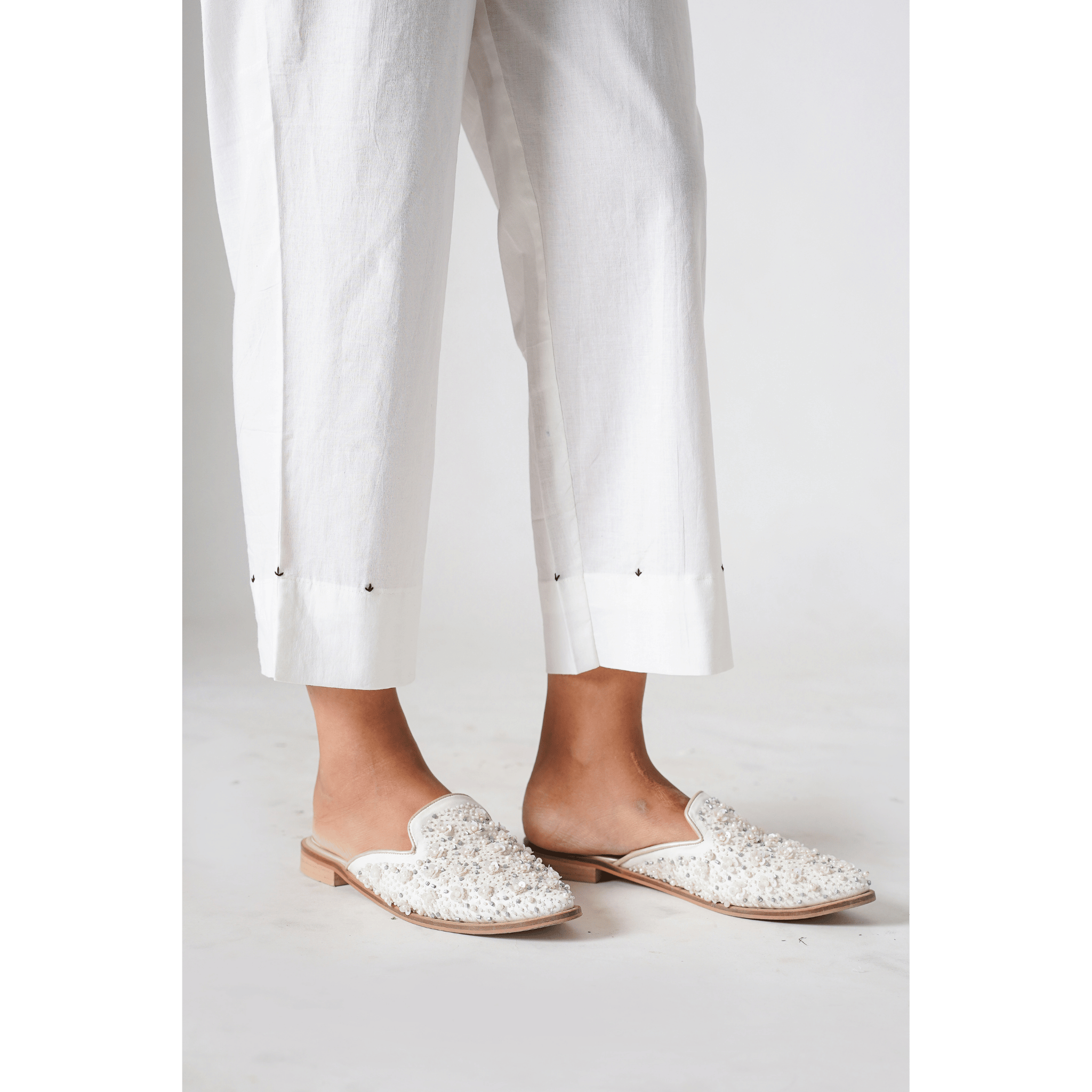
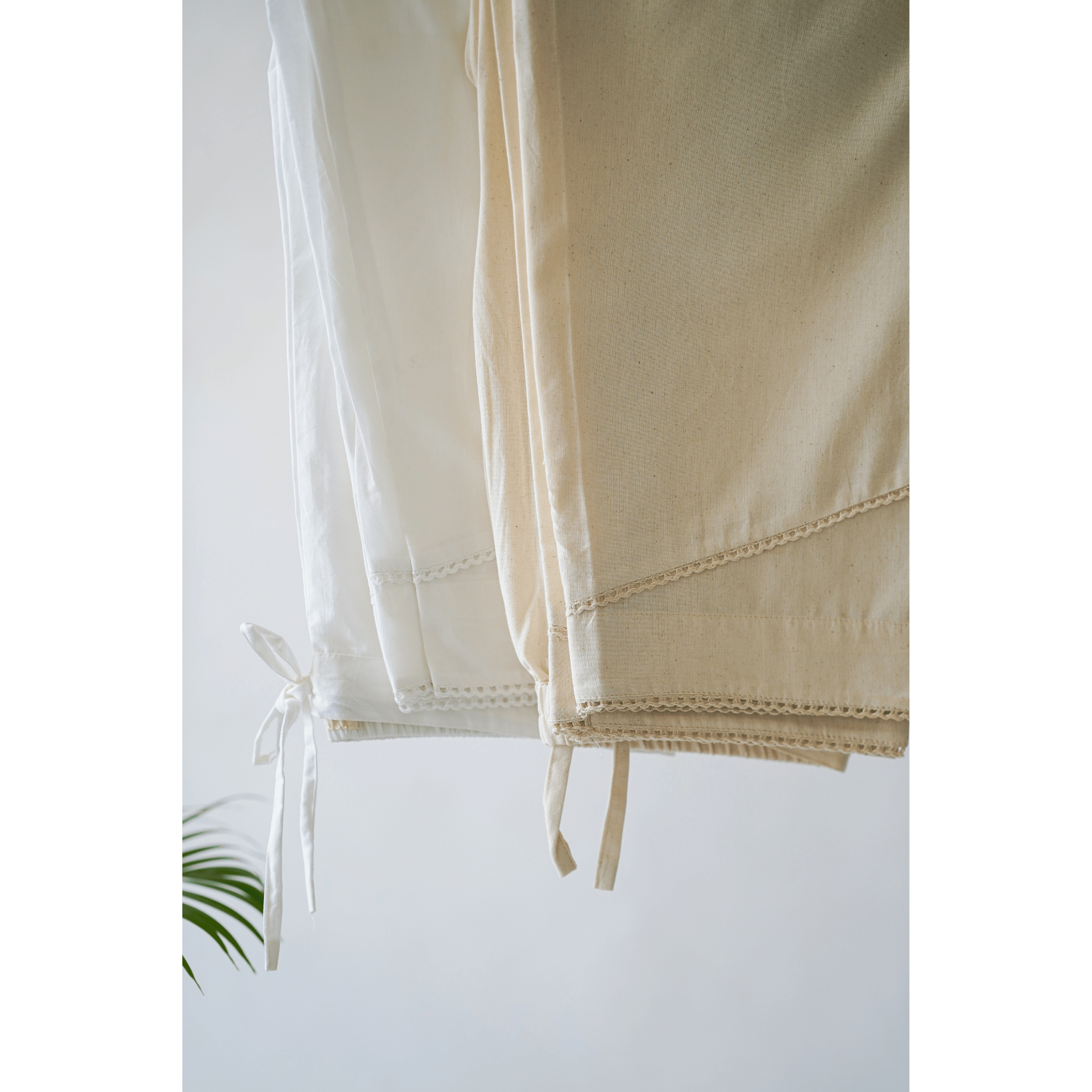
The Khejdi White Mulmul Dhoti Pants (from Rs. 1,600) are the white counterpart — brighter, lighter in both weight and mood, and particularly well suited to Diwali's association with light and the garba season's palette of whites and creams. A white mulmul dhoti with a printed or embroidered kurta is one of those combinations that always works, always looks considered, and always photographs beautifully.
Not every festive outfit needs to announce itself from across the room. Some of the most beautiful festive dressing is done with restraint — with pieces that have something special about them, something that rewards a closer look, without overwhelming the woman wearing them. This is where several of our detailing-forward styles come into their own.
The Siyah Black Cotton Scalloped Pants (from Rs. 1,500) have become a quiet favourite for women who want to look festive without going heavily embellished. The scalloped edge along the hem is highlighted with small pearl details, hand-applied by artisans in our workshop. In person, in evening light, the effect is elegant in a way that photographs struggle to capture — it is the kind of detail you notice when someone walks past you, not the kind that announces itself from a distance. This makes the Siyah remarkably versatile across festive occasions: it is comfortable enough for a family Diwali dinner and refined enough for a formal wedding reception.
The Northern Lights Black Cotton Pants (from Rs. 1,499) are another example of this philosophy in action. Soft cotton with fine pintuck detailing along the leg — the kind of detail that is entirely in the texture and fall of the fabric rather than any applied embellishment. It reads as understated luxury: the kind of thing you only understand when you touch it. For festive occasions where the outfit's complexity is meant to come from the top — a heavily embroidered kurta, an embellished jacket, a statement piece of jewellery — the Northern Lights are the ideal foundation pant.
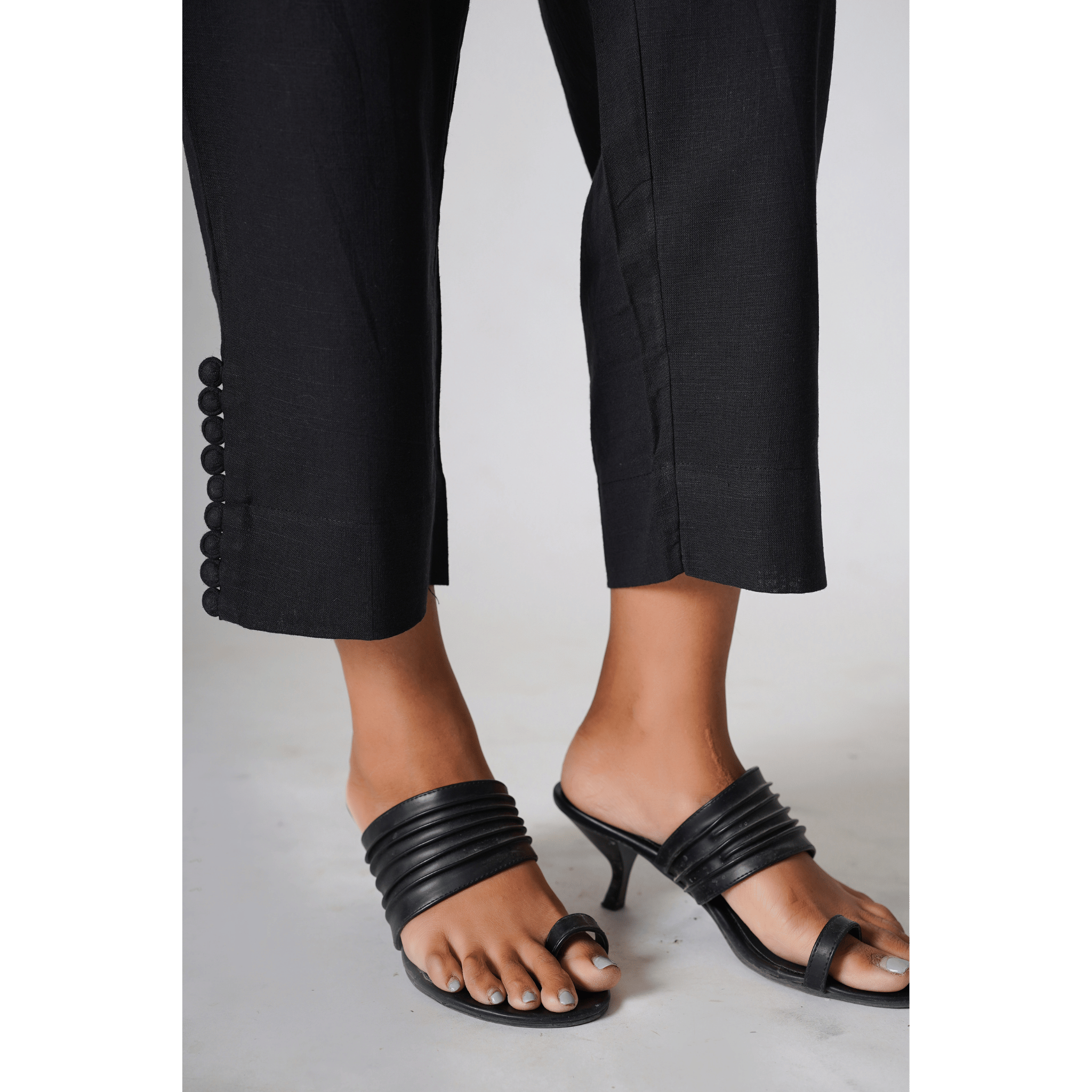
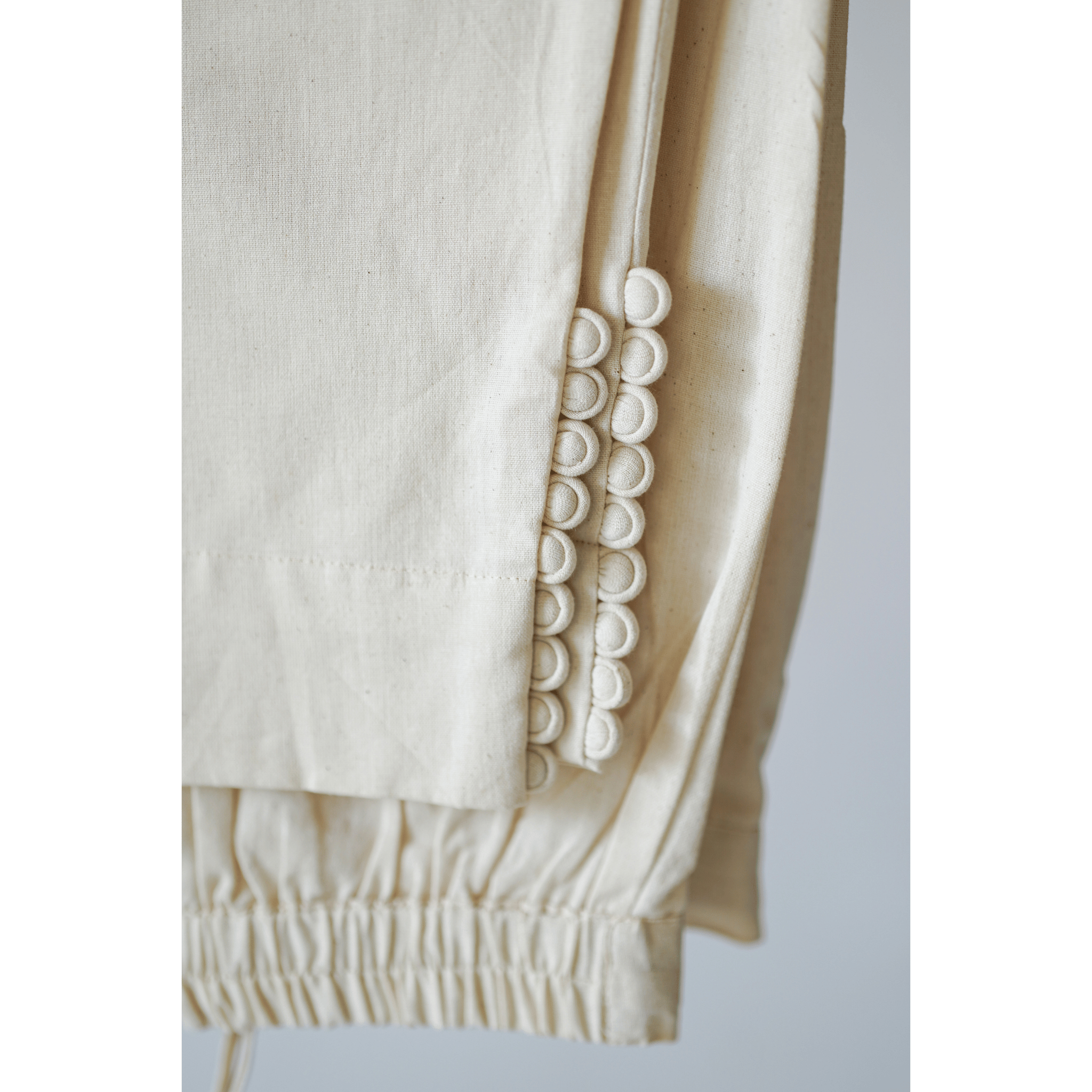
The Amina Black Cotton Pants with Potli Buttons (from Rs. 1,499) deserve particular mention for the festive season, because the potli button is a deeply Indian detail that carries disproportionate charm. These small, fabric-covered buttons — usually in the same fabric as the garment or a complementary material — are a craft detail from Indian tailoring tradition, and they give the Amina pants a quality of finish that elevates them above a plain cotton basic without making them feel heavily embellished. They work beautifully as a festive basic: structured enough for a function, comfortable enough for a long evening.
White is not usually the first colour that comes to mind for festive dressing in India, where the tradition has always leaned toward colour, embellishment, and richness of hue. But white, in the right fabric and the right cut, has its own festive register — and it is one that is increasingly valued by women who want to look beautiful at an occasion without wearing the same saturated palettes every time.
The Jewel White Cotton Poplin Pearl Pants (from Rs. 1,650) make this argument most convincingly. They are made in cotton poplin — a finely woven, slightly lustrous cotton that holds its shape beautifully — and finished with pearl detailing that gives the white pant a genuine festive character. The result is clean but far from plain. It works beautifully with a gold or silver embroidered kurta for a Diwali look, with a bright printed silk for a wedding function, or with an off-shoulder embellished blouse for a more contemporary festive outfit.
The Orchid White Tulip Pants (from Rs. 1,599) are an entirely different silhouette — the tulip cut, with its overlapping panels at the front and tapered ankle, is a more dramatic and contemporary shape that makes a statement on its own terms. In white, it reads as festive in the same way a well-cut white suit reads as festive: through the precision of the shape rather than the weight of the embellishment. Pair it with a richly coloured or embroidered kurta and the white becomes the element that makes everything else sing.
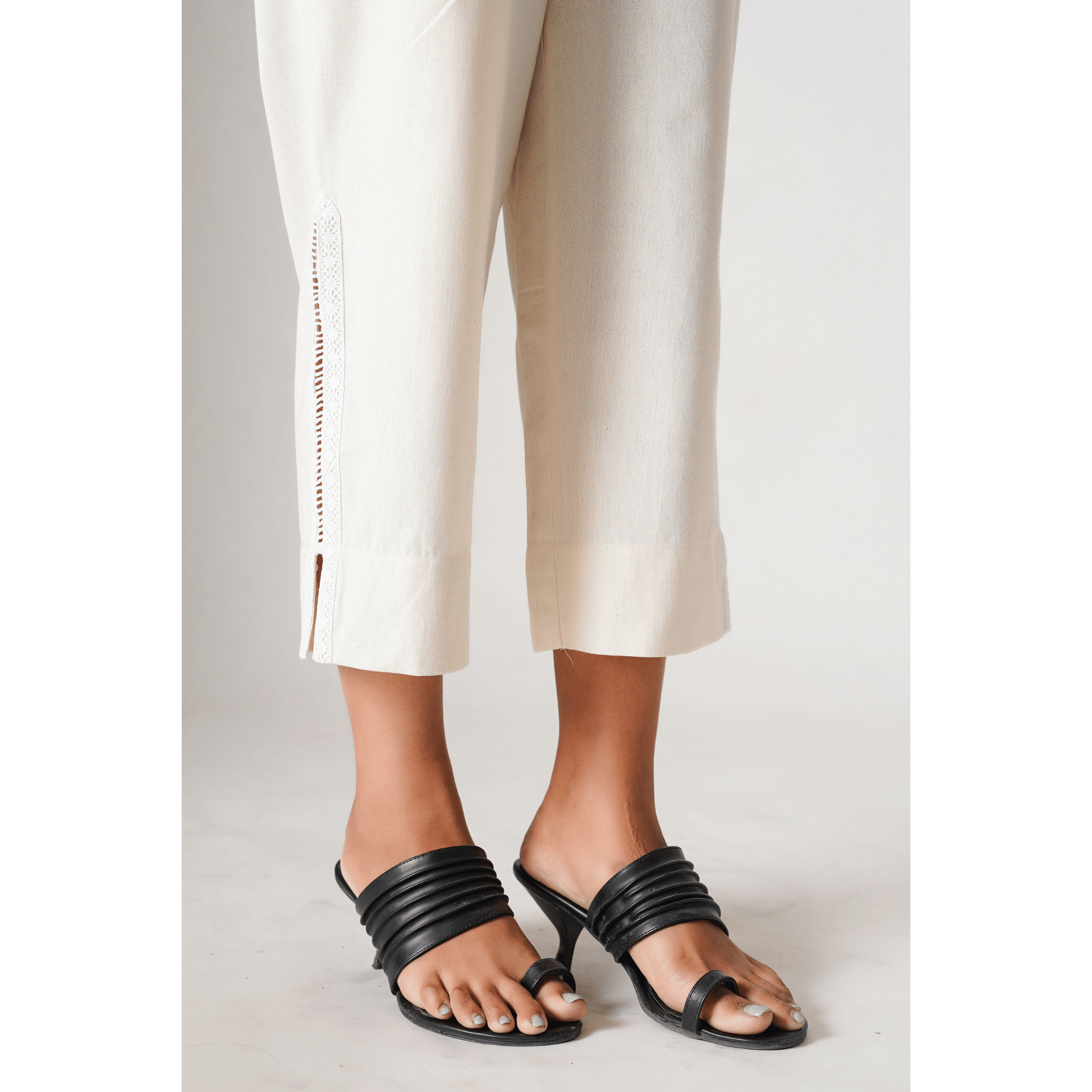
The Snowdrop White Cotton Lace Pants (from Rs. 1,599) and the Iris White Cotton Scalloped Pants (from Rs. 1,400) both carry their festive quality in their detailing — lace trim in the case of Snowdrop, scalloped edges with a silk chanderi insert in the case of Iris. These are pants that can be worn on an ordinary day and look appropriate, but which have something about them — something in the finishing — that makes them equally at home at a celebratory occasion. That versatility is exactly what we aim for.
There is something inherently celebratory about a palazzo pant. The wide leg, the way it moves when you walk, the sense of drama it creates with every step — it is a silhouette that was made for occasions. And in natural fabric, it has a quality of luxuriousness that synthetic alternatives genuinely cannot match, because the way cotton and linen fall, and the way mulmul breathes and moves, cannot be replicated in polyester.
The Amara Hakoba Black Cotton Palazzo (from Rs. 1,799) is one of the most distinctive pieces in the TGA festive range. Hakoba is a fabric with a woven pattern — small repeating dots or geometric motifs created in the weaving process rather than printed or embroidered on afterwards. The result is a texture that is subtle in daylight but catches light beautifully in the evening, giving the palazzo an eveningwear quality that is entirely built into the fabric rather than relying on applied decoration. Worn with a fitted embroidered kurta or an embellished jacket, the Amara palazzo is a complete festive outfit that requires nothing else.
The Victoria Black Cotton Linen Pants (from Rs. 1,700) take a wider-legged approach in cotton-linen blend — more structured than the Amara, with the elegant quality that linen brings to any silhouette. It is a palazzo for the woman who wants the drama of a wide leg without the full softness of mulmul or pure cotton; a slightly more architectural look that works beautifully with both traditional and contemporary festive tops.
No festive outfit is complete without the right foundation, and this is a dimension of festive dressing that rarely gets the attention it deserves. A beautiful mulmul dhoti pant worn over a white synthetic slip is a different experience — texturally, aesthetically, and in terms of comfort — from the same pant worn over a proper mulmul or cotton slip. The foundation matters.
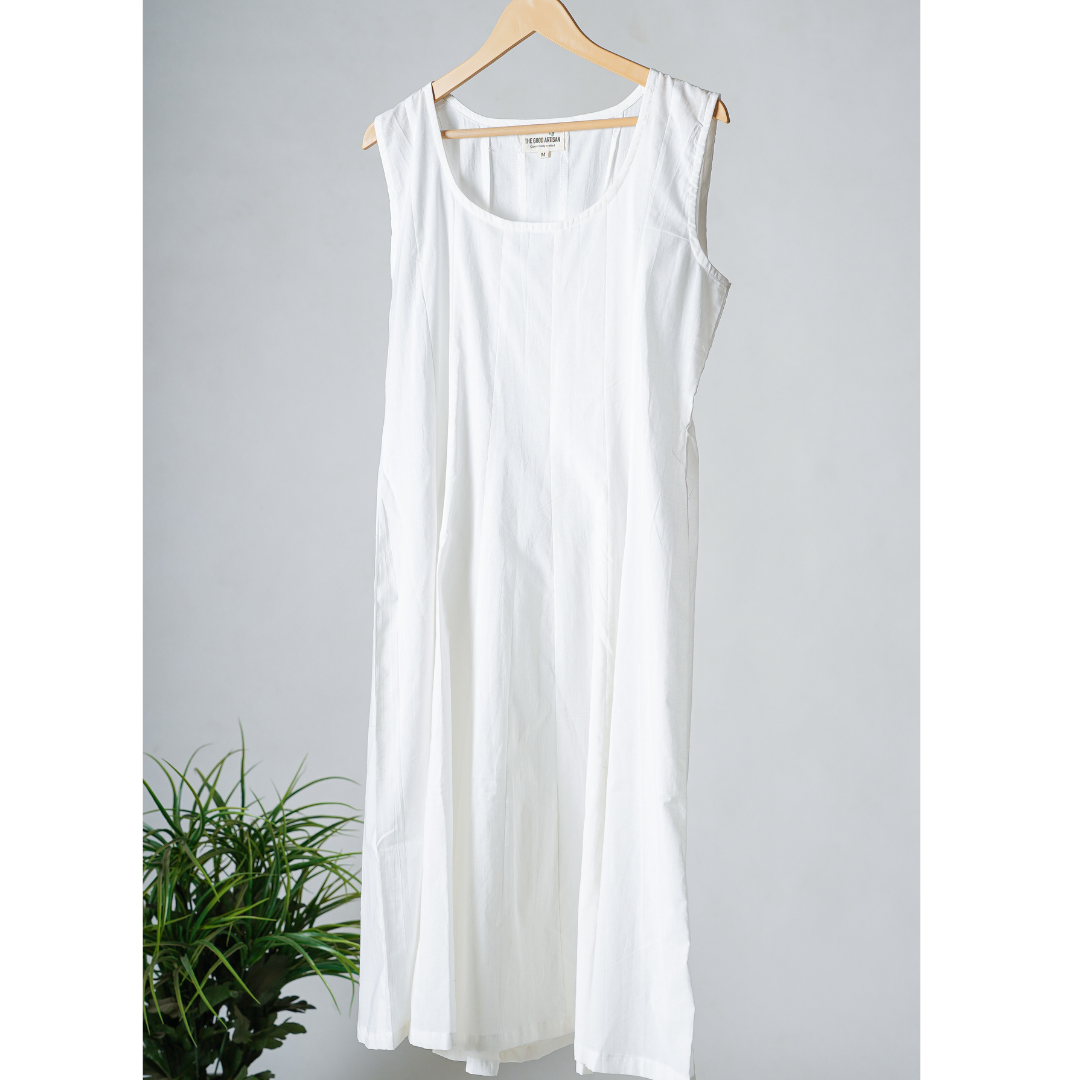
For festive occasion dressing, the Anarkali White Cotton Slip (from Rs. 2,100) is the most important piece in our slip range. Made in full anarkali kalis — the panels cut in the characteristic flare of the anarkali silhouette — it provides the volume and swish that makes an anarkali kurta or a floor-length sheer kurta move the way it is meant to. Without this kind of slip, an anarkali tends to cling and bunch. With it, the garment falls as it was designed to, and the effect at a wedding or a formal function is entirely different.
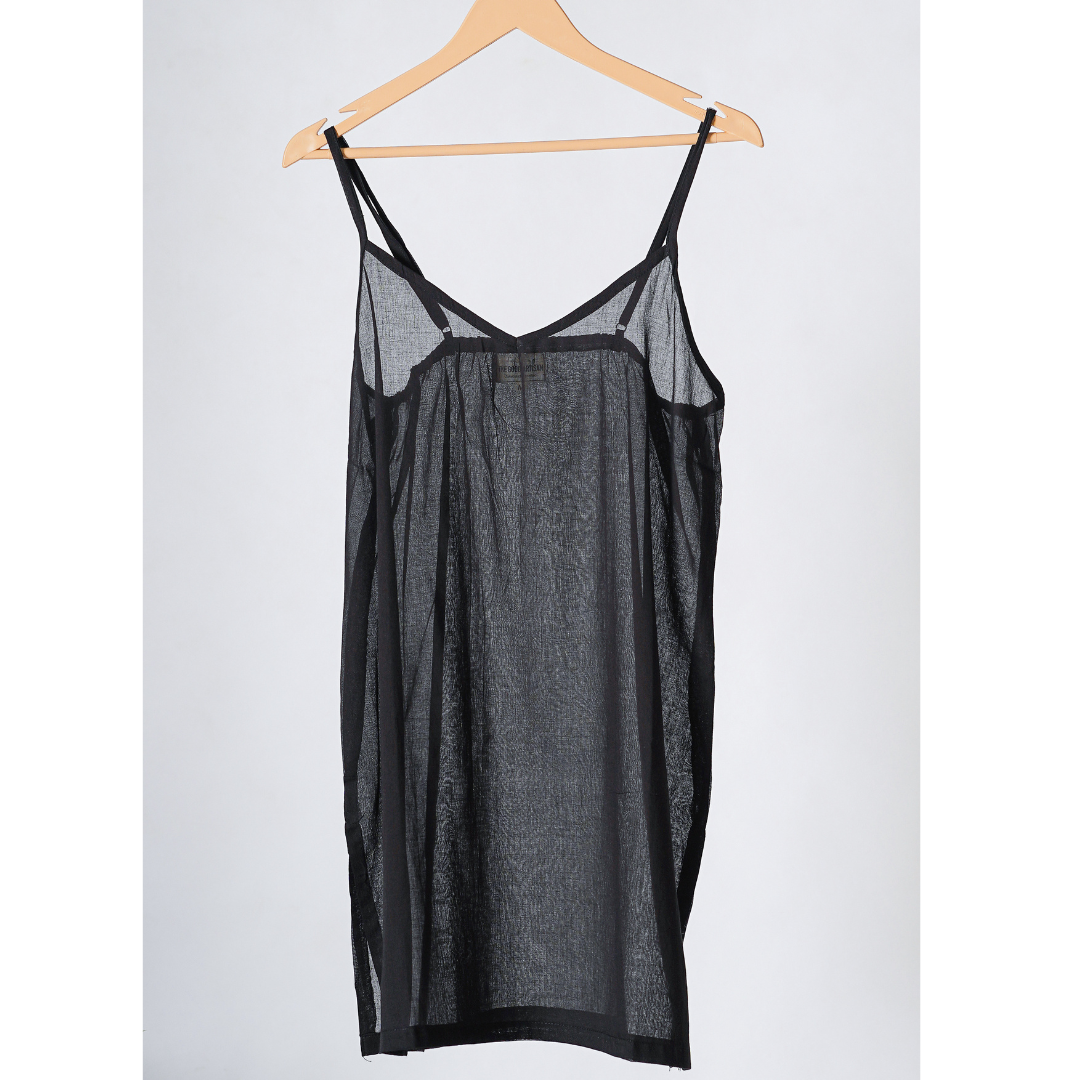
For dhoti pants and mulmul styles specifically, the Black Cotton Slip (from Rs. 875) — our softest, most breathable slip option — ensures that the extraordinary lightness of mulmul fabric is not undermined by a heavyweight or synthetic liner underneath. The cotton slip breathes with the mulmul rather than against it, and the whole outfit is more comfortable and more beautiful for it.
The Indian festive season is not a single event. It is a sequence — from Navratri through Dussehra, Diwali, Bhai Dooj, Karva Chauth, weddings through the winter months, and then the spring celebrations of Holi and Eid. Each occasion has its own mood, its own colour associations, its own level of formality. A wardrobe built for the festive season needs to work across all of them without requiring a complete rebuild for each one.
This is precisely where the TGA approach to festive dressing shows its value. A Siyah scalloped pant can go from a Diwali puja to a wedding dinner to a friend's birthday celebration without any sense of repetition, because the pant itself is a considered piece rather than a single-occasion outfit. A Sahaba black mulmul dhoti works for a garba night and for a formal wedding function. The Jaipur Gotta-Patti pants are entirely at home at a Navratri celebration and equally at home at a winter wedding reception.
The idea is not to have a different outfit for every occasion — it is to have pieces good enough to earn their place at every occasion, styled differently each time. A TGA festive pant worn with a silk dupatta and heavy jhumkas is a different outfit from the same pant worn with a short embroidered jacket and minimalist gold jewellery. The pant is not the variable. The styling is. And that is how a small, considered collection of well-made pieces can carry you through an entire festive calendar without the exhaustion — financial, sartorial, or environmental — of buying something new for every event.
At The Good Artisan, our festive season is busier than any other time of year, and it brings us a particular kind of satisfaction. We see women building their festive wardrobes with thought and intention, choosing pieces that they will return to rather than pieces that will end up at the back of a cupboard in January. We see customers who bought from us last Diwali coming back to add another piece to a collection they have been growing deliberately. We see women discovering for the first time that festive dressing in natural fabric is not a compromise — it is, in fact, the way festive dressing was always meant to be done.
Jaipur is a city that has known this for centuries. The crafts it has produced — the gotta-patti work, the mulmul weaving, the textile traditions that gave this city its character — have always been oriented toward celebration. They were created for occasions that mattered, made to last, designed to be worn and loved. The Good Artisan is a small continuation of that tradition, adapted for the woman of today, priced to be within reach, and crafted with the same intention that has always driven the best of Jaipur's textile work.
This festive season, we hope you find a piece that you will reach for again and again — something that makes you feel genuinely good when you put it on, something worth keeping.
Shop the full festive collection at www.thegoodartisanstore.com