Cart
0
You may also like

There is a version of the future in which fashion helps heal the planet rather than degrade it. It is not a utopian fantasy or a distant policy goal. It is already being built, quietly and incrementally, by consumers who have started asking different questions before they buy, and by the brands willing to earn those answers honestly.
The scale of fashion's environmental impact is not in dispute. The industry is responsible for roughly ten per cent of global carbon emissions annually, more than international aviation and shipping combined. It consumes ninety-three billion cubic metres of water each year. It generates approximately ninety-two million tonnes of textile waste annually, most of which goes directly to landfill or incineration. Its synthetic fibres shed microplastics into every water system they touch. Its dye effluents have contaminated rivers across Asia, including several in India, turning waterways the colour of whatever happened to be in fashion that season.
These are not abstract statistics. They describe a system that is actively destabilising the ecological conditions that sustain human life. And they are, in meaningful part, the cumulative result of individual purchasing decisions made at scale, which means they are also, in meaningful part, reversible through individual purchasing decisions made differently.
This is the argument this piece wants to make: that the choices conscious consumers make about what they wear are not small or symbolic. They are genuinely consequential. And when those choices are made thoughtfully, at scale, they create the conditions under which the planet can begin to recover.
To understand how fashion can help the planet, it helps to understand precisely how it came to harm it.
The modern fast fashion system was built on a single, seductive premise: that clothes could be cheap enough to be disposable. To achieve that price point, the industry externalised its costs onto the environment, onto the workers who made the garments, and onto the communities living near the factories and rivers where production took place. The consumer paid very little. Everyone and everything else paid the rest.
The transition from natural to synthetic fibres was a central part of this story. Polyester, introduced at scale in the 1970s and now the world's most widely used textile fibre, is derived from polyethene terephthalate, the same material as plastic water bottles. It is cheap to produce, easy to care for, resistant to wrinkling, and durable in the sense that it does not biodegrade. That last quality, so appealing to a manufacturer, is catastrophic at end of life. A polyester garment discarded to landfill will persist, essentially unchanged, for hundreds of years. A polyester garment washed in a domestic machine will shed thousands of microplastic fibres into the water system with every cycle.
The acceleration of trend cycles compounded the damage. When fashion moved from two seasons to four, and then from four to the weekly drops of the ultra-fast fashion era, the volume of production increased exponentially. More garments produced means more fibre, more water, more dye, more chemical processing, more waste. Most of the garments produced in this system are worn an average of seven times before being discarded. Many are never worn at all.
The earth is absorbing the cost of this system in degraded soil, contaminated water, warming temperatures, and collapsing biodiversity. The question for the conscious consumer is not whether any of this is their responsibility. The question is what, specifically, they can do about it, and whether what they can do is worth the effort.
The intuition that individual consumer choices are too small to matter against a problem this large is understandable. But it misunderstands how markets work.
A brand does not make production decisions based on what it believes is right. It makes production decisions based on what it believes will sell. When consumers consistently choose natural fibres over synthetic ones, brands respond by sourcing more natural fibres. When consumers ask about production practices and walk away from brands that cannot answer, brands invest in supply chain transparency. When consumers refuse to buy trend-driven disposables and instead invest in fewer, better pieces, brands that are built on volume and novelty lose market share and are forced to reconsider their model.
None of this happens overnight, and no single purchase changes anything in isolation. But the aggregate of conscious purchasing decisions at scale has already begun to reshape the fashion market in measurable ways. The global organic cotton market has grown consistently for the past decade in response to consumer demand. Certifications that were niche ten years ago - GOTS, OEKO-TEX, Fair Trade, are now sought-after differentiators that brands actively pursue because consumers have begun to ask for them. Second-hand and slow fashion markets are growing at rates that would have seemed impossible to predict fifteen years ago.
The individual decision matters because it is a unit of market signal, and markets respond to signal. The consumer who chooses a well-made cotton kurta over a synthetic fast fashion piece is not just making a personal wardrobe choice. They are casting a vote, with money and attention, for a different kind of fashion system.
When you choose a garment made from a natural fibre: cotton, linen, hemp, wool, you are choosing a material that is part of the biological cycle of the earth rather than outside it.
Natural fibres come from living things: the cotton plant, the flax plant, the hemp plant, the sheep's fleece. Growing these materials, when done responsibly, can be part of a regenerative agricultural system. Cotton grown in rotation with other crops can improve soil structure. Flax, the source of linen, can be grown on marginal land without irrigation or pesticides and leaves the soil in better condition than it found it. Hemp grows fast, sequesters carbon as it grows, and returns nutrients to the soil at the end of its cycle. These fibres do not just avoid harm. Done right, they can actively contribute to soil health and carbon sequestration.
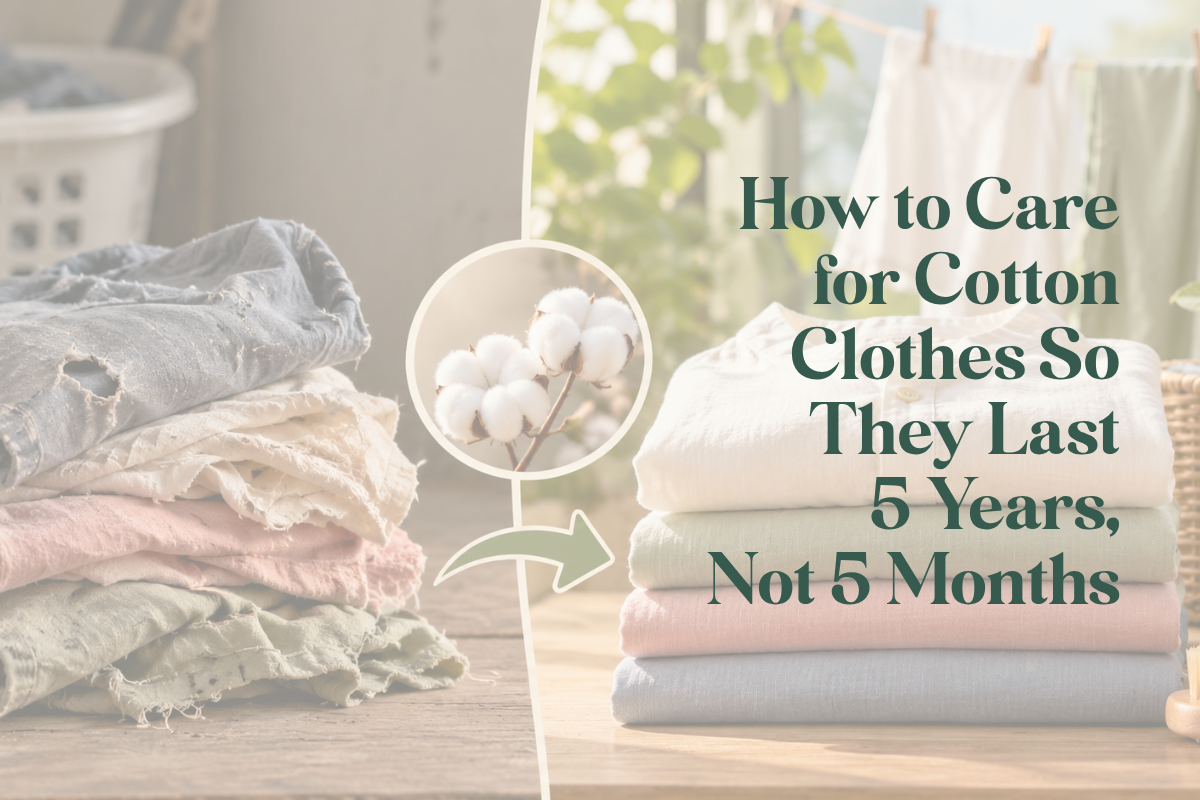
At the other end of the lifecycle, natural fibres biodegrade. A cotton garment buried in soil will decompose within a few months under the right conditions. A linen garment will follow the same trajectory. The material returns its constituent elements to the biological cycle, enriching the soil rather than contaminating it. This is not a minor technical detail. It is the difference between a linear system - extract, produce, consume, discard, and a circular one, in which the end of a garment's useful life is the beginning of something else.
Water tells a particularly important story here. The fashion industry's water consumption is dominated by two activities: the irrigation of conventional cotton and the dyeing and finishing of synthetic fabrics. Organic cotton farming, which uses rain-fed irrigation where possible and eliminates synthetic pesticides and fertilisers, dramatically reduces the water footprint of the fibre. Natural dyes and AZO-free synthetic dyes reduce the chemical burden on wastewater systems. A garment made from organically grown cotton, dyed with responsible dye processes, and finished without synthetic chemical treatments represents a fraction of the water impact of a conventionally produced synthetic equivalent.
None of these improvements happens automatically. They require brands and producers to make deliberate choices at every stage of the supply chain. But they are real, achievable, and already being realised by producers who have decided to take the full lifecycle of their garments seriously.
Fashion's contribution to climate change is largely invisible to the consumer, because carbon emissions are invisible. But the numbers are significant enough to be worth making concrete.
The carbon footprint of a garment begins at fibre production, the energy used to grow, harvest, and process the raw material, and continues through spinning, weaving, dyeing, cutting, sewing, and transportation. For a typical polyester garment produced in Asia and sold in India, that chain involves multiple countries, multiple energy systems, and transport at every stage. For a cotton garment produced, dyed, and sewn in the same city or region, the chain is dramatically shorter and the carbon footprint proportionally smaller.
But the most powerful carbon argument for sustainable fashion is not about production efficiency. It is about longevity. The carbon cost of producing a garment is fixed: it has already been emitted by the time the piece reaches your hands. The way to amortise that carbon cost most effectively is to wear the garment as many times as possible over as many years as possible. A garment worn a hundred times over five years has a carbon footprint per wear that is a fraction of the footprint of a garment worn seven times and discarded. The conscious consumer's most powerful climate tool is not buying the most sustainably produced garment. It is buying a well-made garment and wearing it for as long as it will last.
This is why slow fashion is, at its core, a climate strategy. Not because every slow fashion brand is carbon neutral- most are not, and those that claim to be should be asked to show the numbers- but because the model of buying fewer, better, longer-lasting garments structurally reduces the volume of production required to clothe a population. Lower volume means lower emissions, less waste, less water, less chemical processing. The environmental benefits of slowing down the fashion system are compounding.
India's textile dyeing industry is one of the most visible examples of fashion's environmental cost, and one of the most avoidable.
The Bandi River in Rajasthan, the Noyyal River in Tamil Nadu, the Ulhas River in Maharashtra: these are among the Indian waterways most severely affected by textile dye effluents. The chemicals used in conventional synthetic dyeing, including heavy metals, AZO compounds, formaldehyde, and chlorine bleaches, are acutely toxic to aquatic life and, when they enter groundwater systems, to the human communities that depend on those systems for drinking water and irrigation. The colour of a river should not be determined by what happens to be trending on a fashion platform.
The alternative is not the elimination of colour from clothing. It is the use of dye processes that are less harmful, AZO-free synthetic dyes, GOTS-certified dye processes, and traditional natural dyeing techniques that use plant-based colourants and mordants that are part of the biological cycle. These processes exist. They are used by responsible producers. They cost more than conventional synthetic dyeing, which is why the cheapest fashion is almost always the most chemically intensive. The price of an inexpensive garment is not low. It is simply borne by the river and the community beside it rather than by the consumer.
Choosing a garment from a brand that uses responsible dye processes is choosing a river that is the colour it is supposed to be. That connection between a purchasing decision and an ecological outcome is real, even when it is invisible to the person making the choice.
There is a dimension of sustainable fashion that is rarely discussed in the carbon and water conversation, and it deserves its own moment: the role of traditional craft in preserving not just cultural heritage but ecological knowledge.
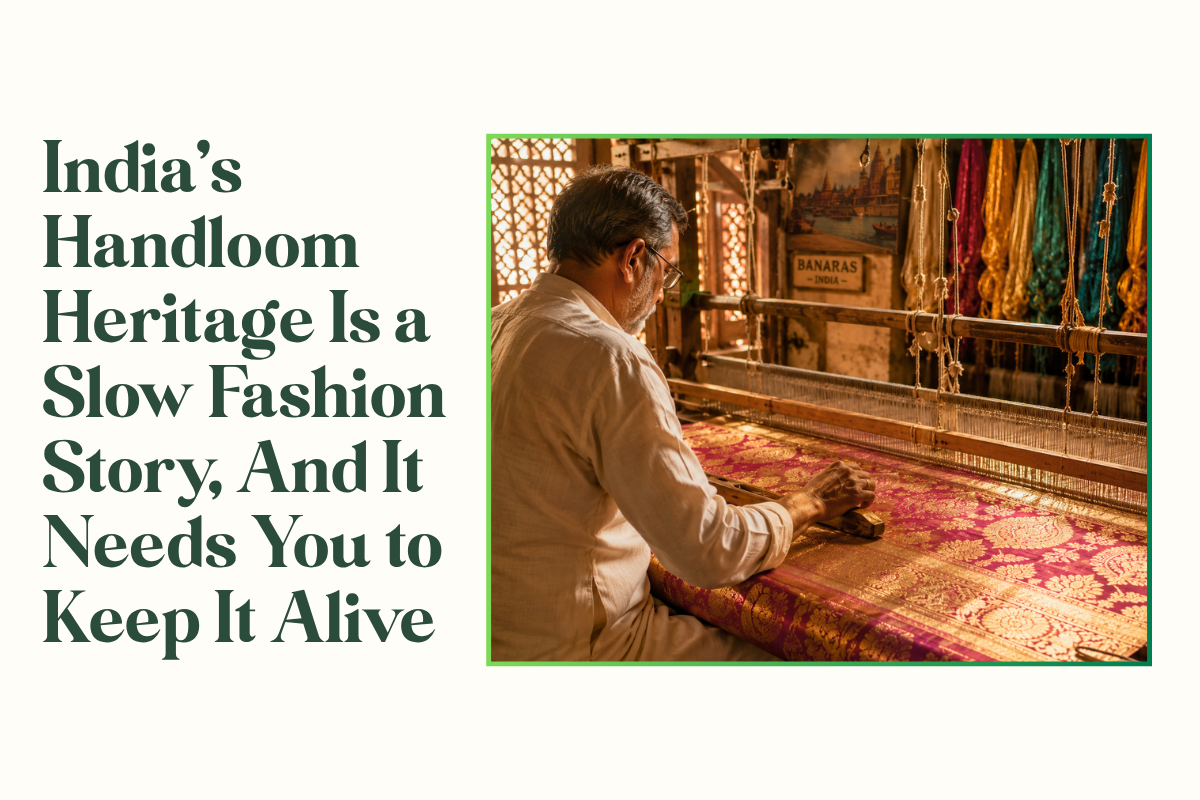
India's hand block printing traditions, the madder-red prints of Bagru, the indigo resist prints of Sanganer, the complex vegetable dye traditions of Kutch, are not just beautiful. They are repositories of ecological knowledge accumulated over centuries. The artisans who practice these traditions know which plants produce which colours, which mordants fix them, which combinations are lightfast and which will fade. They know how to read the season and the soil. That knowledge is inseparable from the landscape that produced it.
When a block printing tradition dies because there is no longer a market for its products, because consumers have chosen cheaper synthetic alternatives, the knowledge dies with it. The medicinal plants that provided the dyes are no longer cultivated. The water management practices that sustained the dyeing process are no longer maintained. The ecological relationship between the craft and its landscape, developed over generations, is severed.
Supporting artisan craft traditions through purchasing decisions is, in this sense, an act of ecological conservation as much as cultural preservation. It keeps alive a relationship between human skill and natural material that the industrial system has largely lost, and that the planet, in its recovery, will need.
The path toward a fashion system that helps rather than harms the planet does not begin with policy reform or industry restructuring, though both are necessary. It begins with individual choices made with greater awareness of their consequences.
Choose natural fibres over synthetic ones. Choose garments designed to last over garments designed to be cheap. Choose brands that can tell you specifically where and how they make their clothes over brands that use the language of sustainability without the substance. Choose to buy less and wear more. Choose to repair before replacing. Choose to pass garments on rather than discard them. Choose to ask questions and expect real answers.
Each of these choices is small in isolation. Together, made consistently by enough people, they are the mechanism by which a different fashion system becomes viable and eventually dominant. The planet does not need the fashion industry to solve climate change. It needs the fashion industry to stop making climate change worse. That shift begins when enough consumers decide that their wardrobe is part of the problem they are trying to solve, and act accordingly.
At The Good Artisan, every piece we make is our attempt to demonstrate that sustainable fashion choices are not a compromise. They are an upgrade.
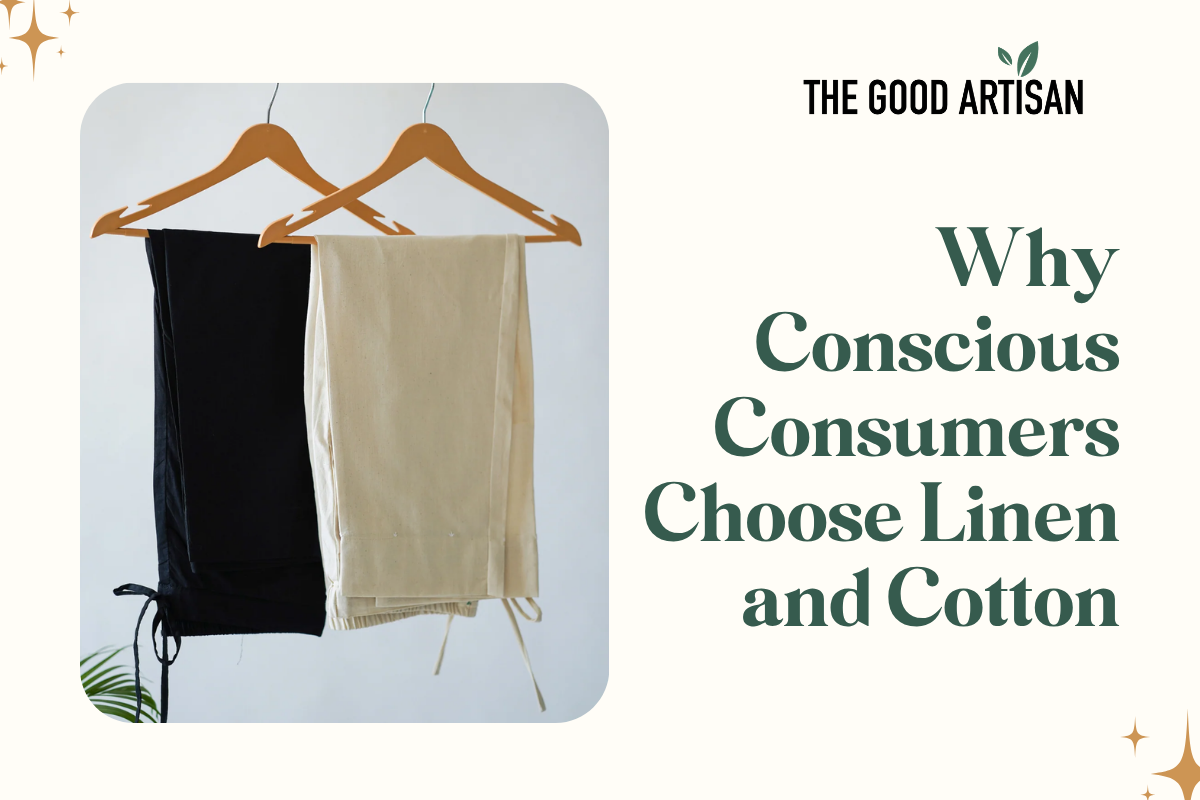
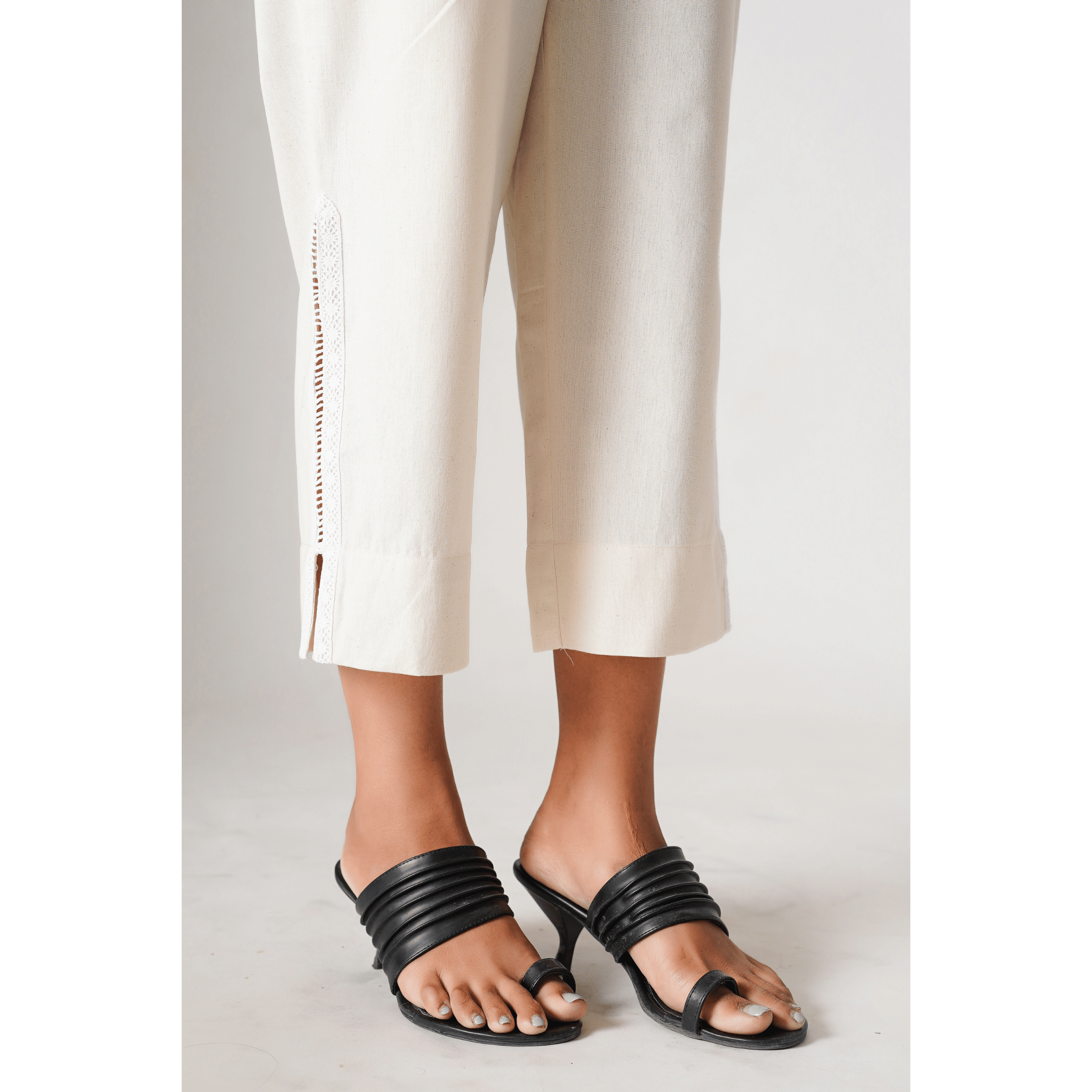
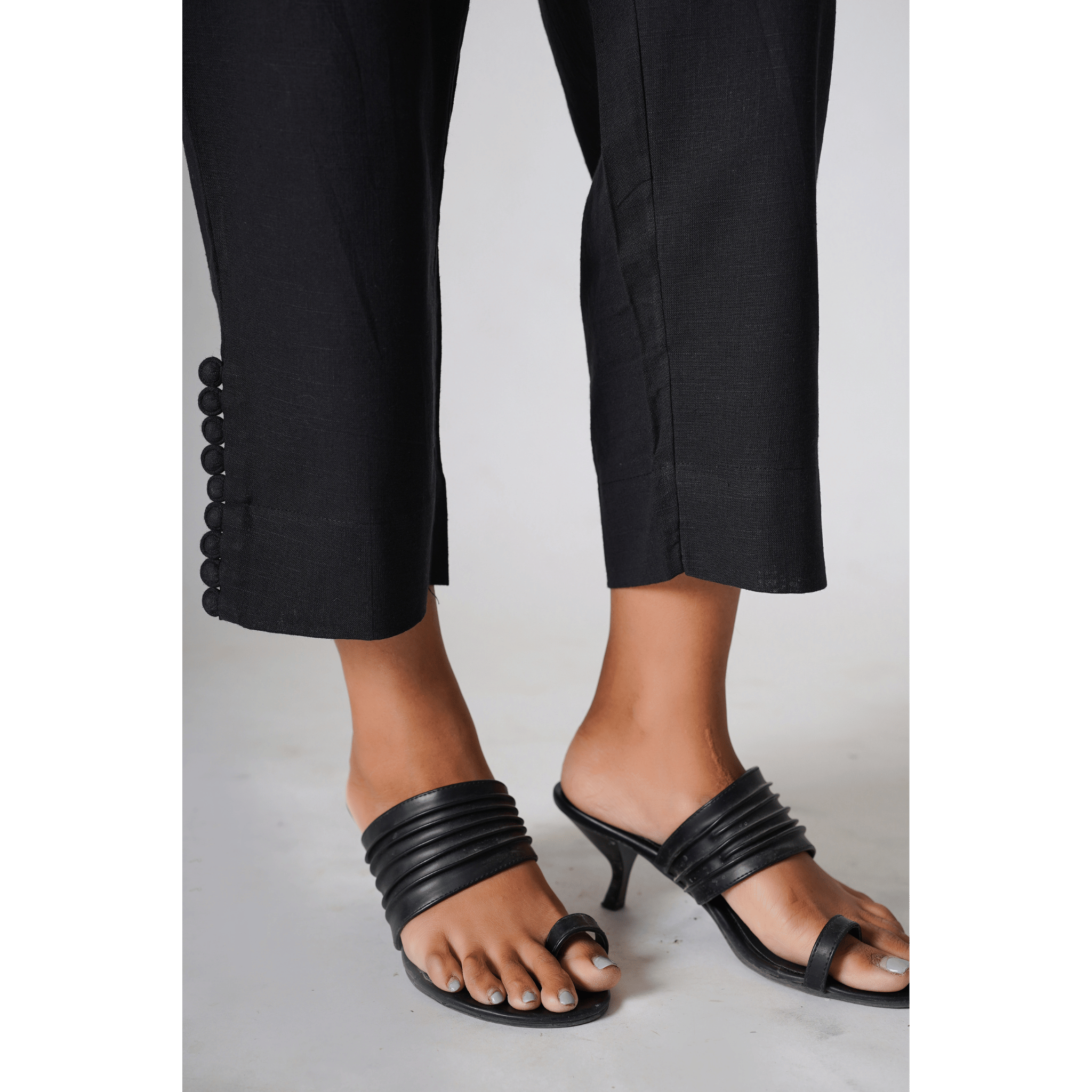
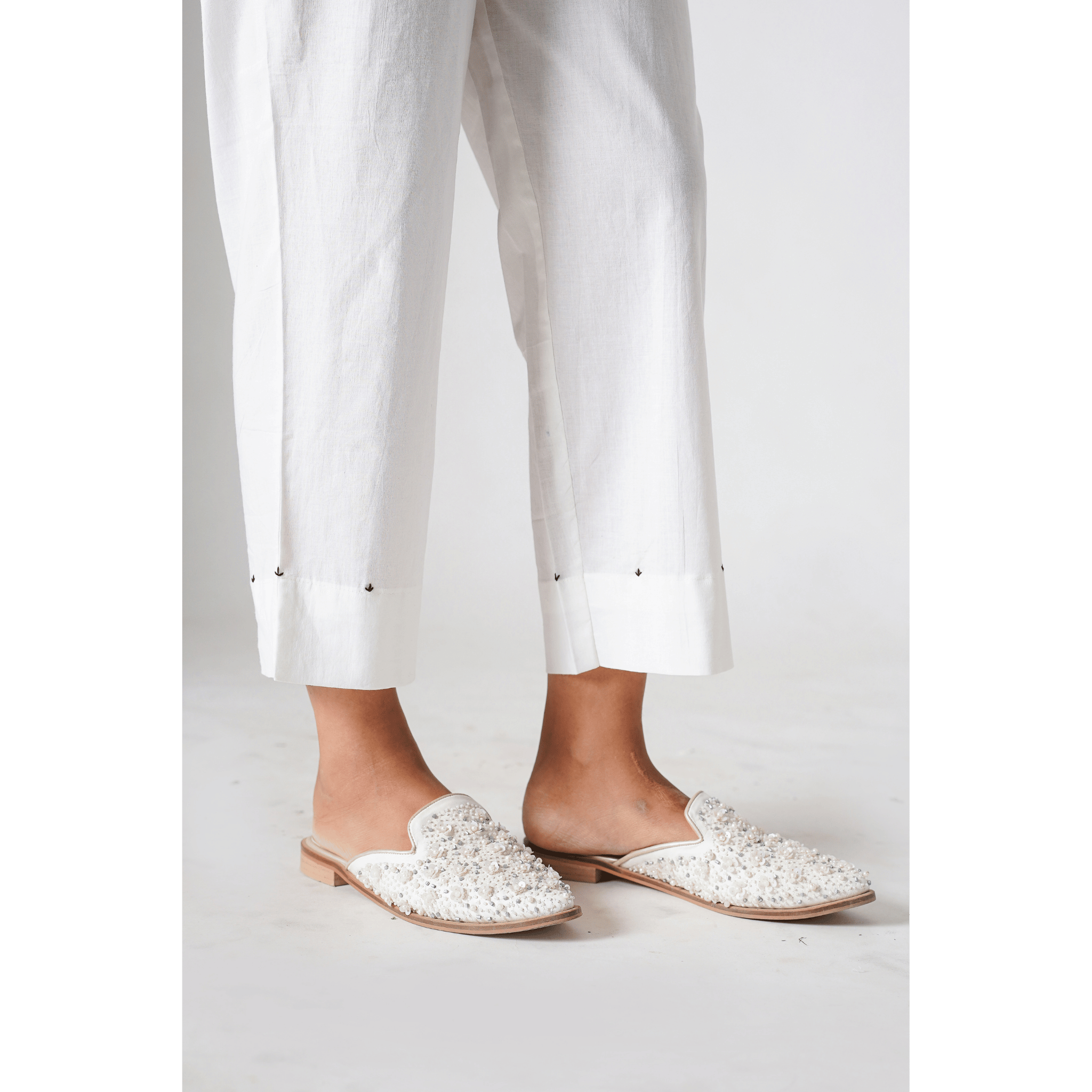
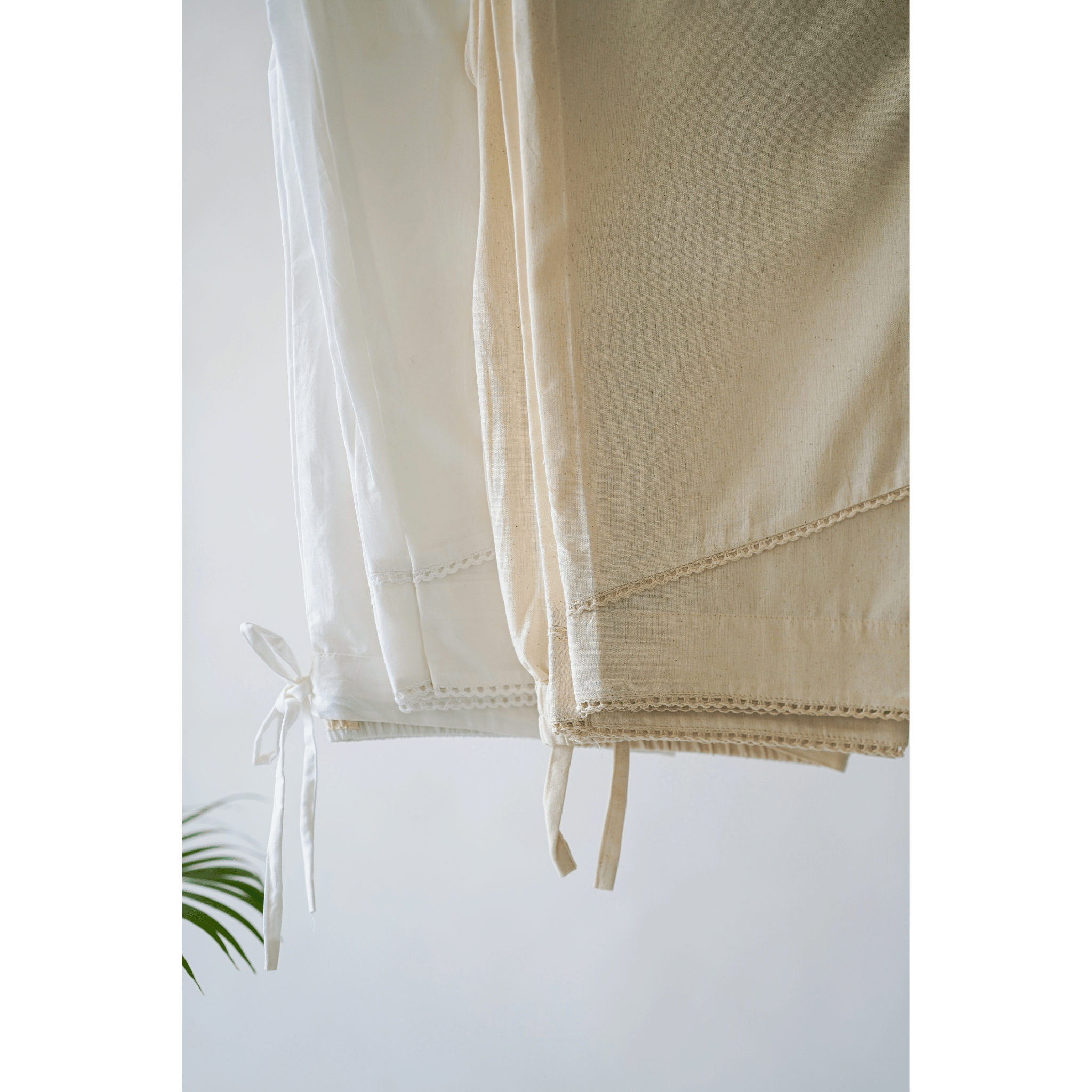
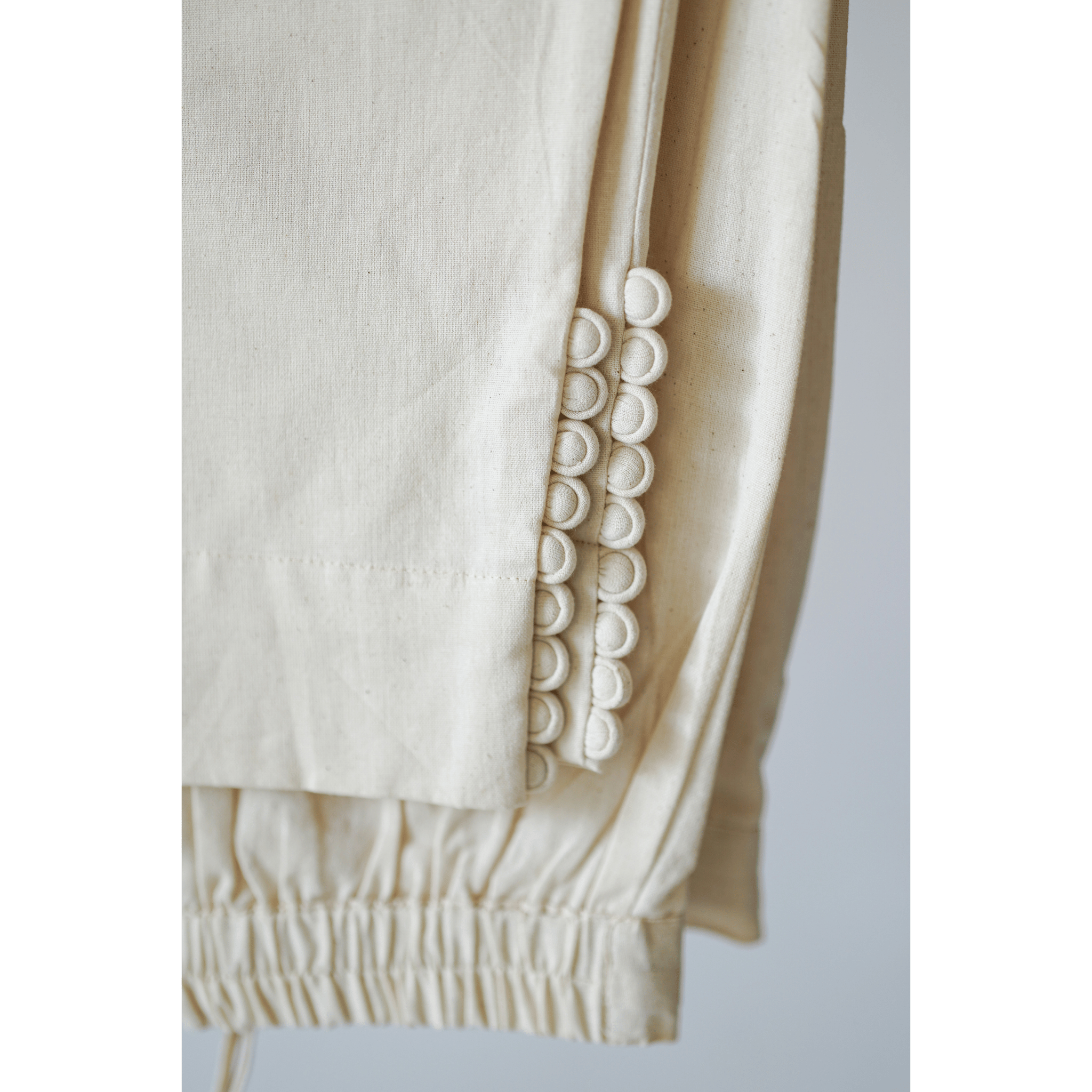
Our Victoria Black Cotton-Linen Pants and Blossom Beige Cotton-Linen Pants are built from a blend that combines the ecological credentials of both fibres, plant-based, biodegradable, dyed with AZO-free processes, made in small batches at our Jaipur production unit. Wear them for five years. They will be better at the end of that time than they are now.
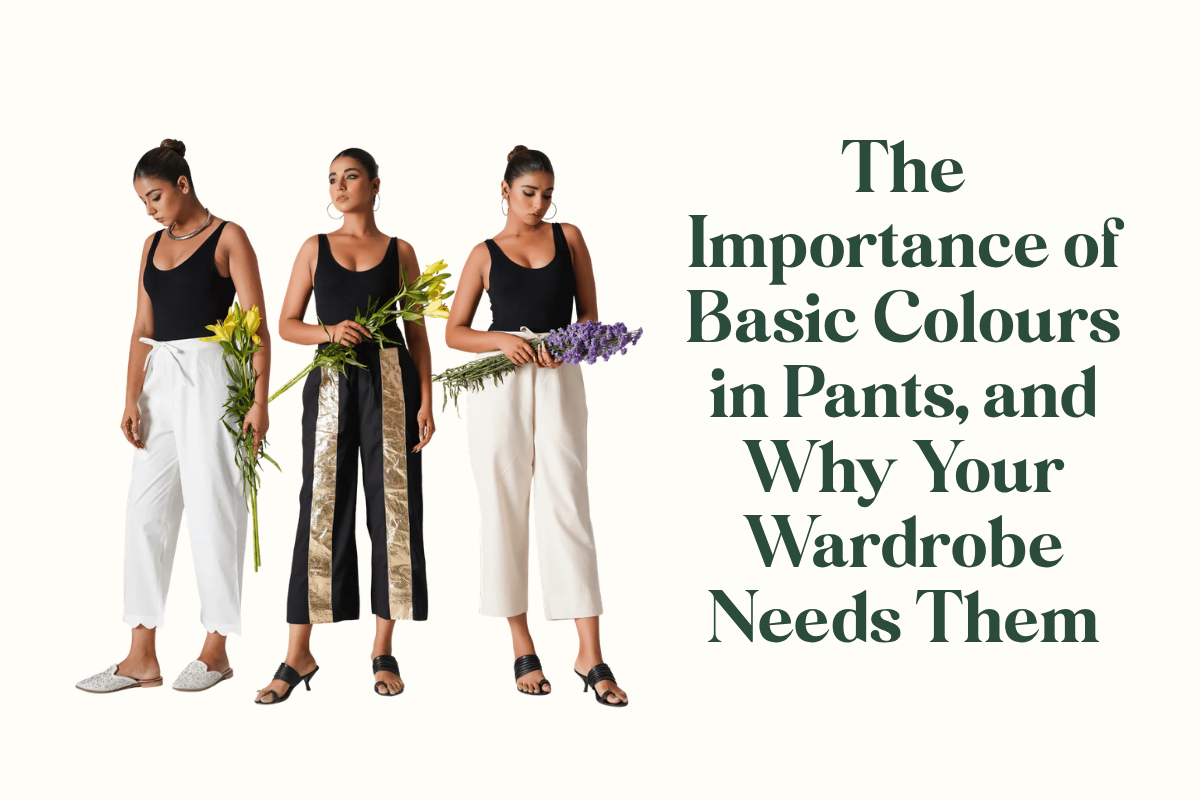
Our Jasmine White Cotton Pants and Dausa Straight Fit Cotton Pants are 100% cotton, the fibre India has grown, woven, and worn for four thousand years, adapted into a contemporary silhouette that will carry you from the office to the weekend to the next half decade without asking to be replaced.
For the craft dimension of this conversation, our Phulera Hand Block Printed Pants bring the Bagru block printing tradition, one of Rajasthan's most ecologically minded dyeing practices, into an everyday wardrobe piece. The Dholpur Gotta Patti Pants carry Jaipur's gotta patti embroidery on a 100% cotton base, the artisan's hand and the natural fibre working together as they have for centuries. The Aira Hand Block Printed Kurta and the Chidiya Print Kurta extend the same philosophy into the upper body, printed by hand, made in natural cotton, designed to be worn for years.
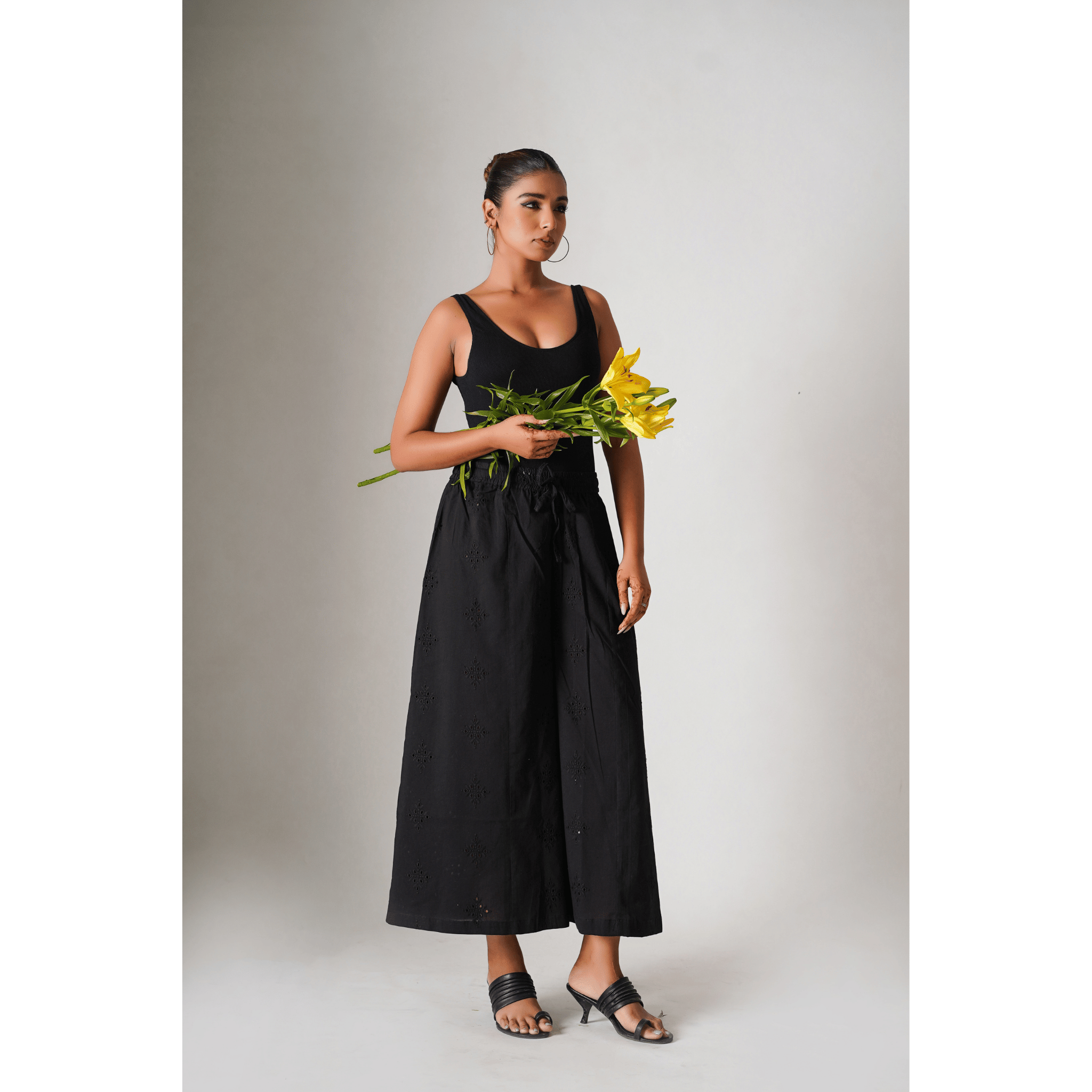
Our Amara Hakoba Palazzos are cut from hakoba cotton, an open-weave fabric that is among the most breathable and least chemically intensive cotton constructions available, the right fabric for a hot Indian summer and a conscious wardrobe in equal measure.
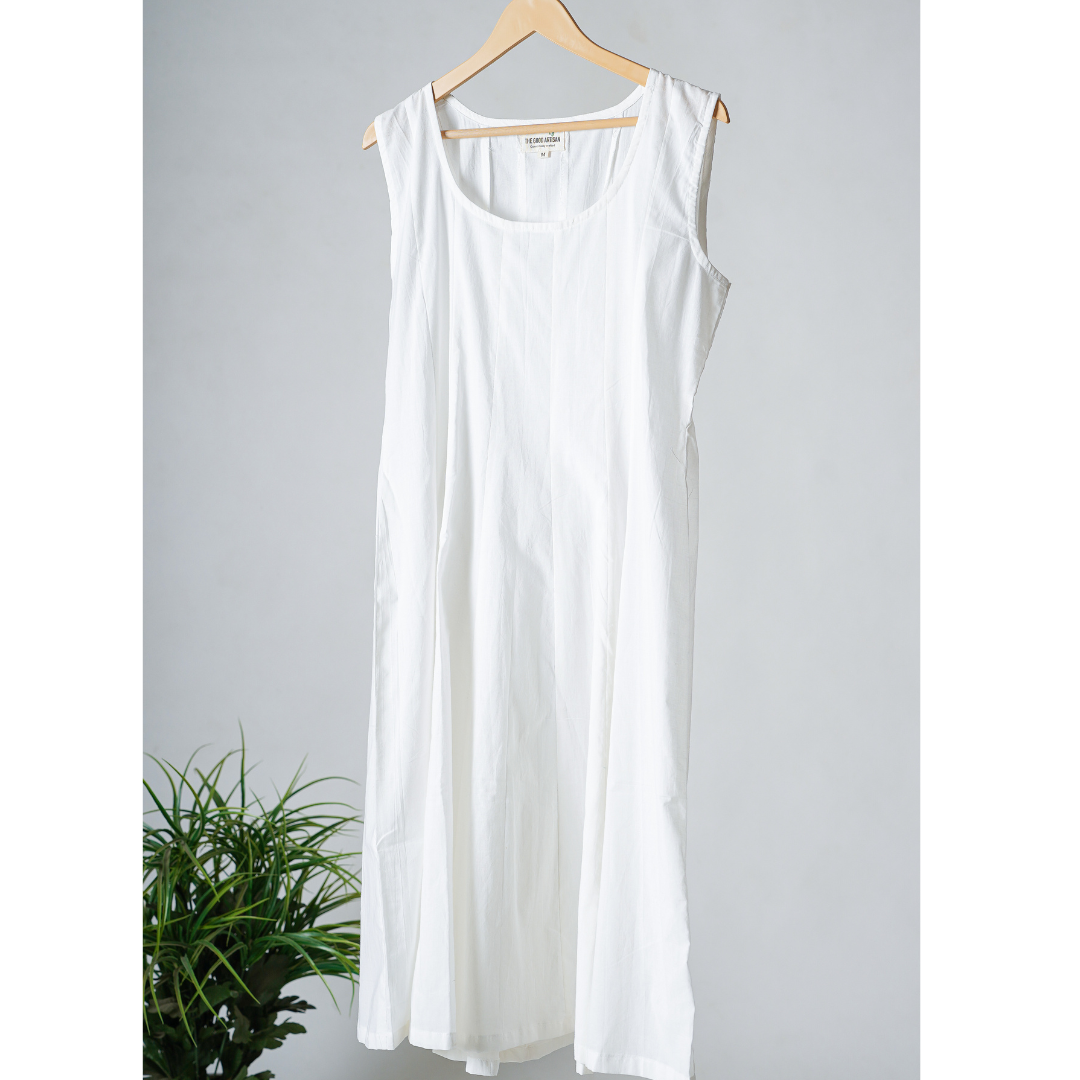
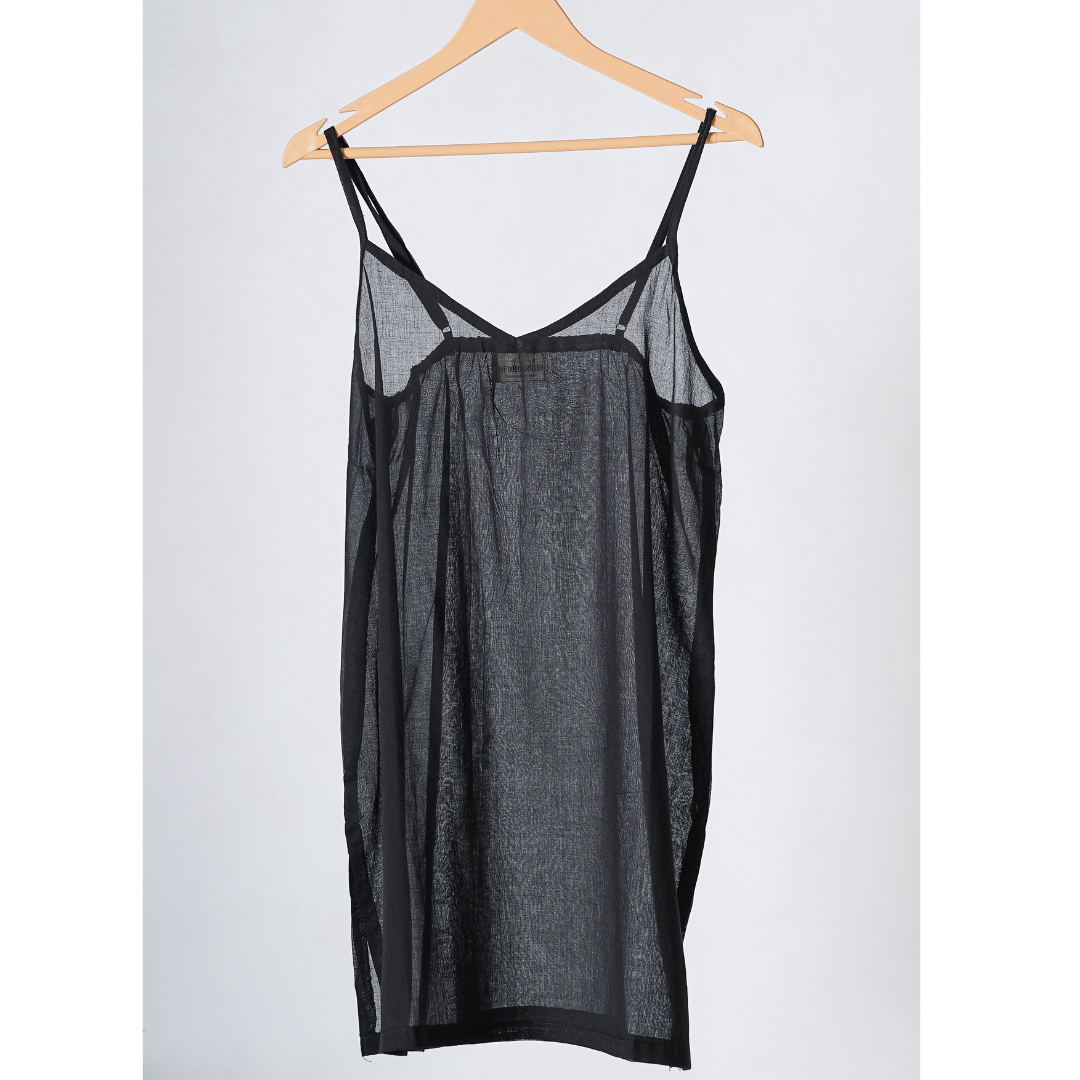
Our Cotton Slips in White and Off-White, in mulmul and regular cotton, complete the picture. The inner layer made from the same natural fibre as the outer garment, because the commitment to natural fibres does not stop at the visible surface of what you wear.
Every one of these pieces is made in Jaipur, in small batches, from natural fibres, by artisans whose craft is part of India's living cultural and ecological heritage. Every one is designed to last, to improve with wearing, and to return to the earth cleanly when its life is done.
That is not a product range. It is a position on what fashion is for, and what the planet needs it to be.
The planet's regeneration will not be achieved by fashion alone. But fashion, one of the most resource-intensive industries on earth and one of the most intimate parts of daily human life, has a role to play that is larger than the industry has historically been willing to acknowledge.
Every garment is a set of decisions made material: decisions about fibre, about process, about labour, about volume, about longevity. When those decisions are made with the health of the planet as a primary consideration, the resulting garment is different in kind from the one produced without that consideration, not just in its environmental profile, but in its relationship to the person who wears it.
Clothes made to last invite a different relationship with time. Clothes made from natural fibres invite a different relationship with the body and the climate. Clothes made by artisans invite a different relationship with the human skill and cultural heritage embedded in them. That different relationship - with time, with the body, with human skill, with the natural world, is what conscious fashion actually offers. And it is, in the end, a richer experience of dressing than disposability ever was.
The earth is patient. It is waiting for us to make different decisions. The wardrobe is a reasonable place to start.